Ethnographic writing intensive: Five activities for the fieldwork-to-writing transition

Recently I have been thinking about how I learnt to transition from fieldwork to writing. Like many graduate students, mid-way through my thesis research I found myself with a stack of notebooks and detailed fieldnotes, interview transcripts, and hundreds of photos (among other things), but I wasn’t sure how to transform this material into ethnographic writing. The shift from gathering data to crafting compelling stories requires a different set of skills that aren’t always explicitly taught in methods courses.

Over the years, as I have supervised graduate students and taught courses on ethnographic methods, I have noticed others struggling with this fieldwork-to-writing transition. In this post I share five activities I have developed to help with that transition. The activities are modelled after the best writing course I have ever done (“Unstuck: The Art of Productivity” with Kel Weinhold from The Professor Is In) and draw on prompts in Kirin Narayan’s excellent book Alive in the Writing: Crafting Ethnography in the Company of Chekhov (2012) as well as my lecture notes from courses I have taught (including ANTH 312 Creative Ethnographic Practices).

These activities form an ethnographic writing intensive designed to strengthen your ethnographic writing practice. They address common challenges I see students facing: how to separate your thoughts from your writing; how to structure a piece of work; how to start with participant perspectives, how to write yourself into the narrative, how to write an ethnographic story.


Activity One: Investigate your thoughts with The Professor Is In

I recommend starting here, with a blog post by writing coach Kel Weinhold from The Professor Is In, because I have found it helpful in dealing with negative thoughts (hello imposter syndrome, my old friend!) in my own writing. This approach has helped me separate my thoughts from my writing process.

Tasks:

  • Read this blog post: https://theprofessorisin.com/2022/06/07/just-one-thing-investigate-your-thoughts/
  • The blog post suggests that writers sometimes have thoughts that feel completely true but actually interfere with making progress. As Kel writes, “The issue is not whether or not we have unhelpful thoughts; the issue is what we do with thoughts” (Weinhold, 2022)
  • See if any of the examples in the post resonate with your own writing experiences
  • If so, work through the investigative process in Kel’s blog post

Reflective question:

What, if anything, did you find useful in this approach that you might carry forward in your own writing practice?


Activity Two: Reverse outline a model piece of writing

I first learnt about reverse outlines through “Unstuck” and since then have recommended doing them to just about all of my graduate students.

For this activity, you are going to create a reverse outline of a model of the kind of writing you are currently working on (e.g. a MA thesis chapter, a journal article). This is a technique I regularly use myself. Usually people create reverse outlines of their own work, but I like to do it with examples of other peoples’ work so I can get a feel for how the piece of writing is structured and what each paragraph does for their argument and overall flow of the writing.

Tasks:

  • Read this blog post on reverse outlines: https://writing.wisc.edu/handbook/reverseoutlines/
  • Read another blog post on reverse outlines: https://owl.purdue.edu/owl/general_writing/the_writing_process/reverse_outlining.html
  • Choose a model piece of writing to work with (e.g. a chapter from a thesis your supervisor recommends, or an article from the journal you want to write for)
  • Sit down and read the piece from start to finish. Just read it; don’t take notes or do any highlighting
  • Read the piece again with a pen. Number each paragraph as you re-read
  • On a fresh piece of paper, write down the number of each paragraph and a sentence or phrase that describes what the author is accomplishing in that paragraph (e.g. this paragraph introduces and defines key concepts; explains the purpose of the chapter; lists the central research questions; situates the chapter in relation to other literature; etc)
  • Optional: add a star next to the paragraph numbers that you think are doing especially important work, or that you particularly like
  • Then, look at a draft you are currently working on to see where you might use elements of the model piece in your own work (e.g. ‘I need to have a paragraph that explains how this chapter contributes to my overall thesis argument’)

Reflective question:

What was useful about this activity? Might you use the reverse outline process on your own writing?


Activity Three: Starting on the ground

“The term “ethnography” has its roots in the Greek words ethnos (folk, the people) and grapho (to write). Ethnography is to write about people, society, and/or culture, but it is much more than writing. It is also a method and a theory. As a method, ethnography is an embodied, empirical, and experiential field-based way of knowing centered around participant observation. Ethnographic research requires participation, not just observation. It is to participate in rather than just observe the daily life, logics, rhythms, and contradictions of a cultural group or society. As such, it requires discipline and commitment beyond what is visible to someone not trained in ethnographic methods. As a theory, ethnography is to start on the ground, with the concepts that ground people’s lives, worldviews, actions, and words in particular ways to that community.”

McGranahan, Carole. 2018. “Ethnography.” In The International Encyclopedia of Anthropology, edited by H. Callan, Wiley. https://doi.org/10.1002/9781118924396.wbiea2262

This activity takes its cue from the first lecture I give in my Creative Ethnographic Practices class. In it, I discuss Carole McGranahan’s point that theory, in ethnography, means to start “on the ground”, with what your participants have to say. Rather than starting with theories developed by others, ethnographic writing tends to ask: what’s going on here? What are my participants telling me about how their world works?

Tasks:

  • Choose a paragraph from a draft you are working on
  • What does the paragraph start with? If it starts with someone else’s theory, can you see a way to rewrite it so your participant’s words and explanations guide your analysis?
  • Note that not every single paragraph needs to do this; the activity prompts you to show how you are building understanding inductively, starting “on the ground” with what your participants said

Reflective question:

What did you notice about the difference between starting with other people’s theories versus starting with participant explanations? How might this approach change the way you build arguments in your writing?


Activity Four: Writing yourself into the text

This activity is drawn from two sources. The first is a lecture I give on autoethnography (a methodology many of our students are drawn to), where I discuss Leon Anderson’s argument that analytic autoethnography requires “narrative visibility of the researcher’s self” (2006, 378).[1] Autoethnographic writing requires you to be visible as a researcher while being in conversation with your participants. Ethnographic writing, too, often includes the presence of the researcher to show how their knowledge was produced. Since dialogue can be a generative way of illustrating key insights from your research while showing the relational nature of knowledge-production, the second source I have drawn on is Kirin Narayan’s chapter “Voice” from Alive in the Writing. This chapter has an excellent discussion of how to “build texts from conversations” (page 69 Kindle edition), and in my course on Creative Ethnographic Methods I ended each lecture with in-class writing prompts (like the ones below) based on Narayan’s work.

[1] Anderson, Leon. 2006. “Analytic Autoethnography.” Journal of Contemporary Ethnography 35 (4): 373–95.

Tasks:

  • Read “Chapter Four: Voice” from Narayan’s Alive in the Writing
  • Writing activity 1: Locate a quote from one of your participants on the issue you’re writing about and experiment with working just a line or two into an introduction (adapted from the prompt on page 73)
  • Writing activity 2: Write an extended conversation in which one of your participants explains a concept to you. Include your questions in the dialogue (adapted from the prompt on page 75)
  • Writing activity 3: Revisit one of your interview transcriptions, using different colour pens to highlight (a) the main questions you asked, (b) your subsidiary questions, and (c) your participant’s answers (adapted from the prompt on page 77)
  • Writing activity 4: Draw on the interview transcript you looked at for the previous activity to create a 2-page dialogue between you and a participant that reveals information or insights central to your project. Pay attention to the textures, cadences, and intonations of voices, including your own (adapted from the prompt on page 92)

Reflective question:

After experimenting with these different ways of writing yourself in to your work via dialogue, what did you notice about how the presence of your questions and responses changes the way insights emerge in your writing? How might dialogue work differently than summary or analysis for revealing what you learned in interviews?


Activity Five: Ethnographic storytelling

“Focusing on stories that have been co-created enables me to work on the ethnographic narrative and its process of coming into life through storytelling. In starting with the creation of ethnographic stories and story lines I am following an argument by Soyini D. Madison; she has criticised the tendency to avoid transparency in oneʼs own ethnographic storytelling techniques by hiding behind the writing of others and showing off (with the theory of others) in order to give more weight to oneʼs own ethnography while hiding possible flaws. She observes that rather than taking guidance from and trusting the stories, instead “the researcher becomes so enamored with […] impressing colleagues that honoring the narrative becomes less important than acrobatics of abstraction and theoretical word play” (Madison 2014, 394)”.

Bönisch-Brednich, Brigitte. 2018. “Writing the Ethnographic Story: Constructing Narrative Out of Narratives.” Fabula 59 (1-2): 8–26. Page 12.

This activity is based on a lecture I give on ethnographic storytelling. I begin that lecture by talking about a blog post Carole McGranahan wrote in 2015, where she writes: “What is defective is how we miss the power of stories and storytellers even as well tell them. We tell stories to get to the point, to make our points. We miss that the stories are the point” (my emphasis added). McGranahan puts forward an argument similar to the one that Madison makes in the quote from Bönisch-Brednich’s article cited above (which I also discuss in that lecture): that we use our participant’s voices to make our own theoretical arguments (often drawing on the theory of others) rather than letting their stories carry the weight of ethnographic insight.

Tasks:

  • Choose a story that one of your participants shared with you that you found especially memorable (perhaps one you are working with in a current piece of writing). You will work with this story in three ways
  • Writing activity 1: write the story as if you are reporting it for a newspaper, using the journalistic who-what-when-where-why-how questions and describing the basic sequence of events
  • Writing activity 2: write the story as your participant might (see the ethnographic vignette that Bönisch-Brednich shares on pages 12-13 of her article for an example)
  • Writing activity 3: Following Bönisch-Brednich’s article or McGranahan’s blog post, write the story for your draft, discussing what it shows about broader patterns in your research and connecting it with relevant theory. This is how it becomes ethnographic storytelling

Reflective question:

After writing the same story three different ways, what did you notice about how each approach revealed different aspects of the experience? How did writing activity 3 differ from simply adding analysis to writing activity 1?


I designed these activities with individual work in mind, but they might also be useful starting points for a ‘shut up and write‘ session with peers. If you try one or more of them, please let me know your thoughts in the comments – I would love to hear from you!
Further reflections on writing ethnographic fieldnotes

The most popular post on my blog describes the fieldnote template I developed during the early stages of my PhD research with community-based NGOs running educational and economic development initiatives in Kolkata (India) and Lae (Papua New Guinea). This fieldnote template has made its way into other blog posts about ethnographic research, textbooks and articles, course outlines, and academic commons. Last year my colleague Grant Jun Otsuki assigned it as a reading for his first year Cultural Anthropology class at Te Herenga Waka-Victoria University of Wellington as a way of helping students prepare for an assignment that involved doing fieldwork, writing fieldnotes, and turning those fieldnotes into a piece of anthropological writing. Grant invited me to come and speak to the class, and that experience has prompted me to write some further reflections on writing ethnographic fieldnotes as a disabled, neurodivergent anthropologist.

In my guest lecture I spoke about why anthropologists keep fieldnotes, what my fieldnotes consist of (handwritten notebooks, photographs, maps, drawings, emails, ticket stubs and other ephemera, voice recordings, notes jotted in an app on my phone, a personal diary, and of course the hundreds of electronic documents generated with my fieldnote template), and my relationship with my fieldnotes, including how I draw on fieldnotes alongside headnotes (Ottenberg, 1990) when I write. I also discussed how ethnographic fieldwork is an all-encompassing activity that involves your body, mind, senses, and memories, and how my fieldnote template offers me a way to document my experiences and begin identifying what and how I “know” about my topic. As part of that, I described some of the strategies I use to manage my energy levels and wellbeing during fieldwork. In India and Papua New Guinea this included ensuring I had access to my medication at all times, packing my own food, wearing headphones, trying to avoid situations that would trigger migraines, and scheduling rest days in between fieldwork days so I could process sights, sounds, smells, and social interactions.

What I didn’t say during my guest lecture was how I have largely developed these strategies on my own. When I began my first major research project in the early 2000s, there were no guides on how to do ethnographic fieldwork as a disabled neurodivergent anthropologist. Neurodiversity, disability, and chronic illness were subjects of anthropological studies that I read as a student, but I don’t recall reading anything written by openly neurodivergent, disabled, or chronically ill anthropologists. We also did not use the terms “neurodivergent” or “disabled” in New Zealand in the early 2000s to describe people like me, who have been diagnosed with various mental health disorders (not all of which I am comfortable disclosing) and medical conditions like chronic migraine and endometriosis (which I am comfortable to share publicly). And I did not write this part of myself into my academic work. Indeed, in one instance I was actively discouraged from writing about how depression and anxiety affected my fieldwork by a well-meaning colleague who worried about how such a disclosure would negatively affect (a) how the quality of my work would be perceived, and (b) my chances of future employment in academia. “You can do that once you’ve finished your PhD and got a permanent job,” was the advice. Now, 13 years on from finishing the PhD and 9 years after securing a permanent job, I am still ambivalent about bringing my neurodivergence into my writing, research, and teaching. All anthropology is filtered, as Amelia Frank-Vitale (2022) points out, but I think there is still considerable stigma against neurodivergent filters. However, as Cinzia Greco (2022) asks,

… if ethnography and participant observation represent core anthropological methods, through which reality is filtered and turned into knowledge, what does it mean to observe, analyze, and conduct fieldwork as a neurodivergent subject? How can variation in how we see, hear, and perceive the world influence ethnographic practice?

These are important questions and I am heartened to see growing conversations about neurodivergence, abelism, and anthropology in academic circles (including, but by no means limited to, Durban 2022; Friedner with Kasnitz and Wool 2018; Gibson 2018; Kinsell 2022; Kasnitz 2020; Morgendorff 2023; Radher 2018; Starn 2022). If you have reading or researcher recommendations, please feel free to comment below or get in touch.

References cited:

Durban, Erin L. 2022. “Anthropology and Ableism.” American Anthropologist 124 (1): 8–20.

Greco, Cinzia. 2022. “Divergent Ethnography: Conducting Fieldwork as an Autistic Anthropologist.” Member Voices, Fieldsights, May 26. https://culanth.org/fieldsights/divergent-ethnography-conducting-fieldwork-as-an-autistic-anthropologist

Frank-Vitale, Amelia. 2022. “Writer’s Block.” In “Taking Note: Complexities and Ambiguities in Writing Ethnographic Fieldnotes,” edited by Magdalena Zegarra Chiappori and Verónica Sousa, American Ethnologist, 26 August. https://americanethnologist.org/features/collections/taking-note-complexities-and-ambiguities-in-writing-ethnographic-fieldnotes/writers-block

Friedner, Michele, with Devva Kasnitz and Zoë Wool. 2018. ‘What I Wish I Knew about Anthropology and Disability: Notes toward a more enabling anthropology’, Anthrodendum, 10 January. https://anthrodendum.org/2018/01/10/what-i-wish-i-knew-about-anthropology-and-disability-notes-toward-a-more-enabling-anthropology/ 

Gibson, Hannah. 2018. “Access denied: the dark side of prestige.” Chronically Academic https://chronicallyacademic.blogspot.com/2018/01/access-denied-dark-side-of-prestige.html

Kasnitz, Devva. 2020. “The Politics of Disability Performativity.” Current Anthropology 61 (S21): S16–25.

Kinsell, Hannah. 2022. “Am I an Anthropologist if… I am (dis)abled?” Anthways https://sites.gold.ac.uk/anthways/am-i-an-anthropologist-if-2022/am-i-an-anthropologist-if-i-am-disabled/

Mogendorff, Karen. 2023. “Countering Ableism in Knowledge Production. Empowerment of Subaltern People and Reproduction of Epistemic Hierarchies.” Swiss Journal of Sociocultural Anthropology 28, 41–60.

Ottenberg, Simon. 1990. “Thirty Years of Fieldnotes: Changing Relationships to the Text.” In Fieldnotes: The Makings of Anthropology, edited by Roger Sanjek, 139–60. New York: Cornell University Press.

Radher, Micha. 2018. “Ethnographic Ableism: Structural Silencing of Physical Disability in Anthropological Research.” The New Ethnographer, 20 August. https://thenewethnographer.com/the-new-ethnographer/2018/08/20/ethnographic-ableism-structural-silencing-of-physical-disability-in-anthropological-research

Starn, Orin. 2022. “Anthropology and the Misery of Writing.” American Anthropologist 124 (1): 187–97.

East Side Orchestras: Music and Social Change

I am currently working on a research project that looks at the social impacts of Arohanui StringsPorirua Soundscapes, and Virtuoso Strings. These groups provide free, Sistema-inspired orchestral music education programmes in low decile schools in Hutt Valley and Porirua. This project is funded by the Royal Society of New Zealand’s Marsden Fund.

Music colour
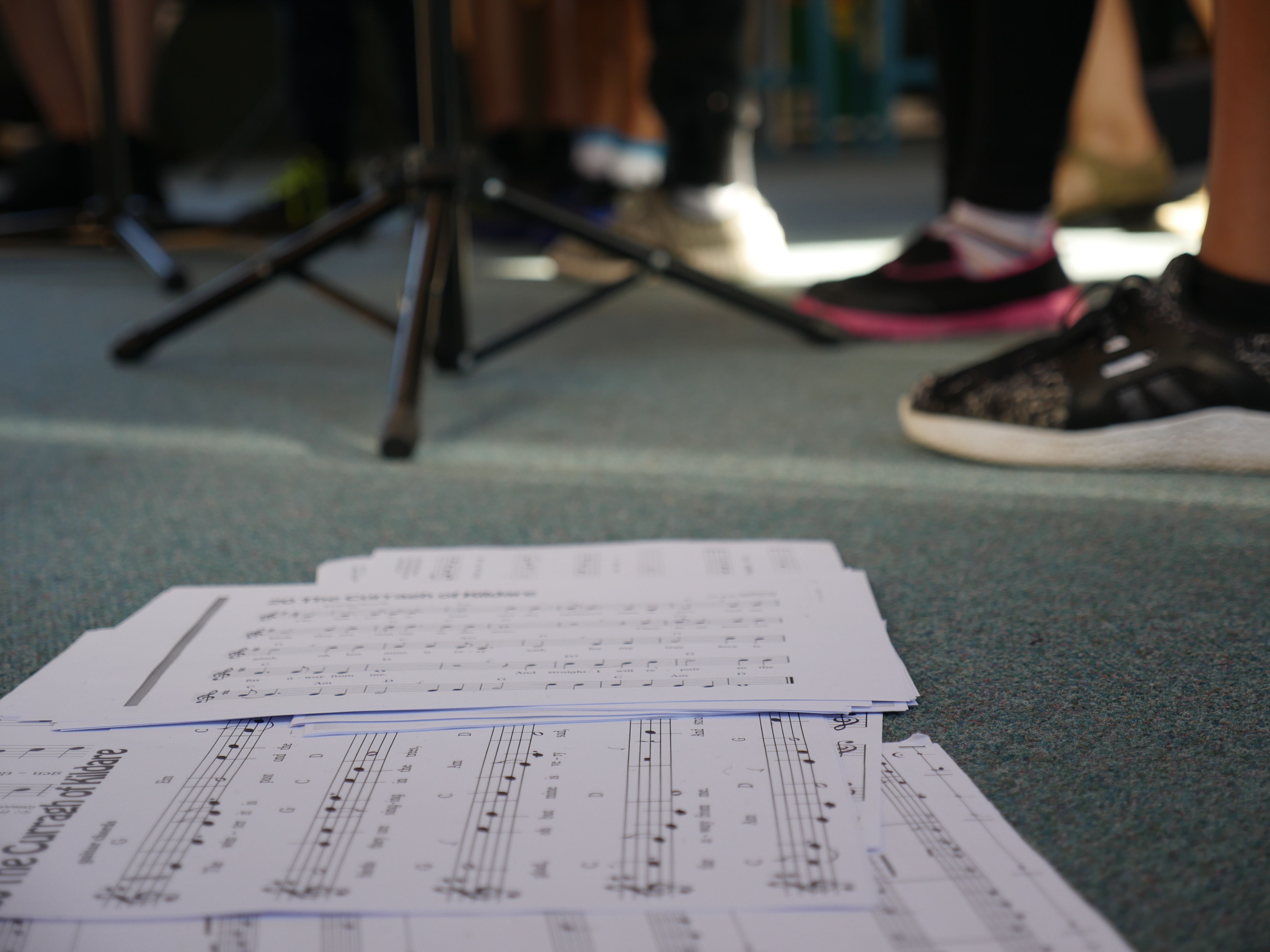
Photo: Lorena Gibson

El Sistema is a Venezuelan music and social development initiative that began in 1975 and is today one of the world’s largest and most famous orchestral music education programmes. Sistema-inspired programmes operate in over 60 countries worldwide, including Aotearoa New Zealand, providing musical and social opportunities to underprivileged children with the aim of transforming their lives, their families’ lives, and their wider communities (Booth & Turnstall 2014, 2016; Sistema Global: Friends of El Sistema Worldwide 2015).

In the last decade, scholars have paid increasing attention to how Sistema-inspired programmes operate in different cultural contexts, reporting positive outcomes in musical and educational attainment, development of children’s personal and social skills (including discipline, positive attitudes towards school, and raised aspirations) and family engagement (Creech et al 2016; Osborne et al 2015; Trinick & McNaughton 2013). Fewer studies have focused on the wider social development aims of Sistema-inspired programmes, however, such as community wellbeing and socioeconomic impacts (Allan 2010; Burns & Bewick 2015; Uy 2012), and a growing number of researchers are critiquing orchestral music education programmes for promoting middle-class Western ideologies and for unintentionally reproducing rather than challenging structural inequalities (e.g., Baker 2014; Bull 2016). This is where my project comes in. I want to look beyond educational achievement to learn more about the social effects that Arohanui Strings, Virtuoso Strings, and Porirua Soundscapes have on the young people who participate in music classes, as well as their families and their wider communities. My aim is to understand how these groups transform young people’s lives through music.

GuitarGoPro b&w
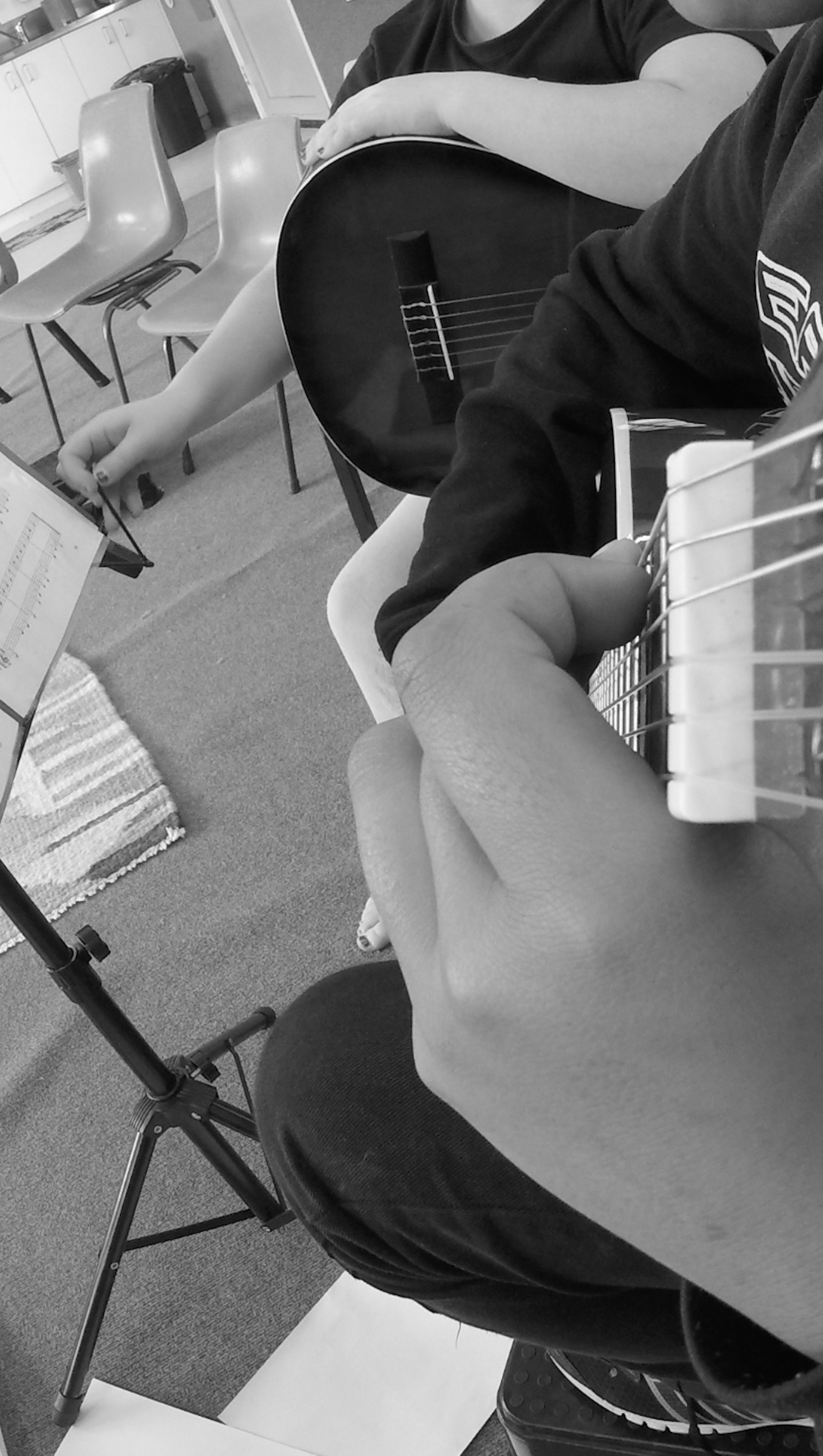
Photo: Lorena Gibson

I am using a range of ethnographic methods in this project, including interviews, participant-observation (attending rehearsals, concerts, holiday programmes, and other events), photography, and participatory video. This involves inviting some of the young people involved in these organisations to use video cameras to document their experiences, and collaborate with me on making a short ethnographic film – for example, by working with me to decide what should be in the film, shooting footage for it, and advising me during the editing process.

As well as making an ethnographic film showing how young people experience the relationship between music and social change, I will produce reports for Arohanui Strings, Virtuoso Strings, and Porirua Soundscapes. I will write academic journal articles and book chapters, and give a public talk at the end of the project (early 2020), and will upload published material here to this blog.

This research has been approved by the Victoria University of Wellington Human Ethics Committee, application reference 24293. If you have any questions about it, or are interested in becoming involved, please contact me.


References

Allan, J. 2010. Arts and the inclusive imagination: Socially engaged arts practices and Sistema Scotland. Journal of Social Inclusion, 1(2): 111-122.

Baker, G. 2014. El Sistema: Orchestrating Venezuela’s youth. New York: Oxford University Press.

Booth, E., & Tunstall, T. 2014. Five encounters with “El Sistema” International: A Venezuelan marvel becomes a global movement. Teaching Artist Journal, 12(2): 69-81.

Booth, E., & Tunstall, T. 2016. Playing for Their Lives: The Global El Sistema Movement for Social Change Through Music. New York: W. W. Norton & Company.

Bull, A. 2016. El Sistema as a bourgeois social project: Class, gender, and Victorian values. Action, Criticism, and Theory for Music Education, 15(1), 120-53.

Burns, S., & Bewick, P. 2015. In Harmony Liverpool Year 5 Evaluation: Health and Well- Being Report. https://issuu.com/liverpoolphilharmonic/docs/in_harmony_liverpool_year_5_evaluat

Creech, A., Gonzales-Moreno, P., Lorenzino, L., Waitman, G., Bates, L., Swan, A., de Jesus Carillo Mendez, R., Hernandes, D.N.C., & Gonzales, P. C. 2016. El Sistema and Sistema-inspired programmes: A literature review of research, evaluation, and critical debates (2nd ed.). San Diego, California: Sistema Global.

Osborne, M. S., McPherson, G. E., Faulkner, R., Davidson, J. W., & Barrett, M. S. 2015. Exploring the academic and psychosocial impact of El Sistema-inspired music programs within two low socio-economic schools. Music Education Research, 18(2), 156-175.

Trinick, Robyn and Stuart McNaughton. 2013. Independent evaluation of the music learning outcomes in the Sistema Aotearoa Programme. Report prepared for Auckland Philharmonia Orchestra. Faculty of Education, the University of Auckland.

Uy, M. S. 2012. Venezuela’s national music education program El Sistema: Its interactions with society and its participants’ engagement in praxis. Music and Arts in Action, 4(1): 5-2.


New Zealand-born and internationally raised

I am delighted to welcome writer Cileme Venkateswar to anthropod. This is the third post in my series on doing fieldwork with kids, and in it Cileme (who I introduced in Part II of this series) reflects on what it was like to be the kid of an anthropologist who travelled a lot to do fieldwork. 

You grow up differently as a kid of an academic, that’s just kind of a given. There’s a certain drive you have, a desire to know more about the world, a determination to succeed in the things you find joy in that I’ve only ever seen so fiercely in children whose parents have similar professions.

But being the kid of an anthropologist in particular? Now that’s a whole other ball game.

I can safely say that I wouldn’t be who I am now in any way whatsoever without my mother’s influence as an anthropologist. I’ve learned some of the most important life lessons I carry with me as a now almost 21 year old from the anthropological teachings I witnessed and the research I was privy to as a child. Growing up, it was just me and my mum and so when it came to her doing fieldwork, there weren’t a whole lot of options for what I would do. It was simple. I’d just go with her.

Cileme
Cileme, age 8, in Singapore

Travelling from a young age is its own lesson. Before the age of 15, I had been to New Zealand (obviously), Australia, India, Thailand, Singapore, Malaysia, the UK, the USA, Nepal, Portugal, Germany, France and quite possibly more that I don’t even remember. It ingrained in me from a very young age the vastness of the world and how much more there was out there. I was surrounded by so many different languages and cultures, heritage and traditions that even if I didn’t understand them, I was immediately curious about how their lives differed from my own and how much diversity existed around the globe.

Kids aren’t inherently patient, not in the slightest, but annual 12 hour plane rides, long taxi commutes to various places in numerous cities, waiting in long queues, having to amuse myself for several hours during book launches, research interviews etc., certainly helped improve what little patience I had as a child! It also produced a remarkably active imagination. I learned to sit in my own corner and make up stories in my head. I carted my imaginary friends around the world with me, having my own adventures in each new location we visited. I began a growing collection of books picked up cheaply in roadside book stalls and airport shops that helped foster a love for storytelling, complex characters and literature, a love that remains today as I study English and Creative Writing at university.

But one of the things I’ve only recently started to appreciate having learned solely from the situation of my mother’s work in academia, is my ability to converse with anyone, especially adults. Adults speak to kids a very particular way, stick to a select few conversational topics and often use that annoying, high pitched, slightly condescending tone of voice, laughing at the interesting and often naive answers they receive to their questions. Children rarely notice, but as a child of an academic, you’re constantly surrounded by adults in scenarios of meetings, pot luck dinners, fieldwork, or random encounters during a normal day. The asking about school, the ‘what do you want to be when you grow up’ and the interest in what books you’re reading grows old pretty quick when you have several pot lucks a semester and you’re encountering the same adults each time. For a while, it’s easy to be amused by the luxury of getting to watch Nickelodeon and Cartoon Network on Sky TV, or running around playing tag outside with the other kids. But eventually, it reaches around 10 o’clock in the evening and the only shows on the television are reruns of episodes you’ve already seen, half the other kids are either asleep or have gone home, the high schoolers are bored of babysitting you and have taken to answering questions about their own subjects and university applications, and you meanwhile want another slice of the pavlova on the dessert table but unfortunately, there’s a group of lecturers from a department you’ve never heard of standing there and you have no segue into asking them to help you reach the cake tin. It’s around that point that you realise you’ve got to bridge the gap between child and adult and just find a way to talk to them without them looking down at you like a silly little kid.

Somewhere between the ages of 8 and 11, I suddenly gained the ability to proficiently and fluently interact with adults outside of the regular ‘child questions’, whether I knew them or not and whether we had common ground or not. I talked about travel, about what they might be researching and what my mum was researching, about where in the world they’d been and where in the world I’d been, about the things I didn’t understand in the books I read, about the stories I was writing, about whether I wanted to be a journalist or a novelist — anything and everything I could hold an almost adult conversation about. It never occurred to me that this was a ‘skill’ of any sort until I was much older. Only in the last few years of my life have I realised that people my age don’t just hold conversation with adults much older than them (even now with so much more to talk about), that it isn’t normal to be able to go up to a perfect stranger and find common ground, sparking a friendship. I’ve had so many friends pull me aside after a seamless conversation with a tutor or a lecturer and whisper ‘How did you do that? How did you know what to say?’ It’s so much easier now, as I can converse about politics, history, literature, climate change, generational differences, activism … but it all stemmed from the ability I decided to cultivate as a child.

Some of the things that have shaped me the most profoundly are the experiences I’ve had because I accompanied my mother in so many aspects of her job. I’ve played soccer with boys living in slums in India even though they didn’t speak a word of English nor I a word of Bengali. I’ve spent half my childhood wandering around university campuses playing make believe and dragging those same invisible friends to every country I had the privilege of visiting. I’ve been changed and impacted by each and every culture and experience I was enveloped in and would be so much lesser of a person without it all. This was all a part of my life out of necessity — me going with my mother was the only option either of us had for when she had to travel or go to research. But to any and all academics out there with kids: honestly. Even if you have other arrangements you could make, don’t rule out taking your kids with you, especially before they reach high school. Getting to see the world as a kid is unlike anything else, and they learn lessons that are invaluable and unteachable in any other circumstance. Believe me. We become better people for it.

Doing fieldwork with kids: Part II

Thanks to some amazing role models in the School of People, Environment and Planning at Massey University, where I studied, I have always known that it is possible (although not easy) to be a parent/grandparent and an academic. What I wasn’t quite so sure about was how, exactly, you went about doing ethnographic fieldwork with kids in tow. As an undergraduate student I read ethnographies written by anthropologists who had their families with them while conducting fieldwork – including Philippe Bourgois’ In Search of Respect: Selling Crack in El Barrio, Nancy Scheper-Hughes’ Death Without Weeping: The Violence of Everyday Life in Brazil, Annette Weiner’s The Trobrianders of Papua New Guinea, and Margaret Trawick’s Notes on Love in a Tamil Family – but I don’t recall many classroom discussions about the relationship between carework and fieldwork. This changed once I started my PhD. A number of my fellow PhD researchers juggled mothering and grandparenting with fieldwork, and have since written about how their experiences influenced their research (e.g., Lesley Reed’s thesis ‘What is this thing called Grandparenting? The social, economic and political influences on the role in New Zealand‘, or see the list Kelly Dombroski has here on her blog). My first glimpse into what it was like to actually do fieldwork with your child present was during a research trip to Kolkata, India, in late 2005.

Continue reading “Doing fieldwork with kids: Part II”

Doing fieldwork with kids: Part I

Recently I started a new research project looking at the social impacts of three Sistema-inspired orchestral music education programmes operating in low decile schools in the Wellington region, where I live. El Sistema is a Venezuelan music and social development initiative that began in 1975 and is today one of the world’s largest and most famous orchestral music education programmes. Sistema-inspired programmes operate in over 60 countries and there are at least six here in New Zealand, including Auckland-based Sistema Aotearoa. My new project involves working with kids: those involved in the orchestral programmes, and my own. In this post I reflect on what it’s like to do fieldwork with my kids in tow, and in the next I’ll discuss how I plan to work with the children in these programmes.

It took me a good couple of years after finishing my PhD to start a new major research project. There were a few reasons for this. Two weeks after submitting my PhD I started working as a lecturer on a series of short-term contracts which meant constantly developing and teaching new courses. I needed to publish from my dissertation so I could secure a permanent academic position – something that is extraordinarily difficult as an adjunct, as many blogs, news articles and #quitlit posts on social media have pointed out. I had my daughter in 2012. And I needed some space to think about what I wanted to work on for the foreseeable future. In 2013 I was employed on a 3-year, part-time contract, meaning I could access university research funding not available to those on short-term contracts. This, combined with the fact that you need to be research-active with a track record of obtaining funding in order to compete for academic jobs, meant it was a good time to develop a new research project.

When I started my PhD I had not yet met my husband and children were not on my horizon, so everything and anything seemed possible. Now I had two other people to think about in deciding where, how, and what I wanted to research – in that order. I wanted to do ethnographic fieldwork in Wellington and continue my interest in development and social justice. Basing my new project in Wellington was also a practical decision: I could take my daughter with me, I wouldn’t need to be away from home for extended periods of time, and I could get started without the security of funding or a permanent job. Coming up with a feasible project was more difficult, but a serendipitous sequence of events led me to Sistema Aotearoa and eventually the charitable organisations that run Sistema-inspired orchestral music programmes in Hutt Valley and Porirua.

I was pregnant with my second child by the time I established relationships with the organisations, developed a research proposal and obtained funding, and received ethics approval to begin the research. Ethnographic fieldwork was relatively straightforward to begin with as I could take my music-loving daughter and composer/conductor/musician husband along to interviews and performances. Things became a bit tricker after our son was born last year.

2015-09-26 08.45.32
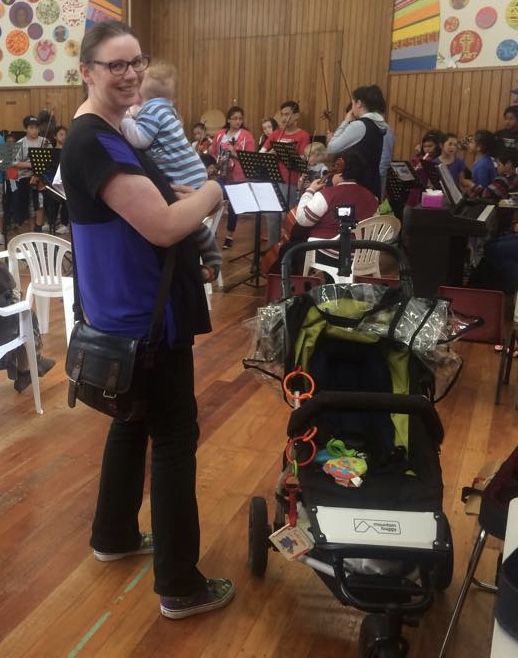
Part of my field-and-carework kit

For a start, my fieldwork kit expanded significantly from a pen, notebook, iPad and camera to include nappy bag, frontpack, and buggy as well as preschooler snacks and activities. I didn’t always have my daughter with me but my son was now a permanent attachment, meaning I relied heavily on family and research assistants for help. He still breastfeeds frequently at night and at the moment my fieldwork doesn’t extend to evening rehearsals as it is just too difficult to get away after the dinner-bath-bed routine. I do go to some evening and weekend performances, usually with one or both kids in tow, and my husband or mother-in-law (also a musician).

Combining fieldwork with carework is not easy. I no longer write notes in the field while my kids are with me, instead relying on my memory, what Simon Ottenberg terms ‘headnotes’ (in the 1990 book Fieldnotes: The Makings of Anthropology edited by Roger Sanjek), and my GoPro camera. I miss things when I’m breastfeeding or changing nappies or leaving the room with a screaming baby or taking a preschooler who’s had enough somewhere else to play. (I have a keen recollection of my then 3-year-old daughter standing up during the middle of a concert and loudly announcing, “That’s enough, everyone wants to go home now.”) My kids miss me when I pay attention to the person I’m interviewing or spend an afternoon at music lessons without them. I often don’t get time to write up my fieldnotes in Evernote at the end of the day, and I definitely don’t have the same amount of time or headspace available to just think.

Despite the difficulties, there are a lot of things I enjoy about combining fieldwork with carework. I like my children being able to see and participate in what I do and love watching their interest in music grow. I get a different perspective when sitting on the floor with my son. My daughter often makes interesting observations about things that I hadn’t noticed, and I value being able to discuss the musical aspects of performances with my husband and mother-in-law. I also appreciate the connections I can make with the children I’m working with, who invariably ask “whose mother are you?” upon meeting me, and also with their parents.

Doing fieldwork with children in tow is not new; a number of anthropologists and geographers have offered useful insights into how one’s children can shape the research process. Kelly Dombroski’s excellent blog post on carework in fieldwork discusses some recent publications on this topic (including her own). However I have not yet come across much work that reflects on fieldwork at home with children. Even this “Family in the Field” survey of anthropologists undertaking fieldwork with their children assumes that ‘the field’ is somewhere away from home.

Do you do ethnographic fieldwork with your kids at locations close to your home? Do you know of people who have written about this? I would love to hear of your experiences!

Version 3
At a concert with my 5 month old (note the buggy doubling as a tripod)


Negotiating comparison in ethnographic fieldwork

Anthropology, a discipline dedicated to understanding the full range of human experience from as many perspectives as possible, has always been comparative. This comparative aspect was one of the things that initially captured my imagination as a student. I became interested in understanding how issues that affect humans everywhere – such as poverty, inequality and development – appear in different contexts. I believe that to better debate such issues, we need to understand people’s practices as well as context-specific structures of history, environment, society, and culture. Careful comparative analysis can add to knowledge about development and social change by informing debates and contributing to more effective policies and strategies.

Continue reading

Using Evernote for ethnographic fieldnotes

A while ago I wrote about the fieldnote template I used in MS Word for my PhD research. Now that I’m starting some new projects it’s the perfect time to try Evernote for ethnographic fieldnotes.

I have used Evernote for a while (mainly for storing annotations and web clippings) but I have to admit it wasn’t the first thing that sprang to my mind when I thought of switching away from MS Word for fieldnotes. I asked ethnographic researchers on Twitter to share what they used to take electronic fieldnotes, and Kelly Dombroski was the first to suggest I take a look at the possibilities Evernote provides for writing and organising fieldnotes. A quick Google search led me to a couple of useful blog posts by reseachers who use Evernote this way, including one by David Keyes on Evernote as Field Notebook where he talks about how he came to use Evernote for fieldwork and data analysis. Over on the Wenner-Gren Blog, Danielle Carr discusses how she became a “reluctant convert” to Evernote and outlines some advantages and disadvantages of using it. Taking a slightly different approach, Tim Sensing uses Evernote for a student ethnography assignment, something also suggested on a web page I found for the course Web 2.0 Foundations: A Networked Research Course describing how to take fieldnotes and write them up in Evernote.

Continue reading

Doing anthropological fieldwork ‘at home’

A month or so ago I posted some thoughts about what it’s really like to be an anthropologist. Not long after that I was asked to talk to a group of Y12 students (high school students in their penultimate year who had come to Victoria University to learn about future study options) about doing anthropological fieldwork. That talk did a much better job of capturing what for me is one of the most rewarding (and challenging) parts of being an anthropologist: doing fieldwork.

I studied Hip-Hop Culture in Aotearoa for my Masters degree in social anthropology, which involved doing fieldwork ‘at home.’ I had long been a fan of Aotearoa Hip-Hop (I used to co-host the Hip-Hop show on Massey University’s student radio station Radio Control) and became interested in understanding how and why Hip-Hop in New Zealand was different to Hip-Hop overseas, particularly the United States. My thesis was based on three years of ethnographic fieldwork (2000-2002) where I explored what Hip-Hop meant to those actively involved in producing and performing Hip-Hop in Aotearoa.

My fieldwork involved a lot of listening and observation. I went to events (b-boy and MC battles, graffiti showcases, gigs, Aotearoa Hip-Hop Summits), used a technique called participant-observation (sometimes known as ‘deep hanging out’ with a purpose) where I would participate in as well as observe what was going on, took fieldnotes and photos, interviewed members of the Hip-Hop community, and tried to immerse myself in all things Hip-Hop.

Lorena doing fieldwork at the 2001 Aotearoa Hip-Hop Summit
Lorena doing fieldwork at the 2001 Aotearoa Hip-Hop Summit in Auckland

People often smile when I tell them my fieldwork involved going to gigs or watching spraycans while people created graffiti art (making jokes like “I bet that was hard work”). However, this kind of fieldwork is not as easy as it sounds. Daniel Simons’ video The Monkey Business Illusion is a great example of how we often miss a lot of what happens around us:
Continue reading

Suddenly non-vegetarian: Dilemmas in anthropological fieldwork

I thought I had prepared for my PhD fieldwork in India and Papua New Guinea. I’d taken language lessons, made initial contacts, researched cultural traditions, read the Lonely Planet guides to each place, tried to anticipate what culture shock might be like, and decided to ‘expect the unexpected’. What I hadn’t fully considered, however, was what I would eat in the field.

Being vegetarian was no problem on my trips to Kolkata (India) where vegetarianism is normal for many. It was easy to find suitable street food and restaurants when I was out and my (Muslim) research participants usually included a vegetarian dish in their meals. I even found vegetarian options at weddings I attended (which was a relief, as it is considered rude not to eat at a wedding and I wanted to be a good guest).

On my first trip to Lae (Papua New Guinea) however, I suddenly became non-vegetarian. I’d met with a village women’s literacy group and, after touring their facilities and meeting the women involved, we shared a meal. Pride of place at the meal was a pig the women had slaughtered and cooked. As a guest, I was offered my plate of food first. All eyes were on me as I accepted it and sat down to eat. I had seconds to decide whether to decline the pork and risk offending my hosts, or whether to eat what was on the plate in front of me. I ate it. I was quite unwell afterwards (not having eaten meat in some years) but preferred this to the discomfort I thought I would have caused by refusing the meal cooked for me.

Everyone has different reasons for becoming vegetarian. Mine involved the treatment of animals in the commercial meat industry in New Zealand, and the fact that I don’t like the taste of red meat. I remember quickly thinking ‘it’s okay, they’ve raised and killed this pig themselves’ and ‘this doesn’t look too bad’ before I ate it. For the rest of my fieldwork in PNG I ate meat when it was offered to me and, over time, became non-vegetarian at home as well (for a whole host of different reasons, and I still dislike red meat).

Recently, conversations I’ve had with colleagues suggest that suddenly becoming non-vegetarian is actually quite common. David Sutton (1997) has written about being a vegetarian anthropologist but I haven’t found much written by anthropologists who faced food-related dilemmas during fieldwork and changed their dietary practices (by either becoming non-vegetarian or vegetarian), temporarily or permanently. Is this because it is considered ‘normal’ or expected for anthropologists to follow the cultural practices of those we work with?

I am curious to find out whether others have crossed the vegetarian/non-vegetarian divide while doing fieldwork. Did you become non-vegetarian, vegetarian, vegan? Why? Have you maintained it? I would love to hear about your experiences!