This year I taught my undergraduate course Anthropology for Liberation at Te Herenga Waka—Victoria University of Wellington after a two year break. As readers of this blog will know, I regularly post about the readings I assign and the assessments I design for this course. Like previous iterations, this year I modified the course in response to the current academic and political climate, student feedback, and ongoing scholarly conversations about what it means to practice an anthropology “designed to promote equality- and justice-inducing social transformation,” as Professor Faye V Harrison (1991, 2) – whose edited book this course is named after – describes it.
This is the first in a three-part series reflecting on changes I made in 2025. This post discusses what happened when I dropped a book from the reading list. Future posts will explore how I redesigned assessments (including AI reflections and game design options) and what I learned from introducing role-playing games in class. Some of these changes worked well, while others taught me an important lesson about the gap between pedagogical intentions and outcomes.
Changing the course readings
What does it mean to teach a course titled “Anthropology for Liberation” while watching genocide unfold in real time on our phones, navigating AI-generated misinformation, and grappling with what feels like an accelerating unraveling of democratic norms? This question troubled me as I prepared the course. I decided to address it at the outset by adding new readings to Week 1. However, this created a practical problem: I had developed the course to use a close reading approach I outlined in a previous blog post, which involved assigning four books to read throughout the trimester and working through them in class. Adding new readings at the start would push the books back in the schedule, and previous feedback from students indicated that working through a book in the final weeks of the trimester was unsatisfying because they were so focused on assignments that they weren’t able to meaningfully engage with it. So, I decided to drop one of the books from this year’s reading list.
Harrison, Faye V. 2025. “Afterword: Toward an Anthropology of Liberation.” In The Anthropology of White Supremacy, edited by Aisha M Beliso-De Jesús, Jemina Pierre, and Junaid Rana, 361–72. Princeton, New Jersey: Princeton University Press.
In our first seminar, I addressed the challenges of teaching a course like this in the current moment by doing a close reading of these new readings. I selected a series of quotes from each piece and read them aloud in class, pausing to discuss the work that a particular word or sentence was doing and to connect it to our course. I started with Jia Tolentino’s comments about phones as “time-eaters”:
The phone eats time; it makes us live the way people do inside a casino, dropping a blackout curtain over the windows to block out the world, except the blackout curtain is a screen, showing too much of the world, too quickly. As Richard Seymour writes in the book “The Twittering Machine,” this avoidance of time’s actual flow, this compulsion toward the chronophage, the time-eater, is a horror story that is likely to happen only “in a society that is busily producing horrors.” (Tolentino 2025)
This prompted students to discuss how they use their phones and the disorienting experience of scrolling through images of hospitals being bombed and screaming children in Gaza alongside influencer content. Several students spoke about the desensitisation to suffering that can occur when such images go viral, while also acknowledging the privilege of being able to scroll past at all. They also made connections with Palestinian solidarity events here in Aotearoa and the November 2024 Hīkoi mō te Tiriti.
The discussion we had led nicely into the quotes I selected from Faye Harrison’s chapter, including her observation that “White supremacy, accumulation by dispossession and expropriation, and the ecological crises of environmental injustice and climate change are global problems that cannot be dealt with simply within nation-states. We have to build multilevel and multilateral bridges that will permit activists to combine forces in greater measures of unity despite the differences and distances between us” (2025, 369). Harrison also argues that “As individual scholar-activists but especially as participants in wider collectivities and coordinated webs of connection, anthropologists have the capacities to align themselves with, become accomplices with, and advocate on behalf of sociopolitical processes aiming to effect meaningful, substantive change” (2025, 370). Working through these quotes helped set up the guiding framework for the trimester.
What I removed from the reading list (and how it affected the course):
The book I chose not to read this year was Ashanté Reese’s 2019 Black Food Geographies: Race,Self-Reliance, and Food Access in Washington, D.C. In previous years, this book worked well alongside the collaboratively authored Imagining Decolonisation (which provides an excellent introduction to ideas of decolonisation as they play out in Aotearoa); Ranginui Walker’s Ka Whawhai Tonu Matou: Struggle Without End (often described as one of the best histories of Aotearoa and which I think makes a key intervention in how we think about history, oppression, power, resistance, and sovereignty in Aotearoa); and Camellia Webb-Gannon’s Morning Star Rising: The Politics of Decolonization in West Papua (about West Papuan struggles for independence). These four books illustrated how decolonisation and liberation movements take different forms in different contexts, moving from Aotearoa to West Papua and the United States and encompassing Indigenous sovereignty movements, ongoing struggles against settler-colonialism, and Black liberation and food justice.
I didn’t realise the consequences of this decision until a student pointed it out to me. We were meeting to discuss potential research project topics and he noted that all three books centered Indigenous sovereignty and liberation movements. He wanted to focus on queer liberation and asked whether I might recommend some books to read about that. His question stopped me short, and I suddenly understood what dropping Black Food Geographies had done for the course. I was teaching as if I still had that book on the reading list and hadn’t adjusted my lectures, which meant that I was introducing students to key course concepts almost exclusively through the lens of Indigenous sovereignty and liberation movements. The decolonial anthropological framework I had developed for the course (Figure 1 below) was designed to apply across diverse liberation struggles (environmental justice, labour movements, abolitionist work, queer liberation, disability justice) but the reading list only included Indigenous case studies.
I shared his observation with the class during our next lecture, explaining what I had done and the unintended outcome. I also said that I had designed this framework to be applied in a variety of contexts and wanted to show how it travelled, and asked the class if they would be interested in spending the last couple of weeks focusing on disability justice. They were, so I assigned the documentary Crip Camp: A Disability Revolutionas our reading and wrote a lecture to illustrate how the same analytical questions that helped us understand patterns in Māori sovereignty and West Papuan liberation movements can also reveal patterns in disability justice movements.
I also asked the class for their thoughts about the close reading approach I had been using. Students appreciated the depth of engagement with each book and valued working through them together in class, but many said they were overwhelmed with the amount of reading required and struggled to keep up. They suggested that journal articles, book chapters, or podcasts would be more manageable as they could engage with shorter pieces without the pressure of feeling like they were “failing” if they didn’t finish an entire book. This year’s experience has convinced me to completely redesign the course reading list the next time I teach it.
This experience taught me an important lesson about curriculum design: reading lists make their own arguments about what counts as knowledge, independent of what instructors say in lectures. If you have had a similar experience of course readings communicating something other than what you intended, I would be keen to hear how you navigated this challenge. I’d also love to hear from you if you have taught – or been a student in – a class that experimented with different approaches to course readings.
In 2019, my friend and colleague Grant Otsuki started experimenting with Generative AI (GenAI) – GPT-2 by OpenAI – to see how well it did at writing an essay for a first year Cultural Anthropology class he taught. As he wrote in a 2020 article for The Conversation, he trained GPT-2 on actual essays his students had written in response to the essay prompt, then worked with it to generate its own essay. I remember reading the work generated by GPT-2 and thinking that although I wouldn’t have awarded it a passing grade (for reasons Grant writes about in his 2020 article), it had potential and that a student could have turned it into a C-grade essay in less than 10 minutes. I also remember thinking that if Grant hadn’t told me it was generated by GPT-2, I probably wouldn’t have been able to tell that it hadn’t been written by a student.
It is no exaggeration to say that GenAI technology and use has exploded since Grant wrote his article, where he argued that we should be teaching students how to work with GenAI tools rather than ignore or try to ban them. Te Herenga Waka-Victoria University of Wellington, where I work, recently developed a policy on Student use of artificial intelligence tools to help write assignments that directs students to check in with their instructors about whether they can use GenAI:
Take time to understand expectations around the use of AI
Expectations may vary from course to course or even from assignment to assignment. This may include rules around how you can or can’t use AI, and what kinds of AI it is acceptable to use. For example, it might be ok to use translation software, but not generative AI like Chat GPT. Your course coordinators should make it clear when you can and cannot use AI and if there are any limitations on how you use it. If you’re not sure, just ask. (https://www.wgtn.ac.nz/students/study/exams/academic-integrity/student-use-of-artificial-intelligence, accessed 24 November 2024)
Class activity: Grade a mini-essay generated by ChatGPT
Earlier this year, I decided to adapt Grant’s activity for my undergraduate course Anthropology, Education, and Social Change. The first assignment for that course asked students to write two mini-essays of 500-600 words about different concepts and/or theories that were discussed in lectures and assigned reading material. I asked ChatGPT (version 2, by OpenAI) to generate a 500-word mini-essay on the topic of “grades” for a course on anthropology of education, that drew on and cited Susan Blum’s book “I Love Learning; I hate School” An Anthropology of College, which we read and discussed in class. I also asked ChatGPT to adhere to the assignment instructions (below) and spent a bit of time editing the mini-essay it generated.
In Week 4 of our course, I brought printed copies of the mini-essay that ChatGPT generated to class and asked students to read it and assign it a grade using the marking guide for this assignment. I had two goals in mind with this activity: 1) to encourage students to think critically about GenAI use in the classroom; and 2) to encourage students to engage with the marking criteria that I was going to use to assess their work.
We began the activity by discussing the following:
how they can use GenAI in my class (e.g. to refine their ideas or fix errors with spelling, grammar, and referencing)
some of the ethical, environmental, and privacy considerations involved in working with GenAI
how to acknowledge their use of GenAI by including an Acknowledgement Statement at the start of their work (our Library provides information about how to cite AI use)
After that, I handed out Chat-GPT’s essay (below) and asked students to give it marks and written feedback. They had the option of doing this individually or in pairs/small groups, and I invited them to share their marks and feedback to our class Miro board.
After about half an hour to mark the mini-essay, we shared our marks and comments with one another. The students – who, for the most part, failed the mini-essay with very critical feedback – were surprised to learn that I had given it a C- grade, which prompted a constructive conversation about the kinds of grading-related issues that Blum writes about in her book and that we had discussed in earlier lectures. It also provided a good entry point for me to discuss why and how I had designed their second assignment using task-based grading (the term I now use to describe my version of labour-based grading). Finally, several students said that they appreciated the opportunity to grade an assignment like this because it helped them better understand the marking criteria.
This activity achieved my goals and I was pleased to see students acknowledging and citing their use of GenAI in later assignments. I also noticed a slightly higher grade distribution for Assignment 1 compared with the previous year. While this approached worked well in my classroom, I know there are many other innovative and meaningful ways to integrate GenAI tools into teaching and assessment practices. If you are working in this space, I am keen to hear about your experiences!
As I wrote in a previous blog post, in this class I guide students through the process of crafting their own independent ethnographic research projects. Along the way, we discuss how to generate, analyse, and present our ethnographic findings in a variety of creative methods and genres, and Week 9 is about graphic ethnography. In that week’s class I adapted some of the exercises from Barry’s book and invited the class to bring some pens, pencils, and paper to class so we could draw together to think about their data and their final research projects. I am not someone who draws (although I will happily join my kids to do some colouring with them) and was apprehensive about how it would go. To my delight, students embraced the activity and many commented on how useful it was in their weekly reflective research journals, prompting me to share the activity here.
“When it comes to drawing as a serious activity – as an ethnographic method, for instance – many feel they lack the expertise to perform such a task. In classroom settings, the announcement of a drawing exercise typically provokes a reaction ranging from the defensive “But I can’t draw!” to the confessional “I don’t know how to draw!” Beginning from this place of not knowing, unskilled and uncertain, says less about our innate abilities than it does about the pervasive undervaluing of drawing in our educational systems. But we should not be deterred; as Betty Edwards famously proclaimed, “I have discovered that any person of sound mind can learn to draw; the probability is the same as for learning to read” (2012, 43). While drawing is a favourite pastime for young children, who exhibit a “beguiling freedom and charm” in their depictions, around the age of ten “children confront an artistic crisis” as they become obsessed with producing realistic drawing (Edwards 2012, 66, 64). Without training to cultivate these skills, they become discouraged and possibly ashamed.”
– Westmoreland 2021, 61
After discussing Westmoreland’s article for a short time, I introduced Lynda Barry’s work and we began the activity I adapted from her book (pages 76-81 and 124).
Step 1. Draw a spiral
You will need: something to draw on, and something to draw with.
Barry, Linda. 2014. Syllabus: Notes from an Accidental Professor. Canada: Drawn & Quarterly. Page 76.
Make a two-page spread (e.g. fold an A4 piece of paper together, or find two clean pages in a drawing book)
Write today’s date at the top of the left page
Number the right side from one to ten
Begin on the left page and make a dot in the middle
Spiral a line around the dot
Keep going, making your spiral bigger and trying to keep the lines as close together as possible without letting them touch
As you make your spiral, think about a memorable moment you had doing fieldwork for your research project (5 mins)
Step 2. Make a list
Turn to the numbered list you made on the right page
Write down 10 of the memories that come to mind when you think about your memorable fieldwork moment (2 mins)
Read over your list and choose a memory that stands out to you
Circle that memory
Turn to a clean page and write the memory you circled at the top, as if it were the title of a story
Draw a big ‘X’ across the page
Step 3. ‘X’ page
Start by picturing yourself in the memory
Pretend we’re on the phone. You can see the image but I can’t. I’m going to ask you some questions that will help me ‘see’ it too
Write or draw your answers anywhere on the ‘X’ page
You will have 20 seconds to write or draw your answer before I ask the next question
No detail is too small or unimportant
Barry, Linda. 2014. Syllabus: Notes from an Accidental Professor. Canada: Drawn & Quarterly. Page 79.
The questions:
Where are you?
What time is it?
How did you get there?
What’s the temperature like?
What can you smell?
What can you see?
What can you hear?
What are you doing?
Is anyone with you?
Why are you there?
How do you feel?
What happened at the start?
Who did you interact with?
How did you leave?
Step 4. Craft an ethnographic story
Turn to a clean page to write this up into a story
Write a sentence about each question you responded to
Draw on all of your senses and use vivid details
Freewrite without stopping for 5 minutes
Use first person (e.g. “I”)
Use present tense (e.g. “I can hear …”)
Step 5. Make a 4-panel comic
Take a clean piece of paper and fold it into four quarters
Draw a border around each panel
In one of the panels, draw an image related to the story you just crafted
In the three other panels, draw that image three other times, making any kind of action you like
Barry, Linda. 2014. Syllabus: Notes from an Accidental Professor. Canada: Drawn & Quarterly. Page 124.
This activity took us an hour. Barry’s book is full of creative prompts so if you haven’t read it, I highly recommend checking it out!
Last week Jogai Bhatt from RNZ approached me to do an interview about Generation X for a mini-series they are airing in the lead up to Generation X: 50 Artworks from the Chartwell Collection, a City Gallery Wellington exhibition shown at Te Papa from 27 July-24 October 2024. I’m not a Generation X researcher, but as a Gen Xer I felt qualified to answer a few questions and as an anthropologist I know how to get up to speed on a topic in a short space of time. I was also preparing a lecture for the Creative Ethnographic Practices class I teach at Te Herenga Waka-Victoria University of Wellington and decided to use the intensive research sprint I did in preparation for the interview as the basis for a session on how to develop a research topic.
When RNZ contacted me I was planning the second lecture for our class, which would include a discussion of the goal of ethnographic research as well as how anthropologists construct “the field,” research ethics (this is something we discuss in every class; I have approval from my university’s Human Ethics Committee for students to undertake independent research projects within specific parameters), and advice for students about how to think about their own potential fieldsites and research topics. I knew some students would appreciate some help in choosing a research topic and I thought “generations” would be a good prompt for them to think with. (Plus I’d done a whole lot of cramming about Generation X and was looking for opportunities to infodump.) So, I recreated my research steps for the lecture and talked the students through how they could develop an anthropological research question about Generation X.
Brainstorming Gen X
The first thing I did was crowdsource ideas from my Cultural Anthropology and Sociology colleagues at Te Herenga Waka. I work with Baby Boomers, Gen Xers, and Geriatric Millennials (although I’m told they prefer the term “Elder Millennial”, which comedian Iliza Shlesinger used as the title for her 2018 Netflix comedy special), and we often talk about generational differences in our lunchtime conversations. For example, some of us are parents to Gen Z and Gen Alpha kids, and we have been discussing how slang and memes (think “Skibidi Toilet”) travel and gain popularity. I began a targeted conversation with them about Generation X and the RNZ interview on Wednesday last week. We are still (irreverently) debating its boundaries and characteristics, which suggests that it is compelling and multifaceted area of inquiry.
Next, I asked Jogai to send me the list of interview questions so I could decide how much time I would dedicate to the interview, which was to take place the next day. Seeing the interview questions helped me narrow the scope of my research, select key terms to use in my search of our library’s catalogue, GoogleScholar, and anthropology databases, and allocate a set number of hours to searching, reading/watching/listening to what I found, synthesising information, and preparing responses to the questions. Knowing that this interview would be recorded for a radio station, I also considered how I could communicate my responses in sound bite form.
In my lecture I explained how students could follow a similar process and emphasised how time should be one of the primary resources they take into account when planning their own projects. In this 12-week course they need to develop a proposal, collect data using selected ethnographic methods, analyse that data, connect their findings to scholarly literature, and communicate their research in a final project. I also suggested that they think about what kind of final project they would like to craft, as this would inform the methods they chose. A series of informative Instagram posts or a ‘zine might call for different methods to a podcast, for example. After this I asked them to do the following activity:
Asking an anthropological research question
Students have to submit a research proposal for me to approve before they begin their research, where they are asked to state the anthropological research question they will explore. In the lecture I discussed what makes a question anthropological and shared the following tips:
Do a GoogleScholar search on the topic you are interested in, using “anthropology” and “ethnography” as part of your search terms. What do other anthropologists ask about your topic? What do their questions look like? What methods do they use to answer them?
Read a few anthropological publications on your topic (e.g. things written or made by anthropologists and published in anthropological journals or on anthropology websites) and make a list of key words that frequently appear, or draw a concept map. See if you can develop questions by using those key words.
Using those same anthropological publications, do some bibliographic mining to see what resources the authors cite and who some influential scholars might be. Bibliographies are often a great place to find further resources on a topic (thanks Eli for the reminder!), and you can also do a forward citation search to see what other publications have cited the one you are looking at. George Mason University’s Library has a good resource on citation mining: https://library.gmu.edu/tutorials/citationmining
Start with “how” questions and keep them open-ended.
I shared RNZ’s list of questions and talked about how I turned them into anthropological questions as I read work on generational studies, aging and life course studies, and technology by anthropologists, sociologists, and other social scientists. That looked like this:
RNZ interview questions
Who fits into Generation X?
What are the other Generations?
Where did these labels come from? Who invented these cohorts?
What are the tropes attached to Gen X?
Do these cohorts exist outside Western culture?
What are the key events that have shaped Gen X?
What do Gen Xs get nostalgic about?
Anthropological questions I developed
How do we talk about social change and cultural differences?
What do generational labels do? How do we use them?
What are the limits to generational labels?
How do generational labels help people make sense of the world?
After that we talked about what kind of methods we might use to explore Gen X as an ethnographic research topic, and I gave a short infodump about Gen X based on what was essentially a preliminary literature review. We were particularly interested in discussing Jogai’s excellent question of whether these cohorts exist outside of Western culture, and how generational labels help people make sense of the world. Hopefully some of the class will take up the idea of “generations” in their research projects.
I have taught our large introductory cultural anthropology course (ANTH 101) on and off since 2014, and every couple of years I redesign it based on conversations with colleagues, research into learning and teaching strategies, and student feedback. In this post I describe a major change made in 2022: incorporating sessions on ‘how to university’ alongside ‘how to anthropology’.
In 2022 I decided to add an extra weekly lecture to ANTH 101 (moving from two 1-hour lectures per week to three) in order to introduce an academic skills component to the course. This change was inspired by:
the different knowledge and experiences that incoming first years bring to the classroom – as students who had completed their secondary schooling during a global pandemic – gauged by the kinds of questions students asked and how they wrote their assignments;
the labour-based grading practices that my colleague Grant Otsuki and I began implementing in 2020 (which you can read about here);
a “first year transitions” professional development course I took in 2021, run by my university’s Faculty of Humanities and Social Sciences, which took us through some of the reasons why students are not well prepared for university (including NCEA, the standards-based assessment system used in secondary schools in Aotearoa) and strategies we can use to facilitate their success.
ANTH 101 had two new goals: (1) to teach students ‘how to anthropology,’ and (2) to teach students ‘how to do well at anthropology at university,’ or ‘how to university’ for short. I also co-taught ANTH 101 for the first time in 2022 with colleague Corinna Howland, who was instrumental in helping enact my vision for the course.
How to anthropology
‘How to anthropology’ introduced students to key concepts in cultural anthropology in two parts. The first six-week block started with the concept of culture and focused on the methods anthropologists use to study culture. We read selected chapters from Mike Wesch’s free online textbook “The Art of Being Human” together with journal articles or book chapters written by members of our Cultural Anthropology Programme, who were invited to join us in the second lecture of each week for a conversation about the piece they wrote. This enabled students to get to know everyone in our Programme as well as key anthropological concepts and methods. During those conversations we asked our colleagues:
Tell us about yourself (who you are, what kind of anthropology you are into)
Thinking about your book chapter or article that our ANTH 101 class is reading, what were your aims and overall argument?
What methods did you use for that research and why?
I connected this part of the course to the first assignment, which asked students to write a narrative biography of an anthropologist who has conducted ethnographic research in Aotearoa New Zealand, and/or who is currently based in Aotearoa New Zealand. Not all of our colleagues were able to join us in class for a discussion about their research, so I included them and their work on the list of anthropologists students could choose to write about for this assignment.
The second half of the 12-week course changed gears to focus on sugar. We used sugar as a material object to explore a range of other key concepts, such as colonialism, capitalism, and gender and sexuality, and we read work by anthropologists who have theorised these concepts in different ways. This half of the course showed students how to think like an anthropologist about sugar (and hopefully other things as well!). Students were invited to write an essay on what an anthropological study of sugar can tell us about the world for their third and final assignment. (The second assignment, a take-home test, is described below.)
How to university
The ‘How to university’ lectures took place on a Friday, after the two ‘how to anthropology’ lectures on Monday and Tuesday. Corinna and I brainstormed a list of everything we thought students needed to know in order to do well in anthropology at university and designed these lectures to equip students with those skills. We started by taking an anthropological approach to the university, explaining what it means to do that and discussing the university as an institution, what it does, who and what makes up a university, how they are different from schools, their history and what they look like now, and what it means to become a university student. In the first six weeks of the course we moved through a series of skills including how to take notes, how to understand assignment questions, how to write thesis statements, how to do a close reading of an article, how to write introductions and conclusions, and how to structure a narrative biography (their first assignment). In the second half of the course, when we shifted to thinking like anthropologists about sugar, our ‘how to university’ lectures focused on ensuring that students understood the theories and concepts discussed in lectures, readings, and films, and that they felt confident about their upcoming assignments.
Lecture topics
Corinna and I decided upon a list of key concepts we thought our students should know and developed a series of questions about them. We then designed each ‘how to anthropology’ lecture to respond to one of those questions. Our 2022 lecture schedule looked like this:
Week
‘How to anthropology’
‘How to university’
1. Introduction to the course
What is cultural anthropology? What is a concept? What is this course about?
What is a university?
2. Culture
How did anthropologists come to make difference through the concept of culture? What is culture, who has it, and how do we talk about it?
Notetaking, critical reading, and how to approach the first assignment
3. Ritual
How do anthropologists study culture and rituals? What is a ritual? What is liminality?
How to do a close reading of a journal article, and how to write a thesis statement
4. Development and disagreement
What is the relationship between anthropology and development? How do anthropologists study and think about disagreement?
Review of key concepts, tips for writing an introduction, and how to structure a narrative biography
5. Difference
What does it mean to be human? How can we critique cultural practices that are not our own?
Tips for writing a conclusion and time management
6. Storytelling
Why do stories matter to anthropologists? What do anthropologists need to think about when writing about people’s lives?
Screening and discussion of Arnav at Six (as an example of visual ethnographic storytelling)
7. Thinking like an anthropologist about sugar
What does studying sugar anthropologically allow us to look at? What does a historical approach to sugar involve? What are the goals of comparison in cultural anthropology?
(No class)
8. How sugar changed the world
What is the relationship between sugar, slavery, capitalism, and race? What was blackbirding in the South Pacific? How have people theorised race and whiteness?
How do different theories provide different answers about global inequality? What is political economy in cultural anthropology? How do anthropologists study commodity chains? And how do we put culture into history?
Essay workshop #1: Who to contact about an extension, how to break down the essay question, how to apply theory to your topic, and how to develop a research question
10. Sugar, consumption, and social class
How do anthropologists theorise social class? How did sugar come to be connected with social class? How are race and class connected? How is social inequality reproduced?
Essay workshop #2: Why structure is important, what introductions are for and how to write them, what body paragraphs are for and how to write them, what conclusions do and how to write them
11. Sugar, gender and sexuality
How do anthropologists think about gender and sexuality? What is the relationship between sweetness, gender and sexuality?
(No class)
12. Cultural appropriation and course review
What is cultural appropriation? What have we learnt in this course?
Each week had one or two required readings and some recommended readings. As the course progressed, I created weekly review quizzes as a study aid for students with questions about the required readings as well as lectures. These weekly review quizzes also helped students prepare for the take-home test, the second assessment item, which was delivered through Blackboard (the learning management system our university was using at the time) and contained questions similar in content and style to the review quizzes.
Week 1
Wesch, Michael. 2018. ‘Lesson One: Fieldwork.’ In The Art of Being Human: A Textbook for Cultural Anthropology, 9–26. Kansas, USA: New Prairie Press ebooks. (required)
UQx World101x Anthropology of Current World Issues. 2014. ‘Episode 1 – Module 1: Anthropology 101 – Conversation with Anthropologists Part I.’ https://www.youtube.com/watch?v=xPS_3aF-w6E
Wesch, Michael. 2018. ‘Lesson Two Culture: The Art of Seeing.’ In The Art of Being Human: A Textbook for Cultural Anthropology, 28–51. Kansas, USA: New Prairie Press ebooks.
Week 3
Bönisch-Brednich, Brigitte. 2015. ‘Rituals of Encounter: Campus Life, Liminality and Being the Familiar Stranger.’ In Crossing Boundaries and Weaving Intercultural Work, Life, and Scholarship in Globalizing Universities, edited by Adam Komisarof and Zhu Hua, 118–30. New York: Routledge. (required)
Treagus, Mandy. 2012. ‘From Whakarewarewa to Oxford: Makereti Papakura and the Politics of Indigenous Self-Representation.’ Australian Humanities Review, 52, 35-56. (We did a close critical reading of this article in the Week 3 ‘how to university’ lecture)
Week 4
Lewis, David. 2012. ‘Anthropology and Development: The Uneasy Relationship.’ In Handbook of Economic Anthropology, 469–84. Cheltenham, UK: Edward Elgar Publishing Limited. (required)
Eli, Elinoff. 2021. ‘Introduction.’ In Citizen Designs: City-Making and Democracy in Northeastern Thailand, 8–37. Hawai’i: University of Hawai’i Press.
Week 5
Abu-Lughod, Lila. 2002. ‘Do Muslim Women Really Need Saving? Anthropological Reflections on Cultural Relativism and Its Others.’ American Anthropologist, 104 (3), 783-790. (required)
Wesch, Michael. 2018. ‘Lesson 7: Superstructure.’ In The Art of Being Human: A Textbook for Cultural Anthropology, 215–69. Kansas: New Prairie Press.
Otsuki, Grant Jun. 2021. ‘Frame, Game, and Circuit: Truth and the Human in Japanese Human-Machine Interface Research.’ Ethnos86 (4): 712–29.
Wesch, Michael. 2018. ‘The Power of Storytelling.’ In The Art of Being Human: A Textbook for Cultural Anthropology, 320–34. Kansas, USA: New Praire Press ebooks. (required)
Bryers-Brown, Tarapuhi. 2015. ‘Te Ara O Te Pūkeko: Methodology and Methods.’ In “He Reached across the River and Healed the Generations of Hara”: Structural Violence, Historical Trauma, and Healing among Contemporary Whanganui Māori, 17–26. MA thesis, Cultural Anthropology, Victoria University of Wellington.
Week 7 – note the increase in recommended readings here, which were provided as potential resources for student essays
Mintz, Sidney W. 1986. ‘Chapter 1. Food, Sociality, and Sugar.’ In Sweetness and Power: The Place of Sugar in Modern History, 3–18. New York: Penguin Books.
Week 8
Hall, Catherine. 2020. ‘The Slavery Business and the Making of “Race” in Britain and the Caribbean.’ Current Anthropology 61 (S22): S172–82. (required)
Errington, Frederick Karl, and Deborah B. Gewertz. 2004. ‘Introduction: On Avoiding a History of the Self-Evident and the Self-Interested.’ In Yali’s Question: Sugar, Culture, and History, 1–20. Chicago: University of Chicago Press. (required)
Diamond, Jared M., Tim Lambert, Cassian Harrison, Peter Coyote, Lion Television Ltd, and National Geographic Television & Film. 2005. Guns, Germs, and Steel (documentary).
Ho, Hang Kei. 2021. ‘Why Has Wine Consumption Become Popular in Hong Kong? Introducing a New Sociocultural Paradigm of Traditional, Aspiring and Creative Drinkers.’ Asian Anthropology 20 (4): 248–68. (required)
Kollnig, Sarah. 2020. ‘The “good People” of Cochabamba City: Ethnicity and Race in Bolivian Middle-Class Food Culture’. Latin American and Caribbean Ethnic Studies 15 (1): 23–43.
Baglar, Rosslyn. 2013. ‘”Oh God, Save Us from Sugar”: An Ethnographic Exploration of Diabetes Mellitus in the United Arab Emirates.’ Medical Anthropology 32 (2): 109–25.
Bourdieu, Pierre. 1987. ‘What Makes a Social Class? On The Theoretical and Practical Existence Of Groups.’ Berkeley Journal of Sociology 32, 1-17.
Smith, Raymond T. 1984. ‘Anthropology and the Concept of Social Class.’ Annual Review of Anthropology 13: 467–94.
Week 11
Holtzman, Jon. 2018. ‘The Weakness of Sweetness: Masculinity and Confectionary in Japan.’ Food, Culture & Society 21 (3): 280–95. (required)
Overall we found this to be a fun way to teach an introductory cultural anthropology course. We learnt a lot about our colleagues’ research by inviting them into the classroom and enjoyed the challenge of using sugar as a framework in the ‘how to anthropology’ lectures. We noticed that the Friday ‘how to university’ lectures attracted fewer students (in-person and online) than the ‘how to anthropology’ lectures earlier in the week. However it is difficult to know whether this was because the lecture was at 9am or whether it was due to the subject of the Friday classes. The feedback we received from students about this component of the course was overwhelmingly positive despite low attendance rates, and we saw an improvement in the quality of work students submitted at the end of the trimester.
Corinna taught this course as the sole course coordinator in 2023, and is co-teaching it with Jacs Forde in 2024. I look forward to seeing what they do with it!
Over the past few years I have been sharing the readings I assign for an undergraduate course I teach at Te Herenga Waka—Victoria University of Wellington, Anthropology for Liberation. I modify the course every year in response to the conversations we have in our classroom and wider scholarly conversations.
This course takes its cue from the book Decolonizing Anthropology: Moving Further Toward an Anthropology for Liberationedited by Professor Faye Harrison. An anthropology for liberation leans into ideas of transformation and bringing about social change to make life more bearable for all people in all places. Harrison explains that it is “designed to promote equality- and justice-inducing social transformation” (1991, 2). This kind of anthropology is practiced by anthropologists “committed to and engaged in struggles against racist oppression, gender inequality, class disparities, and international patterns of exploitation and “difference” rooted largely in capitalist world development” (Harrison 1991, 2). In my view, an anthropology for liberation seeks to unsettle disciplinary boundaries, decentre Western epistemological imperialism, and foster solidarities with those working towards similar goals of liberation and otherwise worlds.
This year I redesigned the assignments to incorporate elements of labour-based grading (my colleague Grant Jun Otsuki has a nice piece explaining what labour-based grading is for those who are curious). As I was doing so, I saw two threads on Twitter by Dr Sereana Naepi and Associate Professor Sarah Martin that offered me a way to better align my assessment practices with the ethos of this course. In this post I share the assignment information I provide to students along with the grading criteria I developed. Please feel free to adapt or remix these ideas into your own course materials, and if you do I would love to hear from you!
There were three assignment for this course in 2022:
This assignment involved an optional revise-review-submit process, where students could submit a draft of their book review for feedback prior to marking, and also to revise and resubmit their work once it had been marked. I was inspired to take this approach after reading Ungrading: Why Rating Students Undermines Learning (And What To Do Instead).
Your first assignment is to write a book review of one of the books on the list below. This assignment encourages deep learning of selected themes covered in this course as well as critical engagement with books dealing with contemporary social justice issues.
In ANTH 302, book reviews are not book reports that summarise a book’s content. Instead, book reviews are essays that critically evaluate how effective a book has been in fulfilling its stated goals, and how it relates to key themes discussed in ANTH 302.
What should the book review look like?
Book reviews are a common type of academic essay. You can find examples in anthropology journals such as American Anthropologist, The Journal of the Royal Anthropological Institute, Anthropological Quarterly, and The Asia Pacific Journal of Anthropology. Your review should look like the reviews you can find in these journals.
As you will see from these journals, book reviews vary in structure but are like other types of academic essays in that they have a title, an introduction with a thesis statement expressing your evaluation of the book, body paragraphs that support the thesis statement, and a conclusion. If you refer to other sources you should also include a list of references. Subheadings are not necessary.
Your book review should contain the following features:
A concise summary of the book, including the author or author’s goals in writing it as well as the main theories and/or concepts the author(s) use to make their argument(s);
A critique of the evidence used by the author(s) to support their argument(s), and how well they used it;
An evaluation of how well the author(s) achieved their goals in writing the book, and of the book as a whole;
A discussion that shows how this book relates to key course themes.
I strongly recommend reading other published book reviews before you start work on your own. You might even be able to find reviews of the book you have chosen to write about.
Books to choose from
Alonso Bejarano, Carolina, Lucia López Juárez, Mirian A Mijangos García, and Daniel M. Goldstein. 2019. Decolonizing Ethnography: Undocumented Immigrants and New Directions in Social Science. Durham: Duke University Press.
Byler, Darren. 2022. Terror Capitalism: Uyghur Dispossession and Masculinity in a Chinese City. Durham: Duke University Press.
Chao, Sophie. 2022. In the Shadow of the Palms: More-Than-Human Becomings in West Papua. Durham: Duke University Press.
Dave, Naisargi N. 2012. Queer Activism in India: A Story in the Anthropology of Ethics. Durham: Duke University Press.
Holmes, Seth M. 2013. Fresh Fruit, Broken Bodies: Migrant Farmworkers in the United States. Berkeley: University of California Press.
Kirsch, Stuart. 2018. Engaged Anthropology: Politics Beyond the Text. California: University of California Press.
Liboiron, Max. 2021. Pollution is Colonialism. Durham: Duke University Press.
Mora Bayo, Mariana. 2017. Kuxlejal Politics: Indigenous Autonomy, Race, and DecolonizingResearch in Zapatista Communities. Austin, TX: University of Texas Press.
Shange, Savannah. 2019. Progressive Dystopia: Abolition, Antiblackness, + Schooling in SanFrancisco. Durham: Duke University Press.
Simpson, Audra. 2014. Mohawk Interruptus: Political Life Across the Borders of Settler States. Durham: Duke University Press.
Note: if you would like to review a book that is not on this list, please contact me (Lorena) to discuss it. I need to approve your selection before you can review it for ANTH 302. You cannot review a book that is not on this list without obtaining permission beforehand.
Critically reading your chosen book
The following questions might be useful as note-taking prompts as you read the book:
What is the book’s central argument? If you had only one sentence to summarise the book, what would it be?
How does the author support their argument (or arguments)? What evidence is provided? Do you find that evidence convincing? Why or why not?
How is the argument structured? Does it make sense? Are you persuaded? Why/why not?
What theories and/or concepts does the author use in their analysis?
Why was this book was on the list of books you could choose from? How has it helped you understand key themes from ANTH 302?
Would you recommend this book to your classmates?
You could also consider the circumstances under which the knowledge in this book was produced (e.g. who the author is, background and training, relationship to the topic/ participants/fieldsite, theoretical persuasion).
Focus on critically evaluating the book, with an argument to back up your evaluation, rather than simply summarising it or describing how much you loved or hated it;
The book review is marked out of 100. In this book review you are expected to:
Concisely summarise the book (20 marks)
Critique the evidence used by the author(s) to support their argument(s) (20 marks)
Evaluate the book (20 marks)
Relate this book to key course themes (20 marks)
Structure your review appropriately (e.g. an introduction with a clear thesis statement, a main body supporting the thesis statement in a logical manner, and a conclusion) and reference correctly using the Chicago 17th author-date referencing style (20 marks)
Instructional words
Course theme
An important idea, subject, or topic that is commonly discussed in an anthropology for liberation (e.g. ‘liberation,’ ‘decolonisation’)
Critique
Express your judgement about the evidence the author uses throughout the book to support their argument(s). Provide examples and commentary to support your critique
Evaluate
Present a careful judgement of book, stressing both its strengths and limitations. Provide an evidence-based argument for your evaluation
Relate
Explain the connection between the book and course theme(s)
Summarise
Give the main points in shortened form, without details, examples, comment, or criticism. Your summary should include the author or author’s goals in writing the book as well as the main theories and/or concepts the author(s) use to make their argument(s)
Getting feedback on a draft of your book review
This assignment uses an optional submit-revise-resubmit process. This is designed to give you an early opportunity to see if you are on the right track with your book review. It works as follows:
Submit a draft of your book review by 4pm on Monday 1 August. We will provide you with some feedback using the marking criteria above and EMRN rubric below. Our feedback will be returned by Monday 8 August.
Revise your book review based on our feedback.
Resubmit your final book review by the due date of 4pm on Friday 12 August.
Points to note:
You do not have to submit a draft of your book review; this is optional.
If you would like feedback on a draft of your book review, you must submit it on or before 4pm on Monday 1 August. This is a hard deadline. No extensions will be given. Any drafts submitted after this date will not be provided with feedback.
You are able to request an extension on the final version of your book review.
The EMRN Rubric
We will use this EMRN rubric to provide feedback on your draft book review. It allows us to quickly identify how you are tracking in relation to the marking criteria, and areas you might need to work on for your final book review. This rubric is based on the EMRN rubric developed by Robert Talbert and I have adapted it for ANTH 302. You can read more about this rubric, its origins, and the Creative Commons licence under which Talbert published it on his website: https://rtalbert.org/emrn/
When we read your draft, we will put it into one of four categories (E, M, R, or N). We will let you know which category we have assigned it to, and we will also note which of the marking criteria might need more work (e.g. 2 Critique, 3 Evaluate). This rubric does not indicate whatgrade you might receive for your final book review.
You are welcome to revise and resubmit your book review once it has been graded. The steps are:
Read your marker’s feedback and reread your book review. Decide which of their comments you are going to address.
Revise your book review.
Write a short summary of how you have responded to your marker’s comments in your revisions (e.g. “I condensed my summary of the book and added a new paragraph critiquing the book, in response to the comment that my summary was too long”). This can be in bullet-point form.
Use the marking criteria to provide an honest self-assessment of your revised book review, and give yourself a mark out of 100.
Submit your revised book review, your summary of the changes you have made, and your self-assessment and mark to the submission link on Blackboard by 11:59pm on Friday 30 September.
I will read your revisions and let you know whether or not I agree with your self-assessed grade.
This revise and resubmit process is available to everyone in the class who would like to improve their grade. You do not have to revise and resubmit your book review if you don’t want to.
Major Research Project
In ANTH 302 you will work on a major research project throughout the course. You will choose one of the options below, conduct research for it, and prepare two pieces of assessment:
Research Journal (2000 words, 30% of your final grade), due 23 September
Final Research Project (3000 words or equivalent, 40% of your final grade), due 14 October
This assignment has been designed to give you the opportunity to:
Create and carry out a piece of secondary (not primary) anthropological research that reflects critically on one or more course themes, drawing on ethnographic examples from Asia, Oceania, the United States, or Latin America;
Review existing scholarly literature and other material (e.g. archives, pūrākau [myths, legends, stories], whakataukī [proverbs], artwork, exhibitions, pamphlets, ‘zines, government documents, blog posts, podcasts, maps, music, film) to identify and engage with core theoretical concepts, and keep a record of your activities in a research journal;
Construct convincing arguments that connect your research findings and your own personal experiences with contemporary issues and social justice debates in an anthropology for liberation.
What will the final research project look like?
Depending on the option you choose, you are welcome to present your final project in the form of a research essay, ‘zine, blog post, poetry, podcast, or another innovative format (approved by Lorena). You are encouraged to discuss your presentation ideas with Lorena as you develop them.
We will talk about what secondary research means, the research journal, and the final research project in class and tutorials, and further information will be provided on Blackboard.
Research Project Options and Instructions
Option 1: Anthropology and activism
What does it mean for an anthropologist to be an activist? Draw on at least two of the ethnographies we discuss in this course to answer this question. You will need to critically discuss the history and goals of activist anthropology (also known as “engaged,” “action,” “advocacy,” and “militant” anthropology), what “activism” means, and the possibilities and limitations associated with scholar-activism. Use examples from the literature you consult to illustrate what such scholar-activism looks like in theory and in practice.
How can anthropology be used in decolonising and emancipatory endeavours? Draw on ethnographic work by at least two different anthropologists to answer this question. You will need to take a position on whether anthropology can, in fact, be used in decolonising and emancipatory endeavours, critically discuss the history and central tenets of an anthropology for liberation, and critique what this kind of anthropology looks like in theory and in practice. Use examples from the literature you consult to illustrate your discussion.
Option 3: Design and enact an intervention related to a contemporary liberation movement
This option invites you to put what you have learned about an anthropology for liberation into practice by posing an intervention. The goal is to draw on anthropological practices discussed in this course, and the research you conduct, to act in solidarity with others working towards emancipatory goals. We will discuss what “intervention” means to anthropologists, as well as the ethics and politics of intervening, during lectures and tutorials.
Option 3 has two parts:
Choose a contemporary liberation movement (broadly conceived – examples could include Free West Papua; Protect Pūtiki; Black Lives Matter; #MeToo; Pacific Climate Warriors; Rhodes Must Fall; LGBTQI+ activism; Fat Liberation; Disability Rights) and design and enact an intervention that will advance their visions of liberation. You are welcome to work individually or in groups on the intervention. The intervention can be on a large scale (e.g. a ‘zine-making session or awareness-raising event), or a small scale (e.g. Instagram or TikTok content, poster or ‘zine drop around the university, syllabus design, activist clothing). You are encouraged to discuss your ideas with Lorena as you design your intervention.
Submit a critical reflection that introduces the liberation movement; outlines the issue you sought to bring attention to and the rationale for your intervention; situates your intervention in relation other examples of scholar-activism; explains how you applied anthropological practices and course themes to your intervention; reflects upon the impact of your intervention; and provides an honest assessment of the work you put into the intervention and what you think your grade should be based on the assessment criteria. This must be an individual submission and can be made in written (2000 words) or oral (10 minutes) form.
Option 3 is a new addition to ANTH 302 for 2022. I am grateful to Dr Sereana Naepi, who teaches Sociology at the University of Auckland, and Avery Smith, who teaches Education here at VUW, for providing the inspiration for this new option (it is based on an intervention assignment Dr Naepi has in one of her classes) and for discussing the logistics of this type of assessment with me.
This semester I assigned an intervention into modernity and the Pacific and it has been inspiring to read and hear about dinner talanoa between families and flatmates, postering campaigns, laptop stickers, kava circles, poems, Instagram posts, and t-shirts. 100% will do again.
This assignment requires you to maintain and submit a research journal containing critical analyses and reflections of course readings, class discussions, and independently sourced resources useful for your final research project. It has the following specific learning goals:
Enable you to keep track of your activities and ideas as you carry out anthropological research relevant to your final research project;
Develop your skills in critical reading, critical and creative thinking, and the ability to synthesise key course themes and concepts in your own words;
Develop your technical skills in referencing while engaging in citational politics (Ahmed 2013) in a way that practices gratitude and recognition (Liboiron and Li 2022);
Develop the argument you will make in your final research project (for Options 1 and 2), or the intervention you will design and enact for your final research project (for Option 3).
I recommend spending about 32 hours on this assignment, and starting it in Week 4. This includes conducting research, thinking, talking with your classmates, critically engaging with material and synthesising ideas, completing the main tasks listed below, and maintaining your research journal.
This assignment will be assessed using a task-based grading system. This means that your grade will be based on your ability to meet the requirements of three main tasks by their due dates.
Main tasks and due dates:
Task 1
Contribute to a Group Bibliography
Due: 9 September
Task 2
Compose two emails to contemporary authors (one from our course readings, one from your research journal) that includes a quote from the reading, your response to the quote, and how the quote has informed your thinking
Due: 16 September
Task 3
Maintain (over a period of at least four weeks) and submit a 2000-word research journal containing critical analyses and reflections of course readings, class discussions, and independently sourced resources useful for your final research project
Due: 23 September
What is a research journal?
A research journal – sometimes known as a research diary – is a place to track your research activities and ideas. Researchers use them to note our thoughts and feelings about a project, references to look up, summaries of articles we’ve read or other material we’ve consulted (including lectures we attend), interesting quotes (and where they come from!), connections we can see between published literature and our research topic, and research questions we might follow. We also use them to critically engage with the material we find, synthesise the main arguments and issues, and develop our arguments and refine our analyses. Your research journal will be an important source of information and inspiration for your final project.
The research journal is a new addition to ANTH 302 for 2022. I am grateful to Associate Professor Sarah Martin, who teaches Political Science at Memorial University in Canada, for generously sharing information about an assignment she teaches in one of her classes. Her work provided the inspiration for the third learning goal of this assignment.
Task-based grading is an alternative assessment method that aims to reward students for the time and effort they spend on an assignment, rather than the range of subjective measures normally found in assessment criteria. Task-based grading uses the number of tasks that students work through in writing their assignment to determine their grades. Your grade will be assessed by whether or not you meet the requirements of the three main tasks listed below.
In short, if you complete the requirements of all three main tasks listed below, you will receive an “A” grade for this assignment regardless of the quality of your work. It will not matter what your lecturer, your marker, or your classmates think of your research skills. It will only matter that you complete the requirements for the tasks on time, in the manner and spirit they are asked (in other words, no bullshit), and work with your classmates and lecturer in a way that contributes to the success of the course as a whole.
It is important to note that the quality of your research journal still matters. We will read your research journal and give feedback designed to help you in your final research project.
If you would like to learn more about alternative assessment methods, check out these resources:
How does task-based grading work for this assignment?
Task-based grading values all of the effort that goes into maintaining a research journal: choosing a topic; finding and critically reading/viewing/listening to relevant resources; talking with classmates and teachers and friends and whānau; practising gratitude and recognition in our citations; as well as thinking, daydreaming, making connections, and developing your argument. This effort is not always visible in a 2000-word written assignment. My goal is to free you from the concerns of “getting it right” so you can focus on doing research, planning your final research project, and developing your citational skills.
Your assignment is graded out of a total of 100. Your grade will be based on whether or not you complete the requirements for the three main tasks listed below. Each task is designed to develop a particular skill, meet the learning goals, and help you create a strong basis for your final research project.
You must complete the requirements for Task 3 in order to pass this assignment. If you only complete Task 3, you are guaranteed a C (57%) for this assignment. If you complete Task 3 and one other task, you will receive a B (72%). If you complete the requirements for all three main tasks by their due dates, you will receive an A (87%).
We will review the tasks you submit to see whether they have been submitted on time and meet the requirements. If they do, we will mark them as “Complete.” If you do not submit a task by the due date or meet the task requirements, then it is “Incomplete.” You can submit Tasks 2 and 3 late (by 4pm on 23 September) and have them marked as “Complete,” but you will not receive feedback on late tasks. You can request an extension for Task 3.
Research journal overall grade
No. of main tasks completed
A (87/100)
3
B (72/100)
2 (Task 3 and one other)
C (57/100)
1 (Task 3 only)
D (45/100)
1 or more tasks but not Task 3
E (0/100)
0
Task 1. Contribute to a Group Bibliography
Due: 9 September, 4pm
In ANTH 302, we use the Chicago 17th author-date system to format our references. Task 1 helps us develop our technical skills in using this referencing system. We will do this by creating a Group Bibliography together. This will be a shared resource that everyone in the class can draw on and contribute to as they conduct research.
During the lecture in Week 3, when we discuss the politics of knowledge production, we will collectively decide on the format our Group Bibliography will take. For example, we might decide to create a shared library in Zotero, a free and open-source reference management software (https://www.zotero.org/). Alternatively, we might decide to create a shared document on Google Docs or OneDrive. Once we have decided on format, I will set up our Group Bibliography during Week 4 and share it with the class.
What you need to do: contribute a minimum of two peer reviewed resources that you think will be useful for the final research project to our Group Bibliography, formatted using the Chicago 17th author-date referencing style. If you see that someone has already added the resources you chose to the Group Bibliography, you have two options: you can either go and find two new peer reviewed resources; or you can find one new resource and add a short annotation to one of the resources someone else found that briefly summarises what it is about and why you endorse it being in our Group Bibliography.
Your resources must be different from the ones in the course reading list on Talis and from the list of books you can choose for your Book Review.
Your resources must be peer reviewed; in other words, they need to have been evaluated by a group of experts in the field. Academic books and journal articles are peer reviewed. An official TED talk is peer reviewed. A film that has been screened as part of a film festival or on a streaming service (e.g. Netflix) is considered to have been peer reviewed. Some websites peer review their blog posts before publication (e.g. https://allegralaboratory.net/, https://anthrodendum.org/, and https://footnotesblogcom.wordpress.com/). YouTube channels or Instagram accounts are not peer reviewed (although they can be subject to complaint). I recommend spending up to 30 minutes formatting and/or annotating your peer reviewed resources, and adding them to the Group Bibliography.
Task 1 Requirements:
EITHER submit a minimum of two peer reviewed resources to our Group Bibliography, formatted using the Chicago 17th author-date style; OR submit a minimum of one peer reviewed resource formatted accurately and one annotation and endorsement of a peer reviewed resource to our Group Bibliography (if someone already added resources that you chose).
Go to the Task 1 assignment submission link on Blackboard and briefly describe what you did (e.g. “I submitted Tuck and Yang’s 2012 article “Decolonization is not a metaphor” and Linda Tuhiwai Smith’s 2012 book Decolonizing Methodologies: Research and Indigenous Peoples (2nd edition)”); OR “I submitted Tuck and Yang’s 2012 article “Decolonization is not a metaphor” and added an annotation and endorsement to Linda Tuhiwai Smith’s 2012 book Decolonizing Methodologies: Research and Indigenous Peoples (2nd edition)”).
Complete Task 1 by 4pm on Friday 9 September
Task 2. Compose two emails to contemporary authors
Due: 16 September, 4pm
This task is based on Associate Professor Sarah Martin’s assignment, which showed me how I could bring classroom discussions of citational politics into this assignment. I am grateful to Prof Martin for tweeting about assessment practices.
Task 2 encourages us to engage with academic citation in the style of an anthropology of liberation: as a political (Ahmed 2013; Harrison 1997) practice of gratitude, recognition, and connection (Liboiron and Li 2022). We will discuss what this means, why it matters, what it looks like, and how to do it, in class throughout the course.
What you need to do: compose two emails to contemporary authors (one from our course readings, including the people on the list of books to choose for the book review; and one from your research journal) that includes a quote from the reading, your response to the quote, and how the quote has informed your thinking. Please note that you don’t necessarily have to send these emails; it is enough for this task just to compose them. Once we have commented on your emails, you could consider sending them to the authors you chose. If you do, let us know if you get a response!
This task is best completed after you have started keeping your research journal. This is because you will use your journal as a way to engage with the resources you consult and start thinking through (and writing about) the connections you can see between the resource, course themes, ideas discussed in lectures in tutorials, and your research topic. You will be able to refine your thinking in your research journal and draw on that work to compose your emails.
Your emails must:
Have an informative subject line
Be formal and in appropriate language: e.g. start with Dear/Tēnā koe Dr/Professor [Surname], end with Yours sincerely/Ngā mihi
Introduce yourself: e.g. “I am a 3rd year student in Cultural Anthropology at Te Herenga Waka—Victoria University of Wellington.”
Explain how you found out about their research: e.g. “For one of my courses, I read your article/book/chapter [insert name of resource] …”
Explain why you are emailing: e.g. “I wanted to let you know how much of an impact/how useful/etc your work has been for a research project I am working on.”
Include a specific quote from the resource by introducing it: e.g. “This quote in particular … [insert quote]”
Include a concise response to the quote and how it has informed your thinking. Try to keep this to 2-3 lines.
Have a clear end point: e.g. “Thank you for taking the time to read my email.”
Sign off with your full name.
I recommend spending up to 1 hour on this task.
Task 2 Requirements:
Submit the text of two emails (containing all of the features listed above) to the Task 2 assignment submission link on Blackboard by 4pm on Friday 16 September.
Task 3. Maintain and submit a 2000-word research journal
Due: 23 September, 4pm
What you need to do: maintain a research journal over a period of at least four weeks, and submit a 2000-word research journal to the submission link on Blackboard by 4pm on Friday 23 September. We will discuss how to start and maintain a research journal during lectures (including how to show evidence of work over time), and set aside time to write in them during tutorials. I recommend spending up to 30 hours on this task.
You can record entries in your research journal using whatever method works best for you. This might include bullet points, mind maps, drawings, freewriting, or a visual representation of how you file pdfs and other relevant material. Your journal could include definitions of key theories and concepts, the search strategy you use to find resources, and quotes (with citations). There is no specific format required for the style of your research journal, but it does need to be legible, converted into an electronic document for submission, and meet the 2000-word requirement.
Your research journal should:
Track your ideas and how you are thinking about the final research project.
Show evidence that it has been maintained over a period of at least four weeks (e.g. by including your thoughts and reflections on lectures, tutorial discussions, or assigned reading material from different weeks).
Contain critical analyses and reflections of course readings, lectures, tutorial discussions, and independently sourced resources.
Format citations using the Chicago 17th author-date referencing style.
Show that you have engaged with a minimum of eight resources relevant to your topic. This could include peer-reviewed literature and other resources such as archives, pūrākau (myths, legends, stories), whakataukī (proverbs), artwork, exhibitions, pamphlets, ‘zines, government documents, blog posts, podcasts, maps, music, dance, and film.
Develop the argument (for Options 1 and 2) or intervention (for Option 3) you will make in your final research project, based on your research.
We will read your research journal and provide written feedback designed to help you with your final research project. The quality of our feedback will depend in part on the quality of your research journal. For example, if you don’t discuss the argument or intervention you plan to make in your final research project, we won’t be able to provide you with any feedback on it.
Task 3 Requirements:
Submit a 2,000 word research journal that has been maintained over a period of at least four weeks, engages with a minimum of eight resources relevant to your topic, and contains critical analyses and reflections of course readings, lectures, tutorial discussions, and independently sourced material.
Your research journal must be no less than 1900 words and no more than 2100 words in length.
You must use the Chicago 17th author-date referencing style in your research journal.
Please include your name, ID number, and the word count for your research journal either in a document header or at the start of your journal.
Submit your research journal in electronic form to the Task 3 assignment submission link on Blackboard by 4pm on Friday 23 September.
Frequently Asked Questions
Can I have an extension on the main tasks?
You can submit Tasks 1 and 2 up until 4pm on Friday 23 September without penalty. Please note that while you will not be penalised for lateness, you will not receive feedback on late tasks. In most cases it will be much better to hand in what you can on time rather than try to do a good job later.
You can request an extension for Task 3 (the 2000-word research journal). Please email Lorena before the due date to discuss this. If you submit Task 3 late without an extension, a late penalty of 5% per day will be applied to the assignment.
I didn’t do Task 3. Can I still pass the assignment?
No. You must complete Task 3 in order to pass the assignment. If you were not able to do so, please contact Lorena to discuss your circumstances and what you might do in order to complete it. We want you to complete the course to the best of your ability so please do get in touch.
Are there any other ways I can improve my grade? (E.g. I got a B but I want an A)
Yes. If you submit Task 3, you can increase your grade by doing the optional supplementary tasks listed below on or before 4pm on 23 September.
Please note that extensions do not apply to these supplementary tasks. You will not be able to complete them after 4pm on 23 September.
Optional supplementary tasks
These optional supplementary tasks are each worth an additional 5% grade increase. You can complete a maximum of three in order to receive a 15% grade bump on your assignment. You can complete an additional supplementary task designed to give one of your classmates, and not you, the 5% grade bump. Supplementary tasks are assessed by their completion, not on the quality of the task itself.
Book a 15-minute Zoom meeting with Lorena to discuss the argument or intervention you will make in your final research project. The meeting needs to take place before Friday 16 September. (Space is limited. First come, first served.)
Create a short description of the method you are using to keep track of your searches (this could take the form of a table or spreadsheet) and any criteria you developed for assessing the material you find (e.g. must be peer reviewed; must be ethnographic; must contain a specific term such as “liberation”). Upload this description to the ANTH 302 Discord server (or send it to Lorena to upload on your behalf) by 4pm on Friday 23 September. You also need to mark supplementary task 2 as complete in the optional supplementary task submission link folder on Blackboard (otherwise Lorena might not see it).
Present an excerpt from your research journal in a 10-minute presentation to the class during tutorials in Week 6 or Week 8. You can share an interesting research finding or show how you are organising your research journal. You cannot present a description of your search method (the subject of supplementary task 2) as supplementary task 3. Your presentation can be a live oral presentation or a recorded video played to the class. (Space is limited so you will need to book this in advance by emailing Lorena.)
Write a short self-assessment of your research journal (Main Task 3) that answers the following questions:
a) What were your goals for this assignment? How have you met them, or not met them? Give an example. b) What are the specific strengths of your research journal? What makes you most proud? Provide an example. c) What are the weaknesses of your research journal? What could you do differently in future?
Upload your short self-assessment (no more than one page) to the submission link on Blackboard.
Write an email to Lorena nominating one classmate from ANTH 302 who has helped you with your research journal in some way, explaining how they helped and what their help meant to you. You will need to show how they helped you – and give an example –rather than wax lyrical about what an awesome person they are. Note: for this task, the nominee (rather than you as the nominator) will receive the 5% bump. Nominees can only receive one 5% grade bump regardless of how many people nominate them.
You may also propose your own supplementary task that relates to the course in some way and will be helpful to other students. For example, a student in a different course recorded themselves reading one of the required readings and provided this as a resource for other students. If you are interested in proposing your own supplementary task, please get in touch with Lorena before completing the task. Your task must be pre-approved for you to receive credit, and the task must be completed by 4pm on Friday 23 September.
If you complete all three main tasks and three of these optional supplementary tasks, then you will receive an A+ (100%) on this assignment. If you did not submit Task 3, you are not eligible to receive a supplementary grade bump.
Final Research Project (40% of final grade)
The research project is the final phase of your research. You will draw on your research journal to address your central argument or intervention, critically discuss your findings, and critically reflect on them in your final project. I recommend spending up to 40 hours on the final research project.
Final Research Project presentation
Depending on the option you choose, you can present your final project in the form of a research essay, ‘zine, blog post, poetry, podcast, or another innovative format (discussed with Lorena).
For Options 1 and 2, your final project is what will be assessed (meaning if you create a podcast, we mark your podcast). Because of this, you are also required to submit a paragraph of no more than 300 words (not included in the final research project word count) that:
Explains the rationale for your chosen format (e.g. if you present your findings in the form of a research essay, explain why that is the most appropriate format for your topic); and
Provides an honest assessment of the work you put in to the final project and what you think your grade should be based on the assessment criteria.
Option 3 involves designing and enacting an intervention related to a contemporary liberation movement. In addition to the intervention (which is not assessed) you are required to submit a critical reflection about your intervention and how it relates to ANTH 302 (which will be assessed). For your critical reflection, you are required to introduce the liberation movement; outline the issue you sought to bring attention to and the rationale for your intervention; situate your intervention in relation other examples of scholar-activism; explain how you applied anthropological practices and course themes to your intervention; reflect upon the impact of your intervention; and provide an honest assessment of the work you put into the intervention and what you think your grade should be based on the assessment criteria. This must be an individual submission and can be made in written (2000 words) or oral (10 minutes) form.
Final Research Project Assessment Criteria
Your final research project will be assessed out of a possible mark of 100 using these criteria:
Your ability to follow the instructions for the topic you chose, as outlined in the ANTH 302 Research Project Overview document (10 marks)
Your ability to construct and present a convincing argument that answers the research question (for Options 1 and 2) or that shows how your intervention was designed to advance the visions of liberation of your chosen liberation movement (for Option 3) (20 marks)
Your ability to critically engage with and apply core theoretical concepts and course themes (20 marks)
Your ability to synthesise and analyse at least eight relevant resources (20 marks)
How well your work is presented (e.g. spelling, grammar, layout, subtitles, production quality, use of colour) and the appropriateness of the format to your topic (10 marks)
The accuracy of your referencing technique (10 marks)
Your ability to critically reflect upon your position within this research (10 marks)
These assessment criteria need to be visible regardless of the format of your final research project. Marks will be deducted if we cannot easily see how your work meets these criteria.
2021 marks the fourth year I have taught Anthropology for Liberation, an undergraduate course in the Cultural Anthropology Programme at Te Herenga Waka-Victoria University of Wellington. The course is inspired by three influential books:
Left to right: Faye Harrison (ed)’s Decolonizing Anthropology: Moving Further Toward an Anthropology for Liberation (2010); Linda Tuhiwai Smith’s Decolonizing Methodologies: Research and Indigenous Peoples (2010); and Paulo Freire’s Pedagogy of the Oppressed (1996).
Each year I revise the course and change the readings. This year I took a new approach: I moved journal articles, book chapters (including chapters from the books above), and other relevant resources to ‘recommended reading’ status, and set four books as required reading.
My first reason is a response to feminist calls for “slow scholarship” (Mountz, Bonds, Mansfield, Loyd, Hyndman, Walton-Roberts, Basu, Whitson, Hawkins, and Hamilton 2015; O’Neill 2014). In our first lecture I explain that slow scholarship is a bit like the slow food movement in that it calls for academics (and everyone involved with tertiary institutions) to slow down, resist the fast-paced demands of the neoliberal university, and demonstrate our commitment to good scholarship, teaching, service, and a collective feminist ethics of care. As Alison Mountz et al (2016) write:
“Slow scholarship is a way of making visible all of the work of academia that has been rendered invisible, the work not accounted for in metrics designed to evaluate our worth: the reading, the agonizing over writing, the teaching preparation, the mentoring of fellow faculty and students, the outreach to community partners, as well as the failures (grants not received, papers never published) that are never accounted for.”
The approach to anthropology that we take in this class means that we need to be thoughtful, reflexive, and deliberate in everything we do. I draw attention all of the work that goes into a course – theirs and mine – and how most of it takes place outside of the classroom. (Our university expects students to spend 14-16 hours per week on this course, and it can be an interesting exercise to ask students where the course is, given that we only spend 2-3 hours per week together in lectures and tutorials.)
Reading four books might not feel like slowing down, especially as we work through 3-4 chapters every week (our 12-week term = three weeks per book). However, dwelling on a book allows for a different, slower method of engagement with each text, compared with reading the same number of journal articles or individual book chapters from different sources.
To practice “close reading”
My second reason comes from seeing the success my colleague Grant Otsuki has in his classes, where he does a close reading of texts in class with students. Grant recommended an excellent article by Joe Dumit called “How I read,” where he outlines a mode of reading that is close, constructive, positive, generous, slightly genealogical, methodological in focus, and ethical (Dumit 2012):
Close reading means that I attend to the specifics of the text. I am interested in how a text as a text makes arguments. What specific modes of writing, grammars, uses of words, modes of characterizing others, and of characterizing others’ arguments are used. I bring up the author’s other works as part of a general context of the kinds of problems being addressed but am committed to figuring out how to find these problems within the text, even if this means reading across a number of pages for a small number of passages. My aim here is to locate the textual basis for making a claim about what the text is doing. Hence my predilection for comments about the method of the text within the text. A general reading I would (perhaps unfairly) characterize as one that sees a text as an instance of something that transcends it (the author’s intention, oeuvre, the times, etc., see Foucault’s “What is an author?”).
Joe Dumit, “How I read”, 2012
I start our close reading sessions by introducing the author(s); who they are, where they are from, what their research interests are, and so on. Then we move into a series of questions:
What is their positionality in this book?
What are their politics/ethics?
What is this book’s central argument? What is the author’s aim in writing this book? Are the two the same?
How is the book structured? Is there a central organising metaphor, for example?
What ethnographic methods does the author use?
What is their theoretical argument?
What is their style of writing?
What scholarly literature are they engaging with? What else counts as knowledge?
What kind of knowledge is being produced through this book? What intervention are they seeking to make (e.g., to anthropology, to West Papua)?
After that I will focus on the book by discussing a paragraph, following an idea as it appears throughout the book, or sometimes going through a section sentence by sentence.
More recently I have been inspired by #collabrary, a project by Max Liboiron and Deondre Smiles, that involves reading with reciprocity, accountability, and generosity, and posting short literature reviews on Twitter. I highly recommend reading Liboiron’s blog post, “#Collabrary: a methodological experiment for reading with reciprocity.” Liboiron’s book Pollution is Colonialism(2021) is on the list of books students can choose to read for one of their assignments – an Anthropology Book Club Kit – which I might write about in another blog post.
Books we read in 2021
Books from left to right:
Kiddle, Rebecca, Bianca Elkington, Moana Jackson, Ocean Ripeka Mercier, Mike Ross, Jennie Smeaton and Amanda Thomas. 2020. Imagining Decolonisation. Wellington: Bridget Williams Books.
Walker, Ranginui. 2004. Ka Whawhai Tonu Matou: Struggle Without End (revised edition). Auckland: Penguin.
Webb-Gannon, Camellia. 2021. Morning Star Rising: The Politics of Decolonization in West Papua. Honolulu: University of Hawai‘i Press.
Reese, Ashanté. 2019. Black Food Geographies: Race,Self-Reliance, and Food Access in Washington, D.C. Chapel Hill: University of North Carolina Press.
Freire, Paulo. 1996. Pedagogy of the Oppressed. London: Penguin.
Harrison, Faye Venetia (ed). 2010. Decolonizing Anthropology: Moving Further Toward an Anthropology for Liberation (third edition). Arlington, VA: Association of Black Anthropologists, American Anthropological Association.
Liboiron, Max. 2021. Pollution is Colonialism. Durham: Duke University Press.
Mountz, Alison, Anne Bonds, Becky Mansfield, Jenna Loyd, Jennifer Hyndman, Margaret Walton-Roberts, Ranu Basu, Risa Whitson, Roberta Hawkins, Trina Hamilton, and Winifred Curran. 2015. “For Slow Scholarship: A Feminist Politics of Resistance Through Collective Action in the Neoliberal University.” ACME: An International Journal for Critical Geographies 14 (4): 1235–59. https://www.acme-journal.org/index.php/acme/article/view/1058
In 2017 I taught a new course for the first time: Anthropology for Liberation. Here’s the short course description:
How can Anthropology advance human emancipation from racism, gender inequality, class disparities, and other forms of oppression and exploitation? In this course we will consider what it means to approach anthropology from a decolonising perspective, and explore what an anthropology for liberation might look like in theory and practice, drawing on examples from Asia, Oceania, and Latin America.
In 2019 I taught the course for the second time, significantly revised based on student feedback, and with a new reading list. I expanded the reading list to include a wider range of material, including blog posts, videos, zines, and podcasts alongside academic articles. I’ll revise it again when I teach it later this year. Here’s what we engaged with in 2019:
Alonso Bejarano, Carolina, Lucia López Juárez, Mirian A. Mijangos García, and Daniel M Goldstein. 2019. “Chapter 1. Colonial Anthropology and its Alternatives.” In Decolonizing Ethnography: Undocumented Immigrants and New Directions in Social Science. Durham and London: Duke University Press. Pages 17-37.
Tuck, Eve, and K Wayne Yang. 2012. “Decolonization is Not a Metaphor.” Decolonization: Indigeneity, Education & Society 1 (1): 1–40.
Week 2
Smith, Linda Tuhiwai. 2012. “Chapter 3. Colonizing Knowledges.” In Decolonizing Methodologies: Research and Indigenous Peoples (2nd Edition). London and New York: Zed Books. Pages 117-143.
Singer, Andre (director). 1986. Off the Verandah – Bronislaw Malinowski (1884-1942). London: Royal Anthropological Institute. 54 mins.
Salmond, Amiria J. M. 2019. “Comparing Relations: Whakapapa and Genealogical Method.” Journal of the Polynesian Society 128 (1): 107–29.
Fabish, Rachael. 2014. “Chapter 1. Methodology: ‘Learning to be affected’ by Kaupapa Māori.” In Black Rainbow: Stories of Māori and Pākehā working across difference. PhD thesis, Victoria University of Wellington. Pages 23-60.
Teaiwa, Teresia. 2014. “The Ancestors We Get to Choose: White Influences I Won’t Deny.” In Theorizing Native Studies, edited by Audra Simpson and Andrea Smith, 43–56. Durham, NC: Duke University Press.
Harrison, Faye V. 2016. “Theorizing in Ex-Centric Sites.” Anthropological Theory 16 (2-3): 160–76.
Aikman, Pounamu Jade William Emery. 2017. “Trouble on the Frontier: Hunt for the Wilderpeople, Sovereignty, and State Violence.” Sites: A journal of social anthropology and cultural studies 14 (1): 56–79. (I also asked them to watch Taika Waititi’s 2016 film Hunt for the Wilderpeople).
Webby, Kim (director). 2015. The Price of Peace. 1hr 33 mins.
Rewhiti, Debbie. 1984. “The Impact of Maori Sovereignty: An Interview with Donna Awatere and Merata Mita.” Broadsheet: New Zealand’s Feminist Magazine 124: 12-13.
Boellstorff, T., M. Cabral, M. Cardenas, T. Cotten, E. A. Stanley, K. Young, and A. Z. Aizura. 2014. “Decolonizing Transgender: A Roundtable Discussion.” TSQ: Transgender Studies Quarterly 1 (3): 419–39.
Laing, Marie. 2018. Two-Spirit: Conversations with Young Two-Spirit, Trans and Queer Indigenous People in Toronto.https://www.twospiritresearchzine.com/
Pouwer, Jan. 1999. “The Colonisation, Decolonisation and Recolonisation of West New Guinea.” The Journal of Pacific History 34 (2): 157–79.
Banivanua-Mar, Tracey. 2008. ““A Thousand Miles of Cannibal Lands”: Imagining Away Genocide in the Re-Colonization of West Papua.” Journal of Genocide Research 10 (4): 583–602.
Kirksey, S. Eben, and J. A. D. Roemajauw. 2002. “The Wild Terrorist Gang: The Semantics of Violence and Self-Determination in West Papua.” Oxford Development Studies 30 (2): 189–203.
Week 9
Harrison, Tere. 2016. Run It Straight (for West Papua). Fires of Kiwa Films. 14mins.
Webb-Gannon, Camellia. 2017. “Effecting Change Through Peace Research in a Methodological ‘No-Man’s Land’: A Case Study of West Papua.” The Asia Pacific Journal of Anthropology 18 (1): 18–35.
Kirsch, Stuart. 2018. “Chapter 2. When Contributions are Elusive.” Engaged Anthropology: Politics Beyond the Text. Oakland: University of California Press.
Week 10
Hayden, Tom. 2002. “Introduction.” In The Zapatista Reader, edited by Tom Hayden. New York : Thunder’s Mouth Press/Nation Books.
Hayden, Tom. 2002. “Zapatistas: A brief historical timeline.” In The Zapatista Reader, edited by Tom Hayden. New York : Thunder’s Mouth Press/Nation Books.
González, Roberto J. 2004. “From Indigenismo to Zapatismo: Theory and Practice in Mexican Anthropology.” Human Organization 63 (2): 141.
Gledhill, John. 2008. “Introduction: Anthropological perspectives on Indigenous resurgence in Chiapas.” Identities: Global Studies in Culture and Power 15 (5): 483-505.
Week 11
Castillo, Rosalva Aída Hernández. 1997. “Between Hope and Adversity: The Struggle of Organized Women in Chiapas Since the Zapatista Uprising.” Journal of Latin American Anthropology 3 (1): 102–20.
Cappelli, Mary Louisa. 2018. “Toward Enacting a Zapatista Feminist Agenda Somewhere in La Selva Lacondona: We Are All Marias.” Cogent Arts & Humanities 5 (1): 1-13.
Mora, Mariana. 2017. “Chapter 5. Women’s Collectives and the Politicized (Re)Production of Social Life.” In Kuxlejal Politics Indigenous Autonomy, Race, and Decolonizing Research in Zapatista Communities. Austin: University of Texas Press.
Nash, June. 2003. “Indigenous Development Alternatives.” Urban Anthropology and Studies of Cultural Systems and World Economic Development 32 (1 Inclusion and Exclusion in the Global Arena): 57–98.
Week 12
Gomberg‐Muñoz, Ruth. 2018. “The Complicit Anthropologist.” Journal for the Anthropology of North America 21 (1): 36-37.
Loperena, Christopher Anthony. 2016. “A Divided Community: The Ethics and Politics of Activist Research.” Current Anthropology 57 (3): 322–46.
Case, Emalani. 2019. “I Ka Piko, to the Summit: Resistance From the Mountain to the Sea.” The Journal of Pacific History 54 (2): 166–81.
Knowing that students might not have time to get through everything assigned each week, I designed a weekly tutorial activity where four students would choose one of the assigned items (a different one each) and give a short written or verbal presentation about it to their tutorial group. The goal was not to summarise the item, but to link it to course themes and pose questions for their group to discuss together. How well that worked is a post for another day!
How can anthropology advance human emancipation from racism, gender inequality, class disparities, and other forms of oppression? We will consider this question by examining anthropology’s colonial history from a decolonising perspective, rethinking key anthropological concepts and asking what an anthropology for liberation might look like in theory and practice.
A number of people have asked me for the list of readings, so here they are. The readings focus on decolonising anthropology and anthropological knowledge, and my lectures will complement this by discussing anthropology for liberation.
Teaiwa, Teresia K. 1995. “Scholarship from a Lazy Native.” In Emma Greenwood, Klaus Nemann and Andrew Sartori (eds.), Work in Flux. Unviersity of Melbourne: Parkville, Victoria. Pages 58-72.
Asad, Talal. 1973. “Introduction.” In Anthropology and the Colonial Encounter. Ithaca Press: London. Pages 9-19.
Smith, Linda Tuhiwai. 2012. “Colonizing Knowledges.” In Decolonizing Methodologies (2nd edition). Dunedin: Otago University Press. Pages 61-80.
Harrison, Faye. 2008. “Writing against the Grain: Cultural Politics of Difference in Alice Walker’s Fiction.” In Outsider Within: Reworking Anthropology in the Global Age. Chicago: University of Illinois Press. Pages 109-133.
Tengan, Ty P. Kāwika. 2005. Unsettling Ethnography: Tales of an ’Ōiwi in the Anthropological Slot. Anthropological Forum, 15:3, 247-256.
Sissons, Jeff. 2005. “Indigenism.” In First Peoples: Indigenous Cultures and their Futures. London: Reaktion Books. Pages 6-35.
Mikaere, Ani. 2011. “Are We All New Zealanders Now? A Māori Response to the Pākeha Quest for Indigeneity.” In Colonising Myths, Māori Realities: He Rukuruku Whakaaro. Wellington: Huia Publishers. Pages 97-119.
Simpson, Audra. 2007. On Ethnographic Refusal: Indigeneity, ‘Voice’ and Colonial Citizenship. Junctures, 9, 67-80.
Kaʻili, Tēvita O. 2012. Felavai, Interweaving Indigeneity and Anthropology: The Era of Indigenising Anthropology. In Joy Hendry and Laara Fitznor (eds.), Anthropologists, Indigenous Scholars and the Research Endeavour: Seeking Bridges Towards Mutual Respect. London, United Kingdom: Routledge. Pages 21-27.
Muru-Lanning, Marama. 2016. Intergenerational investments or selling ancestors? Māori perspectives of privatising New Zealand electricity-generating assets. In Peter Adds, Brigitte Bönisch-Brednich, Richard S. Hill, and Graeme Whimp (eds.), Reconciliation, Representation and Indigeneity: ‘Biculturalism’ in Aotearoa New Zealand. Heidelberg : Universitätsverlag Winter. Pages 49-61.
Fabish, Rachael. 2014. “Chapter 1. Methodology: ‘Learning to be affected’ by Kaupapa Māori.” In Black Rainbow: Stories of Māori and Pākehā working across difference. PhD thesis, Victoria University of Wellington. Pages 23-60.
Loperena, Christopher Anthony. 2016. A Divided Community: The Ethics and Politics of Activist Research. Current Anthropology, 57:3, 332-346.
As you can see, we are only going to read one reading per week instead of the usual 2-3 per week that many courses assign. This is so we can develop a thorough, critical understanding of each required reading.
I plan to provide a list of recommended readings to supplement the required reading list, which will include authors like Paulo Freire, Franz Fanon, and Edward Said, and non-academic texts such as poetry, fiction and film. What would you recommend I add to this list of recommended readings, and why? I would love to hear your suggestions!
This is the time of year in New Zealand when potential university students start thinking about future career options and what they’d like to study. Last week I received this email from Hannah asking what it’s like to be an anthropologist:
I am at that point in my life where I need to decide what it is I want to do with my life career wise and I have a shortlist of things I love to do and would love to do as a career, Anthropologist is one of those things.
I have done a bit of research into it but what I would really like is to know what it is really like to be an Anthropologist on a day to day basis and in the long run?
I would like to know this so I can decided if this is what I really want to do so I can choose my study for next year at Uni.
I would greatly appreciate any information you can give me on the life of an Anthropologist.
Hannah said the replies I sent her were helpful and gave her a lot of food for thought in terms of her future career. I asked her if I could share them on my blog in case other students might also find them helpful. She agreed, so there they are! Continue reading

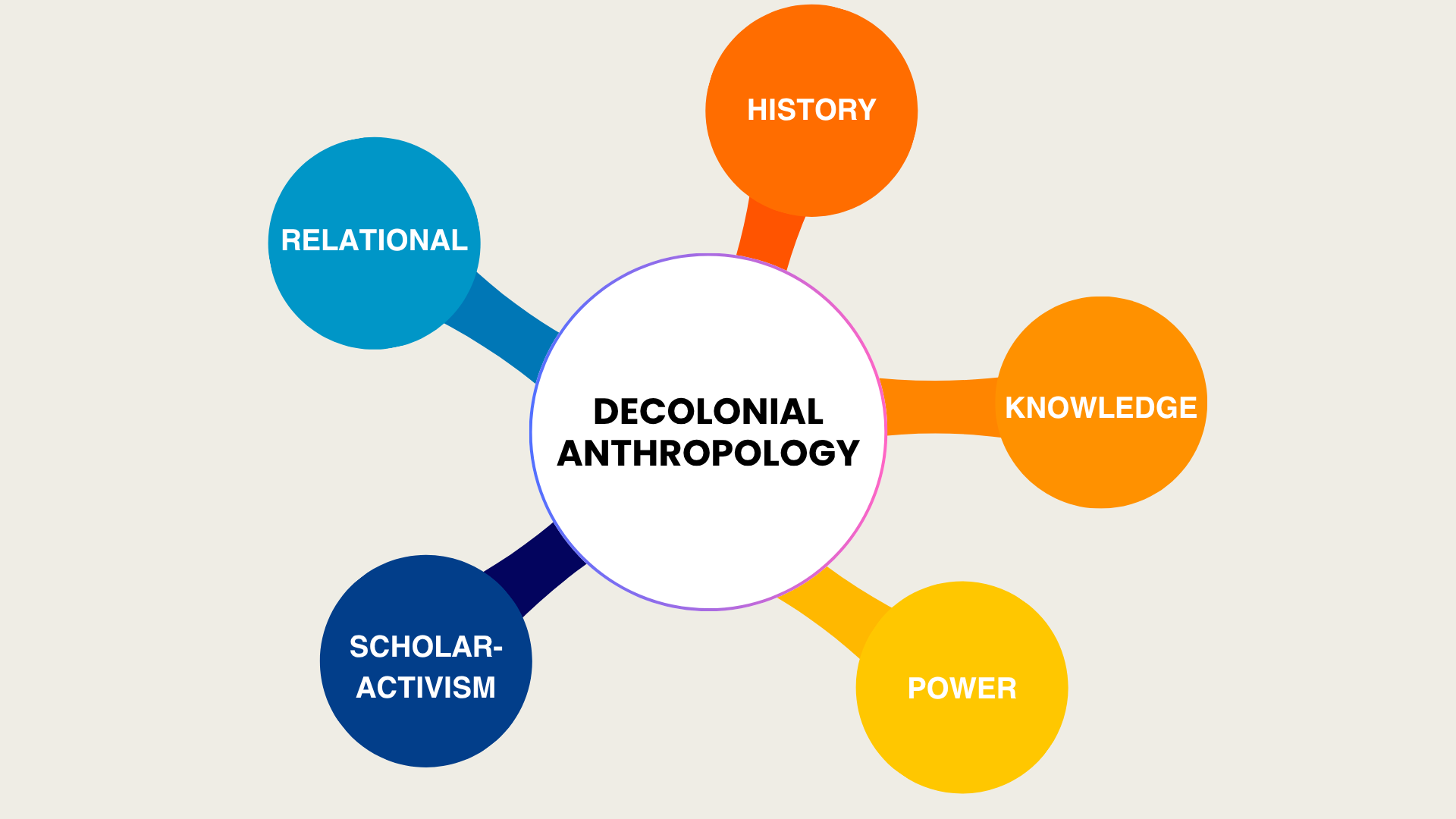


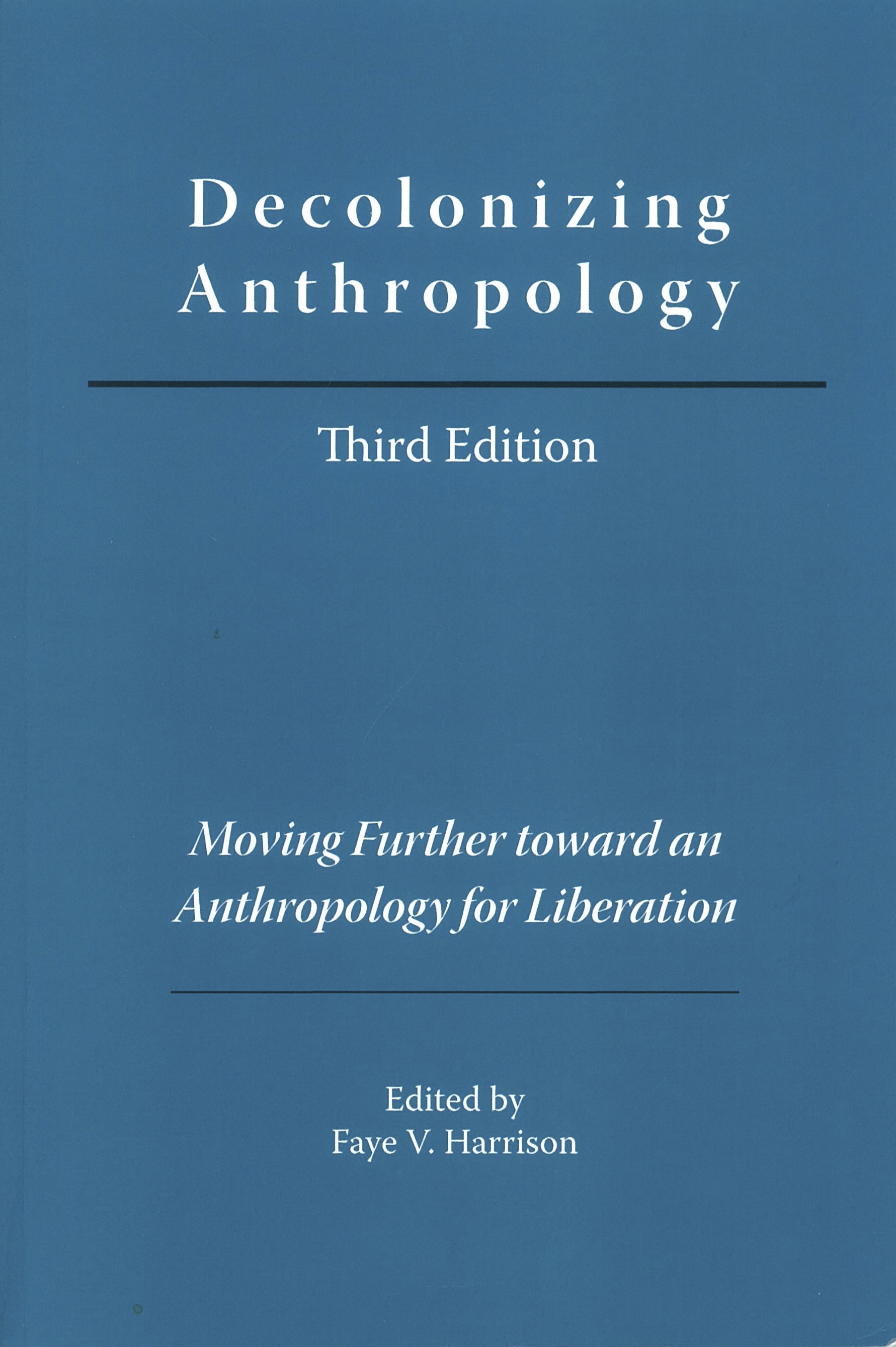


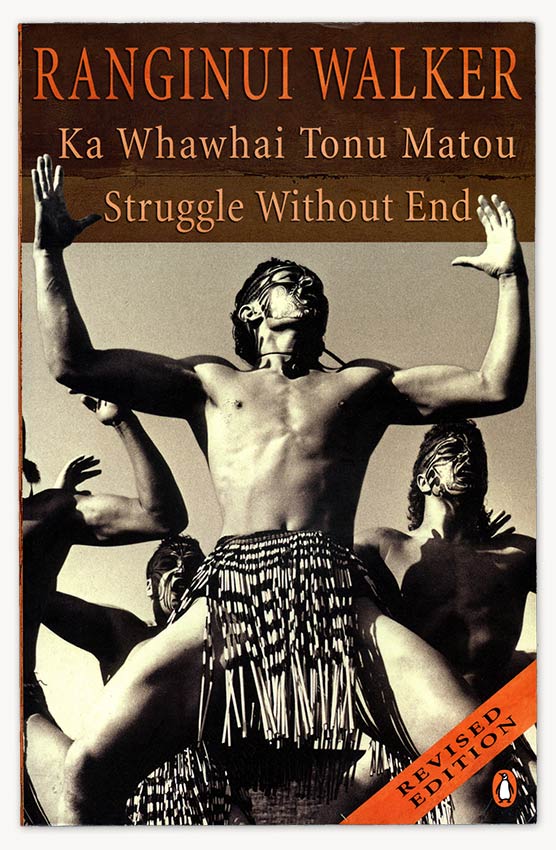
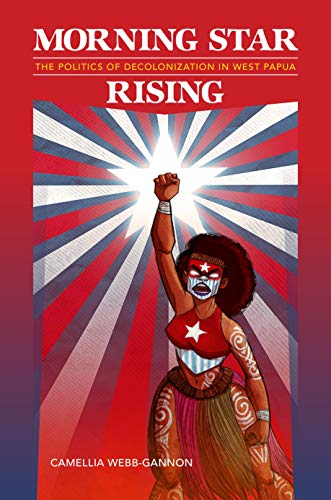

 Lorena Gibson