Ethnographic writing intensive: Five activities for the fieldwork-to-writing transition

Recently I have been thinking about how I learnt to transition from fieldwork to writing. Like many graduate students, mid-way through my thesis research I found myself with a stack of notebooks and detailed fieldnotes, interview transcripts, and hundreds of photos (among other things), but I wasn’t sure how to transform this material into ethnographic writing. The shift from gathering data to crafting compelling stories requires a different set of skills that aren’t always explicitly taught in methods courses.

Over the years, as I have supervised graduate students and taught courses on ethnographic methods, I have noticed others struggling with this fieldwork-to-writing transition. In this post I share five activities I have developed to help with that transition. The activities are modelled after the best writing course I have ever done (“Unstuck: The Art of Productivity” with Kel Weinhold from The Professor Is In) and draw on prompts in Kirin Narayan’s excellent book Alive in the Writing: Crafting Ethnography in the Company of Chekhov (2012) as well as my lecture notes from courses I have taught (including ANTH 312 Creative Ethnographic Practices).

These activities form an ethnographic writing intensive designed to strengthen your ethnographic writing practice. They address common challenges I see students facing: how to separate your thoughts from your writing; how to structure a piece of work; how to start with participant perspectives, how to write yourself into the narrative, how to write an ethnographic story.


Activity One: Investigate your thoughts with The Professor Is In

I recommend starting here, with a blog post by writing coach Kel Weinhold from The Professor Is In, because I have found it helpful in dealing with negative thoughts (hello imposter syndrome, my old friend!) in my own writing. This approach has helped me separate my thoughts from my writing process.

Tasks:

  • Read this blog post: https://theprofessorisin.com/2022/06/07/just-one-thing-investigate-your-thoughts/
  • The blog post suggests that writers sometimes have thoughts that feel completely true but actually interfere with making progress. As Kel writes, “The issue is not whether or not we have unhelpful thoughts; the issue is what we do with thoughts” (Weinhold, 2022)
  • See if any of the examples in the post resonate with your own writing experiences
  • If so, work through the investigative process in Kel’s blog post

Reflective question:

What, if anything, did you find useful in this approach that you might carry forward in your own writing practice?


Activity Two: Reverse outline a model piece of writing

I first learnt about reverse outlines through “Unstuck” and since then have recommended doing them to just about all of my graduate students.

For this activity, you are going to create a reverse outline of a model of the kind of writing you are currently working on (e.g. a MA thesis chapter, a journal article). This is a technique I regularly use myself. Usually people create reverse outlines of their own work, but I like to do it with examples of other peoples’ work so I can get a feel for how the piece of writing is structured and what each paragraph does for their argument and overall flow of the writing.

Tasks:

  • Read this blog post on reverse outlines: https://writing.wisc.edu/handbook/reverseoutlines/
  • Read another blog post on reverse outlines: https://owl.purdue.edu/owl/general_writing/the_writing_process/reverse_outlining.html
  • Choose a model piece of writing to work with (e.g. a chapter from a thesis your supervisor recommends, or an article from the journal you want to write for)
  • Sit down and read the piece from start to finish. Just read it; don’t take notes or do any highlighting
  • Read the piece again with a pen. Number each paragraph as you re-read
  • On a fresh piece of paper, write down the number of each paragraph and a sentence or phrase that describes what the author is accomplishing in that paragraph (e.g. this paragraph introduces and defines key concepts; explains the purpose of the chapter; lists the central research questions; situates the chapter in relation to other literature; etc)
  • Optional: add a star next to the paragraph numbers that you think are doing especially important work, or that you particularly like
  • Then, look at a draft you are currently working on to see where you might use elements of the model piece in your own work (e.g. ‘I need to have a paragraph that explains how this chapter contributes to my overall thesis argument’)

Reflective question:

What was useful about this activity? Might you use the reverse outline process on your own writing?


Activity Three: Starting on the ground

“The term “ethnography” has its roots in the Greek words ethnos (folk, the people) and grapho (to write). Ethnography is to write about people, society, and/or culture, but it is much more than writing. It is also a method and a theory. As a method, ethnography is an embodied, empirical, and experiential field-based way of knowing centered around participant observation. Ethnographic research requires participation, not just observation. It is to participate in rather than just observe the daily life, logics, rhythms, and contradictions of a cultural group or society. As such, it requires discipline and commitment beyond what is visible to someone not trained in ethnographic methods. As a theory, ethnography is to start on the ground, with the concepts that ground people’s lives, worldviews, actions, and words in particular ways to that community.”

McGranahan, Carole. 2018. “Ethnography.” In The International Encyclopedia of Anthropology, edited by H. Callan, Wiley. https://doi.org/10.1002/9781118924396.wbiea2262

This activity takes its cue from the first lecture I give in my Creative Ethnographic Practices class. In it, I discuss Carole McGranahan’s point that theory, in ethnography, means to start “on the ground”, with what your participants have to say. Rather than starting with theories developed by others, ethnographic writing tends to ask: what’s going on here? What are my participants telling me about how their world works?

Tasks:

  • Choose a paragraph from a draft you are working on
  • What does the paragraph start with? If it starts with someone else’s theory, can you see a way to rewrite it so your participant’s words and explanations guide your analysis?
  • Note that not every single paragraph needs to do this; the activity prompts you to show how you are building understanding inductively, starting “on the ground” with what your participants said

Reflective question:

What did you notice about the difference between starting with other people’s theories versus starting with participant explanations? How might this approach change the way you build arguments in your writing?


Activity Four: Writing yourself into the text

This activity is drawn from two sources. The first is a lecture I give on autoethnography (a methodology many of our students are drawn to), where I discuss Leon Anderson’s argument that analytic autoethnography requires “narrative visibility of the researcher’s self” (2006, 378).[1] Autoethnographic writing requires you to be visible as a researcher while being in conversation with your participants. Ethnographic writing, too, often includes the presence of the researcher to show how their knowledge was produced. Since dialogue can be a generative way of illustrating key insights from your research while showing the relational nature of knowledge-production, the second source I have drawn on is Kirin Narayan’s chapter “Voice” from Alive in the Writing. This chapter has an excellent discussion of how to “build texts from conversations” (page 69 Kindle edition), and in my course on Creative Ethnographic Methods I ended each lecture with in-class writing prompts (like the ones below) based on Narayan’s work.

[1] Anderson, Leon. 2006. “Analytic Autoethnography.” Journal of Contemporary Ethnography 35 (4): 373–95.

Tasks:

  • Read “Chapter Four: Voice” from Narayan’s Alive in the Writing
  • Writing activity 1: Locate a quote from one of your participants on the issue you’re writing about and experiment with working just a line or two into an introduction (adapted from the prompt on page 73)
  • Writing activity 2: Write an extended conversation in which one of your participants explains a concept to you. Include your questions in the dialogue (adapted from the prompt on page 75)
  • Writing activity 3: Revisit one of your interview transcriptions, using different colour pens to highlight (a) the main questions you asked, (b) your subsidiary questions, and (c) your participant’s answers (adapted from the prompt on page 77)
  • Writing activity 4: Draw on the interview transcript you looked at for the previous activity to create a 2-page dialogue between you and a participant that reveals information or insights central to your project. Pay attention to the textures, cadences, and intonations of voices, including your own (adapted from the prompt on page 92)

Reflective question:

After experimenting with these different ways of writing yourself in to your work via dialogue, what did you notice about how the presence of your questions and responses changes the way insights emerge in your writing? How might dialogue work differently than summary or analysis for revealing what you learned in interviews?


Activity Five: Ethnographic storytelling

“Focusing on stories that have been co-created enables me to work on the ethnographic narrative and its process of coming into life through storytelling. In starting with the creation of ethnographic stories and story lines I am following an argument by Soyini D. Madison; she has criticised the tendency to avoid transparency in oneʼs own ethnographic storytelling techniques by hiding behind the writing of others and showing off (with the theory of others) in order to give more weight to oneʼs own ethnography while hiding possible flaws. She observes that rather than taking guidance from and trusting the stories, instead “the researcher becomes so enamored with […] impressing colleagues that honoring the narrative becomes less important than acrobatics of abstraction and theoretical word play” (Madison 2014, 394)”.

Bönisch-Brednich, Brigitte. 2018. “Writing the Ethnographic Story: Constructing Narrative Out of Narratives.” Fabula 59 (1-2): 8–26. Page 12.

This activity is based on a lecture I give on ethnographic storytelling. I begin that lecture by talking about a blog post Carole McGranahan wrote in 2015, where she writes: “What is defective is how we miss the power of stories and storytellers even as well tell them. We tell stories to get to the point, to make our points. We miss that the stories are the point” (my emphasis added). McGranahan puts forward an argument similar to the one that Madison makes in the quote from Bönisch-Brednich’s article cited above (which I also discuss in that lecture): that we use our participant’s voices to make our own theoretical arguments (often drawing on the theory of others) rather than letting their stories carry the weight of ethnographic insight.

Tasks:

  • Choose a story that one of your participants shared with you that you found especially memorable (perhaps one you are working with in a current piece of writing). You will work with this story in three ways
  • Writing activity 1: write the story as if you are reporting it for a newspaper, using the journalistic who-what-when-where-why-how questions and describing the basic sequence of events
  • Writing activity 2: write the story as your participant might (see the ethnographic vignette that Bönisch-Brednich shares on pages 12-13 of her article for an example)
  • Writing activity 3: Following Bönisch-Brednich’s article or McGranahan’s blog post, write the story for your draft, discussing what it shows about broader patterns in your research and connecting it with relevant theory. This is how it becomes ethnographic storytelling

Reflective question:

After writing the same story three different ways, what did you notice about how each approach revealed different aspects of the experience? How did writing activity 3 differ from simply adding analysis to writing activity 1?


I designed these activities with individual work in mind, but they might also be useful starting points for a ‘shut up and write‘ session with peers. If you try one or more of them, please let me know your thoughts in the comments – I would love to hear from you!

Using GenAI to think critically about grading in a Cultural Anthropology class

In 2019, my friend and colleague Grant Otsuki started experimenting with Generative AI (GenAI) – GPT-2 by OpenAI – to see how well it did at writing an essay for a first year Cultural Anthropology class he taught. As he wrote in a 2020 article for The Conversation, he trained GPT-2 on actual essays his students had written in response to the essay prompt, then worked with it to generate its own essay. I remember reading the work generated by GPT-2 and thinking that although I wouldn’t have awarded it a passing grade (for reasons Grant writes about in his 2020 article), it had potential and that a student could have turned it into a C-grade essay in less than 10 minutes. I also remember thinking that if Grant hadn’t told me it was generated by GPT-2, I probably wouldn’t have been able to tell that it hadn’t been written by a student.

It is no exaggeration to say that GenAI technology and use has exploded since Grant wrote his article, where he argued that we should be teaching students how to work with GenAI tools rather than ignore or try to ban them. Te Herenga Waka-Victoria University of Wellington, where I work, recently developed a policy on Student use of artificial intelligence tools to help write assignments that directs students to check in with their instructors about whether they can use GenAI:

Take time to understand expectations around the use of AI

Expectations may vary from course to course or even from assignment to assignment. This may include rules around how you can or can’t use AI, and what kinds of AI it is acceptable to use. For example, it might be ok to use translation software, but not generative AI like Chat GPT. Your course coordinators should make it clear when you can and cannot use AI and if there are any limitations on how you use it.  If you’re not sure, just ask.
(https://www.wgtn.ac.nz/students/study/exams/academic-integrity/student-use-of-artificial-intelligence, accessed 24 November 2024)

This policy offers teaching staff a lot of flexibility and accommodates people like me, who want to bring GenAI into our classrooms so students can learn how to use it while discussing some of the concerns around its use (including its environmental impact and the looming issue of reliable information only being available to those who can afford it).

Class activity: Grade a mini-essay generated by ChatGPT

Earlier this year, I decided to adapt Grant’s activity for my undergraduate course Anthropology, Education, and Social Change. The first assignment for that course asked students to write two mini-essays of 500-600 words about different concepts and/or theories that were discussed in lectures and assigned reading material. I asked ChatGPT (version 2, by OpenAI) to generate a 500-word mini-essay on the topic of “grades” for a course on anthropology of education, that drew on and cited Susan Blum’s book “I Love Learning; I hate School” An Anthropology of College, which we read and discussed in class. I also asked ChatGPT to adhere to the assignment instructions (below) and spent a bit of time editing the mini-essay it generated.

In Week 4 of our course, I brought printed copies of the mini-essay that ChatGPT generated to class and asked students to read it and assign it a grade using the marking guide for this assignment. I had two goals in mind with this activity: 1) to encourage students to think critically about GenAI use in the classroom; and 2) to encourage students to engage with the marking criteria that I was going to use to assess their work.

We began the activity by discussing the following:

  • how they can use GenAI in my class (e.g. to refine their ideas or fix errors with spelling, grammar, and referencing)
  • the University’s policy on using AI to help write assignments
  • the limitations of using GenAI (e.g. hallucinations)
  • some of the ethical, environmental, and privacy considerations involved in working with GenAI
  • how to acknowledge their use of GenAI by including an Acknowledgement Statement at the start of their work (our Library provides information about how to cite AI use)

After that, I handed out Chat-GPT’s essay (below) and asked students to give it marks and written feedback. They had the option of doing this individually or in pairs/small groups, and I invited them to share their marks and feedback to our class Miro board.

After about half an hour to mark the mini-essay, we shared our marks and comments with one another. The students – who, for the most part, failed the mini-essay with very critical feedback – were surprised to learn that I had given it a C- grade, which prompted a constructive conversation about the kinds of grading-related issues that Blum writes about in her book and that we had discussed in earlier lectures. It also provided a good entry point for me to discuss why and how I had designed their second assignment using task-based grading (the term I now use to describe my version of labour-based grading). Finally, several students said that they appreciated the opportunity to grade an assignment like this because it helped them better understand the marking criteria.

This activity achieved my goals and I was pleased to see students acknowledging and citing their use of GenAI in later assignments. I also noticed a slightly higher grade distribution for Assignment 1 compared with the previous year. While this approached worked well in my classroom, I know there are many other innovative and meaningful ways to integrate GenAI tools into teaching and assessment practices. If you are working in this space, I am keen to hear about your experiences!

Drawing with Lynda Barry’s “Syllabus” in a creative ethnographic practices class

A few years ago, my friend Caroline Bennett gave me Lynda Barry’s 2014 book Syllabus: Notes from an Accidental Professor and this term I decided to use some of Barry’s creative drawing and writing prompts in the Creative Ethnographic Practices class I’m teaching at Te Herenga Waka-Victoria University of Wellington.

Cover page of Lynda Barry’s 2014 book “Syllabus: Notes from an accidental professor.”

As I wrote in a previous blog post, in this class I guide students through the process of crafting their own independent ethnographic research projects. Along the way, we discuss how to generate, analyse, and present our ethnographic findings in a variety of creative methods and genres, and Week 9 is about graphic ethnography. In that week’s class I adapted some of the exercises from Barry’s book and invited the class to bring some pens, pencils, and paper to class so we could draw together to think about their data and their final research projects. I am not someone who draws (although I will happily join my kids to do some colouring with them) and was apprehensive about how it would go. To my delight, students embraced the activity and many commented on how useful it was in their weekly reflective research journals, prompting me to share the activity here.

“But I can’t draw!”

Keenly aware of my own hesitancies about drawing, I began the session with a quote from Mark Westmoreland’s 2021 chapter “Graphic anthropology: A foundation for multimodality”:

“When it comes to drawing as a serious activity – as an ethnographic method, for instance – many feel they lack the expertise to perform such a task. In classroom settings, the announcement of a drawing exercise typically provokes a reaction ranging from the defensive “But I can’t draw!” to the confessional “I don’t know how to draw!” Beginning from this place of not knowing, unskilled and uncertain, says less about our innate abilities than it does about the pervasive undervaluing of drawing in our educational systems. But we should not be deterred; as Betty Edwards famously proclaimed, “I have discovered that any person of sound mind can learn to draw; the probability is the same as for learning to read” (2012, 43). While drawing is a favourite pastime for young children, who exhibit a “beguiling freedom and charm” in their depictions, around the age of ten “children confront an artistic crisis” as they become obsessed with producing realistic drawing (Edwards 2012, 66, 64). Without training to cultivate these skills, they become discouraged and possibly ashamed.” 

– Westmoreland 2021, 61

After discussing Westmoreland’s article for a short time, I introduced Lynda Barry’s work and we began the activity I adapted from her book (pages 76-81 and 124).

Step 1. Draw a spiral

You will need: something to draw on, and something to draw with.

Page 76 of Lynda Barry’s 2014 book “Syllabus: Notes from an accidental professor.”
Barry, Linda. 2014. Syllabus: Notes from an Accidental Professor. Canada: Drawn & Quarterly. Page 76.
  • Make a two-page spread (e.g. fold an A4 piece of paper together, or find two clean pages in a drawing book)
  • Write today’s date at the top of the left page
  • Number the right side from one to ten
  • Begin on the left page and make a dot in the middle
  • Spiral a line around the dot
  • Keep going, making your spiral bigger and trying to keep the lines as close together as possible without letting them touch
  • As you make your spiral, think about a memorable moment you had doing fieldwork for your research project (5 mins)

Step 2. Make a list

  • Turn to the numbered list you made on the right page
  • Write down 10 of the memories that come to mind when you think about your memorable fieldwork moment (2 mins)
  • Read over your list and choose a memory that stands out to you
  • Circle that memory
  • Turn to a clean page and write the memory you circled at the top, as if it were the title of a story
  • Draw a big ‘X’ across the page

Step 3. ‘X’ page

  • Start by picturing yourself in the memory
  • Pretend we’re on the phone. You can see the image but I can’t. I’m going to ask you some questions that will help me ‘see’ it too
  • Write or draw your answers anywhere on the ‘X’ page
  • You will have 20 seconds to write or draw your answer before I ask the next question
  • No detail is too small or unimportant
Page 79 of Lynda Barry’s 2014 book “Syllabus: Notes from an accidental professor.”
Barry, Linda. 2014. Syllabus: Notes from an Accidental Professor. Canada: Drawn & Quarterly. Page 79.

The questions:

  • Where are you?
  • What time is it?
  • How did you get there?
  • What’s the temperature like?
  • What can you smell?
  • What can you see?
  • What can you hear?
  • What are you doing?
  • Is anyone with you?
  • Why are you there?
  • How do you feel?
  • What happened at the start?
  • Who did you interact with?
  • How did you leave?

Step 4. Craft an ethnographic story

  • Turn to a clean page to write this up into a story
  • Write a sentence about each question you responded to
  • Draw on all of your senses and use vivid details 
  • Freewrite without stopping for 5 minutes
  • Use first person (e.g. “I”)
  • Use present tense (e.g. “I can hear …”)

Step 5. Make a 4-panel comic

  • Take a clean piece of paper and fold it into four quarters
  • Draw a border around each panel
  • In one of the panels, draw an image related to the story you just crafted
  • In the three other panels, draw that image three other times, making any kind of action you like
Page 124 of Lynda Barry’s 2014 book “Syllabus: Notes from an accidental professor.”
Barry, Linda. 2014. Syllabus: Notes from an Accidental Professor. Canada: Drawn & Quarterly. Page 124.

This activity took us an hour. Barry’s book is full of creative prompts so if you haven’t read it, I highly recommend checking it out!

Further reflections on writing ethnographic fieldnotes

The most popular post on my blog describes the fieldnote template I developed during the early stages of my PhD research with community-based NGOs running educational and economic development initiatives in Kolkata (India) and Lae (Papua New Guinea). This fieldnote template has made its way into other blog posts about ethnographic research, textbooks and articles, course outlines, and academic commons. Last year my colleague Grant Jun Otsuki assigned it as a reading for his first year Cultural Anthropology class at Te Herenga Waka-Victoria University of Wellington as a way of helping students prepare for an assignment that involved doing fieldwork, writing fieldnotes, and turning those fieldnotes into a piece of anthropological writing. Grant invited me to come and speak to the class, and that experience has prompted me to write some further reflections on writing ethnographic fieldnotes as a disabled, neurodivergent anthropologist.

In my guest lecture I spoke about why anthropologists keep fieldnotes, what my fieldnotes consist of (handwritten notebooks, photographs, maps, drawings, emails, ticket stubs and other ephemera, voice recordings, notes jotted in an app on my phone, a personal diary, and of course the hundreds of electronic documents generated with my fieldnote template), and my relationship with my fieldnotes, including how I draw on fieldnotes alongside headnotes (Ottenberg, 1990) when I write. I also discussed how ethnographic fieldwork is an all-encompassing activity that involves your body, mind, senses, and memories, and how my fieldnote template offers me a way to document my experiences and begin identifying what and how I “know” about my topic. As part of that, I described some of the strategies I use to manage my energy levels and wellbeing during fieldwork. In India and Papua New Guinea this included ensuring I had access to my medication at all times, packing my own food, wearing headphones, trying to avoid situations that would trigger migraines, and scheduling rest days in between fieldwork days so I could process sights, sounds, smells, and social interactions.

What I didn’t say during my guest lecture was how I have largely developed these strategies on my own. When I began my first major research project in the early 2000s, there were no guides on how to do ethnographic fieldwork as a disabled neurodivergent anthropologist. Neurodiversity, disability, and chronic illness were subjects of anthropological studies that I read as a student, but I don’t recall reading anything written by openly neurodivergent, disabled, or chronically ill anthropologists. We also did not use the terms “neurodivergent” or “disabled” in New Zealand in the early 2000s to describe people like me, who have been diagnosed with various mental health disorders (not all of which I am comfortable disclosing) and medical conditions like chronic migraine and endometriosis (which I am comfortable to share publicly). And I did not write this part of myself into my academic work. Indeed, in one instance I was actively discouraged from writing about how depression and anxiety affected my fieldwork by a well-meaning colleague who worried about how such a disclosure would negatively affect (a) how the quality of my work would be perceived, and (b) my chances of future employment in academia. “You can do that once you’ve finished your PhD and got a permanent job,” was the advice. Now, 13 years on from finishing the PhD and 9 years after securing a permanent job, I am still ambivalent about bringing my neurodivergence into my writing, research, and teaching. All anthropology is filtered, as Amelia Frank-Vitale (2022) points out, but I think there is still considerable stigma against neurodivergent filters. However, as Cinzia Greco (2022) asks,

… if ethnography and participant observation represent core anthropological methods, through which reality is filtered and turned into knowledge, what does it mean to observe, analyze, and conduct fieldwork as a neurodivergent subject? How can variation in how we see, hear, and perceive the world influence ethnographic practice?

These are important questions and I am heartened to see growing conversations about neurodivergence, abelism, and anthropology in academic circles (including, but by no means limited to, Durban 2022; Friedner with Kasnitz and Wool 2018; Gibson 2018; Kinsell 2022; Kasnitz 2020; Morgendorff 2023; Radher 2018; Starn 2022). If you have reading or researcher recommendations, please feel free to comment below or get in touch.

References cited:

Durban, Erin L. 2022. “Anthropology and Ableism.” American Anthropologist 124 (1): 8–20.

Greco, Cinzia. 2022. “Divergent Ethnography: Conducting Fieldwork as an Autistic Anthropologist.” Member Voices, Fieldsights, May 26. https://culanth.org/fieldsights/divergent-ethnography-conducting-fieldwork-as-an-autistic-anthropologist

Frank-Vitale, Amelia. 2022. “Writer’s Block.” In “Taking Note: Complexities and Ambiguities in Writing Ethnographic Fieldnotes,” edited by Magdalena Zegarra Chiappori and Verónica Sousa, American Ethnologist, 26 August. https://americanethnologist.org/features/collections/taking-note-complexities-and-ambiguities-in-writing-ethnographic-fieldnotes/writers-block

Friedner, Michele, with Devva Kasnitz and Zoë Wool. 2018. ‘What I Wish I Knew about Anthropology and Disability: Notes toward a more enabling anthropology’, Anthrodendum, 10 January. https://anthrodendum.org/2018/01/10/what-i-wish-i-knew-about-anthropology-and-disability-notes-toward-a-more-enabling-anthropology/ 

Gibson, Hannah. 2018. “Access denied: the dark side of prestige.” Chronically Academic https://chronicallyacademic.blogspot.com/2018/01/access-denied-dark-side-of-prestige.html

Kasnitz, Devva. 2020. “The Politics of Disability Performativity.” Current Anthropology 61 (S21): S16–25.

Kinsell, Hannah. 2022. “Am I an Anthropologist if… I am (dis)abled?” Anthways https://sites.gold.ac.uk/anthways/am-i-an-anthropologist-if-2022/am-i-an-anthropologist-if-i-am-disabled/

Mogendorff, Karen. 2023. “Countering Ableism in Knowledge Production. Empowerment of Subaltern People and Reproduction of Epistemic Hierarchies.” Swiss Journal of Sociocultural Anthropology 28, 41–60.

Ottenberg, Simon. 1990. “Thirty Years of Fieldnotes: Changing Relationships to the Text.” In Fieldnotes: The Makings of Anthropology, edited by Roger Sanjek, 139–60. New York: Cornell University Press.

Radher, Micha. 2018. “Ethnographic Ableism: Structural Silencing of Physical Disability in Anthropological Research.” The New Ethnographer, 20 August. https://thenewethnographer.com/the-new-ethnographer/2018/08/20/ethnographic-ableism-structural-silencing-of-physical-disability-in-anthropological-research

Starn, Orin. 2022. “Anthropology and the Misery of Writing.” American Anthropologist 124 (1): 187–97.

Teaching ‘how to anthropology’ alongside ‘how to university’ in an introductory cultural anthropology class

I have taught our large introductory cultural anthropology course (ANTH 101) on and off since 2014, and every couple of years I redesign it based on conversations with colleagues, research into learning and teaching strategies, and student feedback. In this post I describe a major change made in 2022: incorporating sessions on ‘how to university’ alongside ‘how to anthropology’.

In 2022 I decided to add an extra weekly lecture to ANTH 101 (moving from two 1-hour lectures per week to three) in order to introduce an academic skills component to the course. This change was inspired by:

  • the different knowledge and experiences that incoming first years bring to the classroom – as students who had completed their secondary schooling during a global pandemic – gauged by the kinds of questions students asked and how they wrote their assignments;
  • the labour-based grading practices that my colleague Grant Otsuki and I began implementing in 2020 (which you can read about here);
  • a “first year transitions” professional development course I took in 2021, run by my university’s Faculty of Humanities and Social Sciences, which took us through some of the reasons why students are not well prepared for university (including NCEA, the standards-based assessment system used in secondary schools in Aotearoa) and strategies we can use to facilitate their success.

ANTH 101 had two new goals: (1) to teach students ‘how to anthropology,’ and (2) to teach students ‘how to do well at anthropology at university,’ or ‘how to university’ for short. I also co-taught ANTH 101 for the first time in 2022 with colleague Corinna Howland, who was instrumental in helping enact my vision for the course.

How to anthropology

‘How to anthropology’ introduced students to key concepts in cultural anthropology in two parts. The first six-week block started with the concept of culture and focused on the methods anthropologists use to study culture. We read selected chapters from Mike Wesch’s free online textbook “The Art of Being Human” together with journal articles or book chapters written by members of our Cultural Anthropology Programme, who were invited to join us in the second lecture of each week for a conversation about the piece they wrote. This enabled students to get to know everyone in our Programme as well as key anthropological concepts and methods. During those conversations we asked our colleagues:

  • Tell us about yourself (who you are, what kind of anthropology you are into)
  • Thinking about your book chapter or article that our ANTH 101 class is reading, what were your aims and overall argument?
  • What methods did you use for that research and why?

I connected this part of the course to the first assignment, which asked students to write a narrative biography of an anthropologist who has conducted ethnographic research in Aotearoa New Zealand, and/or who is currently based in Aotearoa New Zealand. Not all of our colleagues were able to join us in class for a discussion about their research, so I included them and their work on the list of anthropologists students could choose to write about for this assignment.

The second half of the 12-week course changed gears to focus on sugar. We used sugar as a material object to explore a range of other key concepts, such as colonialism, capitalism, and gender and sexuality, and we read work by anthropologists who have theorised these concepts in different ways. This half of the course showed students how to think like an anthropologist about sugar (and hopefully other things as well!). Students were invited to write an essay on what an anthropological study of sugar can tell us about the world for their third and final assignment. (The second assignment, a take-home test, is described below.)

How to university

The ‘How to university’ lectures took place on a Friday, after the two ‘how to anthropology’ lectures on Monday and Tuesday. Corinna and I brainstormed a list of everything we thought students needed to know in order to do well in anthropology at university and designed these lectures to equip students with those skills. We started by taking an anthropological approach to the university, explaining what it means to do that and discussing the university as an institution, what it does, who and what makes up a university, how they are different from schools, their history and what they look like now, and what it means to become a university student. In the first six weeks of the course we moved through a series of skills including how to take notes, how to understand assignment questions, how to write thesis statements, how to do a close reading of an article, how to write introductions and conclusions, and how to structure a narrative biography (their first assignment). In the second half of the course, when we shifted to thinking like anthropologists about sugar, our ‘how to university’ lectures focused on ensuring that students understood the theories and concepts discussed in lectures, readings, and films, and that they felt confident about their upcoming assignments.

Lecture topics

Corinna and I decided upon a list of key concepts we thought our students should know and developed a series of questions about them. We then designed each ‘how to anthropology’ lecture to respond to one of those questions. Our 2022 lecture schedule looked like this:

Week‘How to anthropology’ ‘How to university’
1. Introduction to the courseWhat is cultural anthropology? What is a concept? What is this course about?What is a university?
2. CultureHow did anthropologists come to make difference through the concept of culture? What is culture, who has it, and how do we talk about it?Notetaking, critical reading, and how to approach the first assignment
3. RitualHow do anthropologists study culture and rituals? What is a ritual? What is liminality?How to do a close reading of a journal article, and how to write a thesis statement
4. Development and disagreementWhat is the relationship between anthropology and development? How do anthropologists study and think about disagreement?Review of key concepts, tips for writing an introduction, and how to structure a narrative biography
5. DifferenceWhat does it mean to be human? How can we critique cultural practices that are not our own? Tips for writing a conclusion and time management
6. StorytellingWhy do stories matter to anthropologists? What do anthropologists need to think about when writing about people’s lives?Screening and discussion of Arnav at Six (as an example of visual ethnographic storytelling)
7. Thinking like an anthropologist about sugarWhat does studying sugar anthropologically allow us to look at? What does a historical approach to sugar involve? What are the goals of comparison in cultural anthropology?(No class)
8. How sugar changed the worldWhat is the relationship between sugar, slavery, capitalism, and race? What was blackbirding in the South Pacific? How have people theorised race and whiteness?Screening and discussion of Sugar Slaves
9. Sugar and the world systemHow do different theories provide different answers about global inequality? What is political economy in cultural anthropology? How do anthropologists study commodity chains? And how do we put culture into history?Essay workshop #1: Who to contact about an extension, how to break down the essay question, how to apply theory to your topic, and how to develop a research question
10. Sugar, consumption, and social classHow do anthropologists theorise social class? How did sugar come to be connected with social class? How are race and class connected? How is social inequality reproduced?Essay workshop #2: Why structure is important, what introductions are for and how to write them, what body paragraphs are for and how to write them, what conclusions do and how to write them
11. Sugar, gender and sexualityHow do anthropologists think about gender and sexuality? What is the relationship between sweetness, gender and sexuality?(No class)
12. Cultural appropriation and course reviewWhat is cultural appropriation? What have we learnt in this course?Screening and discussion of Qallunaat! Why White People Are Funny

Readings

Each week had one or two required readings and some recommended readings. As the course progressed, I created weekly review quizzes as a study aid for students with questions about the required readings as well as lectures. These weekly review quizzes also helped students prepare for the take-home test, the second assessment item, which was delivered through Blackboard (the learning management system our university was using at the time) and contained questions similar in content and style to the review quizzes.

Week 1

Week 2

Wesch, Michael. 2018. ‘Lesson Two Culture: The Art of Seeing.’ In The Art of Being Human: A Textbook for Cultural Anthropology, 28–51. Kansas, USA: New Prairie Press ebooks.

Week 3

  • Bönisch-Brednich, Brigitte. 2015. ‘Rituals of Encounter: Campus Life, Liminality and Being the Familiar Stranger.’ In Crossing Boundaries and Weaving Intercultural Work, Life, and Scholarship in Globalizing Universities, edited by Adam Komisarof and Zhu Hua, 118–30. New York: Routledge. (required)
  • Treagus, Mandy. 2012. ‘From Whakarewarewa to Oxford: Makereti Papakura and the Politics of Indigenous Self-Representation.’ Australian Humanities Review, 52, 35-56. (We did a close critical reading of this article in the Week 3 ‘how to university’ lecture)

Week 4

  • Lewis, David. 2012. ‘Anthropology and Development: The Uneasy Relationship.’ In Handbook of Economic Anthropology, 469–84. Cheltenham, UK: Edward Elgar Publishing Limited. (required)
  • Eli, Elinoff. 2021. ‘Introduction.’ In Citizen Designs: City-Making and Democracy in Northeastern Thailand, 8–37. Hawai’i: University of Hawai’i Press.

Week 5

  • Abu-Lughod, Lila. 2002. ‘Do Muslim Women Really Need Saving? Anthropological Reflections on Cultural Relativism and Its Others.’ American Anthropologist, 104 (3), 783-790. (required)
  • Wesch, Michael. 2018. ‘Lesson 7: Superstructure.’ In The Art of Being Human: A Textbook for Cultural Anthropology, 215–69. Kansas: New Prairie Press.
  • Otsuki, Grant Jun. 2021. ‘Frame, Game, and Circuit: Truth and the Human in Japanese Human-Machine Interface Research.’ Ethnos 86 (4): 712–29.
  • Hancock, Tayla. 2015. ‘Reflexivity.’ Anthsisters. 2 September. http://www.anthsisters.com/2015/09/theorythursday.html

Week 6

  • Wesch, Michael. 2018. ‘The Power of Storytelling.’ In The Art of Being Human: A Textbook for Cultural Anthropology, 320–34. Kansas, USA: New Praire Press ebooks. (required)
  • Bryers-Brown, Tarapuhi. 2015. ‘Te Ara O Te Pūkeko: Methodology and Methods.’ In “He Reached across the River and Healed the Generations of Hara”: Structural Violence, Historical Trauma, and Healing among Contemporary Whanganui Māori, 17–26. MA thesis, Cultural Anthropology, Victoria University of Wellington.
  • Adichie, Chimamanda Ngozi. 2009. ‘The Danger of a Single Story | TED Talk.’ https://www.ted.com/talks/chimamanda_ngozi_adichie_the_danger_of_a_single_story?langu age=en#t-106653
  • Case, Emalani. 2020. ‘A Future Built by Stories.’ He Wahī Paʻakai: A Package of Salt. 26 February. https://hewahipaakai.wordpress.com/2020/02/26/a-future-built-by-stories

Week 7 – note the increase in recommended readings here, which were provided as potential resources for student essays

Mintz, Sidney W. 1986. ‘Chapter 1. Food, Sociality, and Sugar.’ In Sweetness and Power: The Place of Sugar in Modern History, 3–18. New York: Penguin Books.

Week 8

Week 9

  • Errington, Frederick Karl, and Deborah B. Gewertz. 2004. ‘Introduction: On Avoiding a History of the Self-Evident and the Self-Interested.’ In Yali’s Question: Sugar, Culture, and History, 1–20. Chicago: University of Chicago Press. (required)
  • Cook*, Ian. 2004. ‘Follow the Thing: Papaya.’ Antipode 36 (4): 642–64. (required)
  • Diamond, Jared M., Tim Lambert, Cassian Harrison, Peter Coyote, Lion Television Ltd, and National Geographic Television & Film. 2005. Guns, Germs, and Steel (documentary).
  • ‘The Story of Stuff.’ https://www.storyofstuff.org/movies/story-of-stuff/

Week 10

  • Ho, Hang Kei. 2021. ‘Why Has Wine Consumption Become Popular in Hong Kong? Introducing a New Sociocultural Paradigm of Traditional, Aspiring and Creative Drinkers.’ Asian Anthropology 20 (4): 248–68. (required)
  • Kollnig, Sarah. 2020. ‘The “good People” of Cochabamba City: Ethnicity and Race in Bolivian Middle-Class Food Culture’. Latin American and Caribbean Ethnic Studies 15 (1): 23–43.
  • Baglar, Rosslyn. 2013. ‘”Oh God, Save Us from Sugar”: An Ethnographic Exploration of Diabetes Mellitus in the United Arab Emirates.’ Medical Anthropology 32 (2): 109–25.
  • Bourdieu, Pierre. 1987. ‘What Makes a Social Class? On The Theoretical and Practical Existence Of Groups.’ Berkeley Journal of Sociology 32, 1-17.
  • Smith, Raymond T. 1984. ‘Anthropology and the Concept of Social Class.’ Annual Review of Anthropology 13: 467–94.

Week 11

Week 12

No assigned readings.

Reflections

Overall we found this to be a fun way to teach an introductory cultural anthropology course. We learnt a lot about our colleagues’ research by inviting them into the classroom and enjoyed the challenge of using sugar as a framework in the ‘how to anthropology’ lectures. We noticed that the Friday ‘how to university’ lectures attracted fewer students (in-person and online) than the ‘how to anthropology’ lectures earlier in the week. However it is difficult to know whether this was because the lecture was at 9am or whether it was due to the subject of the Friday classes. The feedback we received from students about this component of the course was overwhelmingly positive despite low attendance rates, and we saw an improvement in the quality of work students submitted at the end of the trimester.

Corinna taught this course as the sole course coordinator in 2023, and is co-teaching it with Jacs Forde in 2024. I look forward to seeing what they do with it!

Anthropology for Liberation readings 3.0

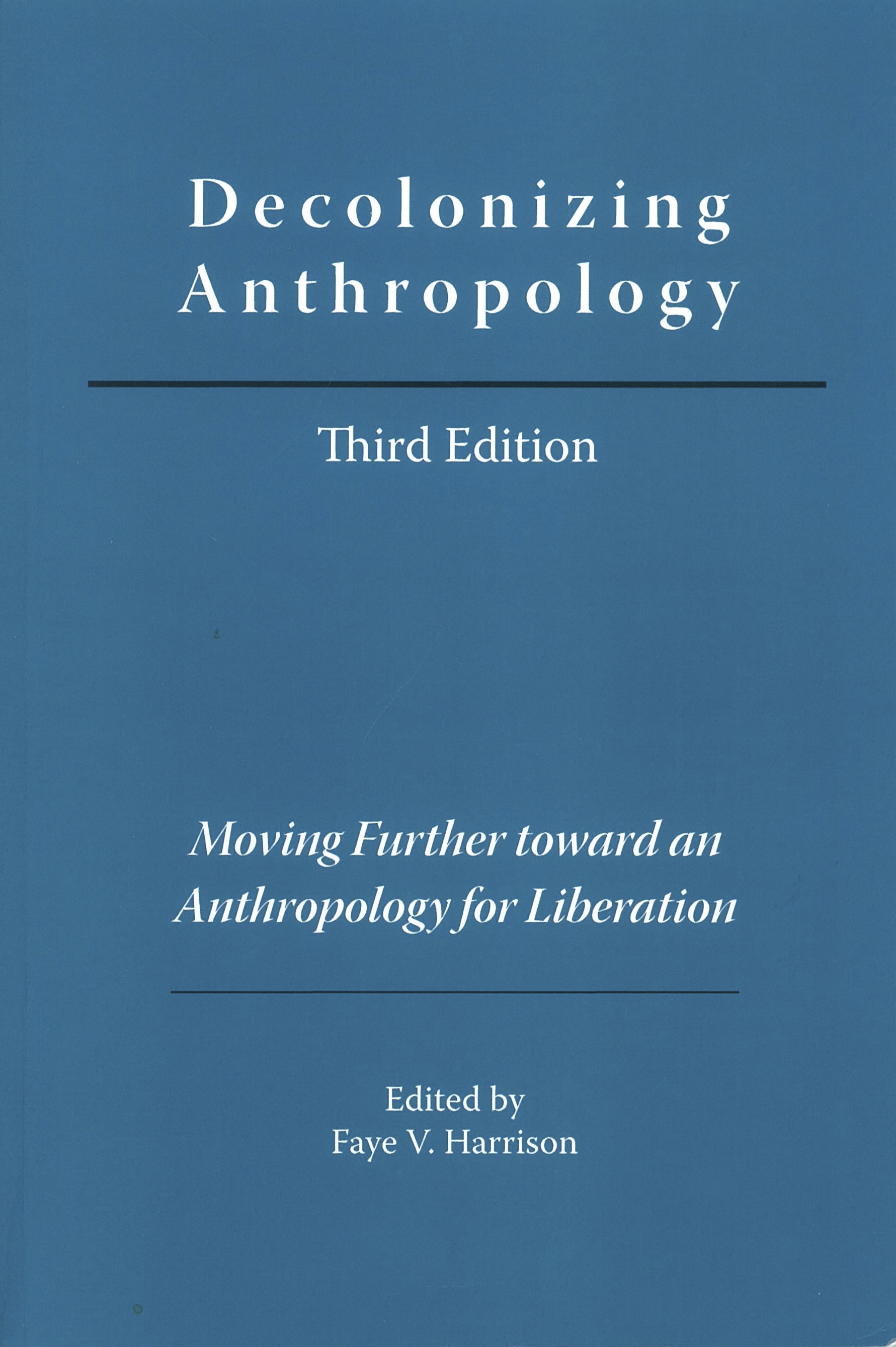
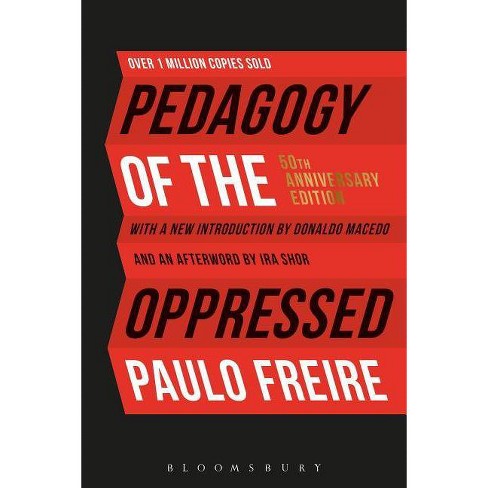
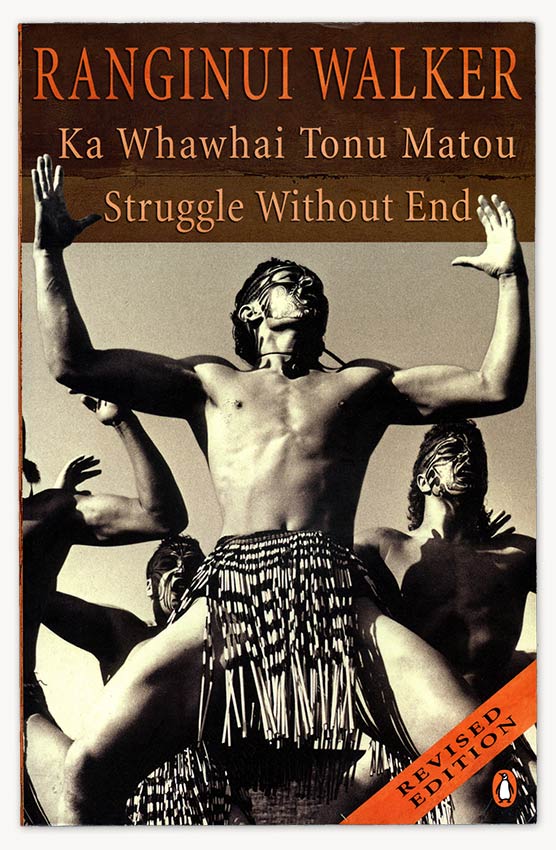
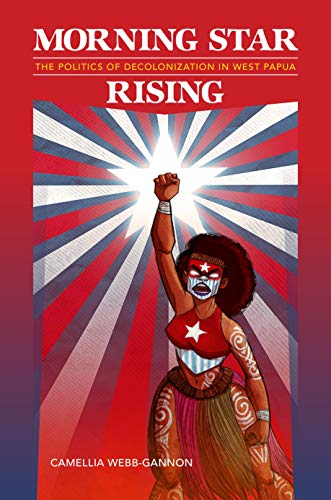
2021 marks the fourth year I have taught Anthropology for Liberation, an undergraduate course in the Cultural Anthropology Programme at Te Herenga Waka-Victoria University of Wellington. The course is inspired by three influential books:

Each year I revise the course and change the readings. This year I took a new approach: I moved journal articles, book chapters (including chapters from the books above), and other relevant resources to ‘recommended reading’ status, and set four books as required reading.

Why would I assign four books when we know that “up to 80% of uni students don’t read their assigned readings?” Two reasons:

To slow down

My first reason is a response to feminist calls for “slow scholarship” (Mountz, Bonds, Mansfield, Loyd, Hyndman, Walton-Roberts, Basu, Whitson, Hawkins, and Hamilton 2015; O’Neill 2014). In our first lecture I explain that slow scholarship is a bit like the slow food movement in that it calls for academics (and everyone involved with tertiary institutions) to slow down, resist the fast-paced demands of the neoliberal university, and demonstrate our commitment to good scholarship, teaching, service, and a collective feminist ethics of care. As Alison Mountz et al (2016) write:

“Slow scholarship is a way of making visible all of the work of academia that has been rendered invisible, the work not accounted for in metrics designed to evaluate our worth: the reading, the agonizing over writing, the teaching preparation, the mentoring of fellow faculty and students, the outreach to community partners, as well as the failures (grants not received, papers never published) that are never accounted for.”

The approach to anthropology that we take in this class means that we need to be thoughtful, reflexive, and deliberate in everything we do. I draw attention all of the work that goes into a course – theirs and mine – and how most of it takes place outside of the classroom. (Our university expects students to spend 14-16 hours per week on this course, and it can be an interesting exercise to ask students where the course is, given that we only spend 2-3 hours per week together in lectures and tutorials.)

Reading four books might not feel like slowing down, especially as we work through 3-4 chapters every week (our 12-week term = three weeks per book). However, dwelling on a book allows for a different, slower method of engagement with each text, compared with reading the same number of journal articles or individual book chapters from different sources.

To practice “close reading”

My second reason comes from seeing the success my colleague Grant Otsuki has in his classes, where he does a close reading of texts in class with students. Grant recommended an excellent article by Joe Dumit called “How I read,” where he outlines a mode of reading that is close, constructive, positive, generous, slightly genealogical, methodological in focus, and ethical (Dumit 2012):

Close reading means that I attend to the specifics of the text.  I am interested in how a text as a text makes arguments.  What specific modes of writing, grammars, uses of words, modes of characterizing others, and of characterizing others’ arguments are used.  I bring up the author’s other works as part of a general context of the kinds of problems being addressed but am committed to figuring out how to find these problems within the text, even if this means reading across a number of pages for a small number of passages.  My aim here is to locate the textual basis for making a claim about what the text is doing.  Hence my predilection for comments about the method of the text within the text.  A general reading I would (perhaps unfairly) characterize as one that sees a text as an instance of something that transcends it (the author’s intention, oeuvre, the times, etc., see Foucault’s “What is an author?”).

Joe Dumit, “How I read”, 2012

I start our close reading sessions by introducing the author(s); who they are, where they are from, what their research interests are, and so on. Then we move into a series of questions:

  • What is their positionality in this book?
  • What are their politics/ethics?
  • What is this book’s central argument? What is the author’s aim in writing this book? Are the two the same?
  • How is the book structured? Is there a central organising metaphor, for example?
  • What ethnographic methods does the author use?
  • What is their theoretical argument?
  • What is their style of writing?
  • What scholarly literature are they engaging with? What else counts as knowledge?
  • What kind of knowledge is being produced through this book? What intervention are they seeking to make (e.g., to anthropology, to West Papua)? 

After that I will focus on the book by discussing a paragraph, following an idea as it appears throughout the book, or sometimes going through a section sentence by sentence.

More recently I have been inspired by #collabrary, a project by Max Liboiron and Deondre Smiles, that involves reading with reciprocity, accountability, and generosity, and posting short literature reviews on Twitter. I highly recommend reading Liboiron’s blog post, “#Collabrary: a methodological experiment for reading with reciprocity.” Liboiron’s book Pollution is Colonialism (2021) is on the list of books students can choose to read for one of their assignments – an Anthropology Book Club Kit – which I might write about in another blog post.

Books we read in 2021

Books from left to right:

Kiddle, Rebecca, Bianca Elkington, Moana Jackson, Ocean Ripeka Mercier, Mike Ross, Jennie Smeaton and Amanda Thomas. 2020. Imagining Decolonisation. Wellington: Bridget Williams Books.

Walker, Ranginui. 2004. Ka Whawhai Tonu Matou: Struggle Without End (revised edition). Auckland: Penguin.

Webb-Gannon, Camellia. 2021. Morning Star Rising: The Politics of Decolonization in West Papua. Honolulu: University of Hawai‘i Press.

Reese, Ashanté. 2019. Black Food Geographies: Race, Self-Reliance, and Food Access in Washington, D.C. Chapel Hill: University of North Carolina Press.

References

Dumit, Joseph. 2012. “How I read.” https://dumit.net/how-i-read/

Freire, Paulo. 1996. Pedagogy of the Oppressed. London: Penguin.

Harrison, Faye Venetia (ed). 2010. Decolonizing Anthropology: Moving Further Toward an Anthropology for Liberation (third edition). Arlington, VA: Association of Black Anthropologists, American Anthropological Association.

Liboiron, Max. 2021. “#Collabrary: a methodological experiment for reading with reciprocity.” https://civiclaboratory.nl/2021/01/03/collabrary-a-methodological-experiment-for-reading-with-reciprocity/

Liboiron, Max. 2021. Pollution is Colonialism. Durham: Duke University Press.

Mountz, Alison, Anne Bonds, Becky Mansfield, Jenna Loyd, Jennifer Hyndman, Margaret Walton-Roberts, Ranu Basu, Risa Whitson, Roberta Hawkins, Trina Hamilton, and Winifred Curran. 2015. “For Slow Scholarship: A Feminist Politics of Resistance Through Collective Action in the Neoliberal University.” ACME: An International Journal for Critical Geographies 14 (4): 1235–59. https://www.acme-journal.org/index.php/acme/article/view/1058

Mountz, Alison, Anne Bonds, Becky Mansfield, Jenna Loyd, Jennifer Hyndman, Margaret Walton-Roberts, Ranu Basu, Risa Whitson, Roberta Hawkins, Trina Hamilton, and Winifred Curran. 2016. “All for slow scholarship and slow scholarship for all.” https://www.universityaffairs.ca/opinion/in-my-opinion/slow-scholarship-slow-scholarship/

O’Neill, Maggie. 2014. “The Slow University: Work, Time and Well-Being.” Forum Qualitative Sozialforschung / Forum: Qualitative Social Research 15 (3): Art. 14. https://www.qualitative-research.net/index.php/fqs/article/view/2226/3697

Smith, Linda Tuhiwai. 2012. Decolonizing Methodologies: Research and Indigenous Peoples (second edition). London: Zed Books.

Book review: Citizen Designs (2021) by Eli Elinoff

The University of Hawaiʻi Press has been publishing some excellent books lately, including Eli Elinoff’s first monograph, Citizen Designs: City-Making and Democracy in Northeastern Thailand (2021). Having seen this book develop from a draft into its final form – Eli is one of my colleagues in the Cultural Anthropology Programme at Te Herenga Waka-Victoria University of Wellington – I was looking forward to reading it. I was not disappointed (and yes, I would have let him know if I was!).

As the title suggests, Citizen Designs is a book about democracy and citizenship in Thailand, as seen from a railway squatter settlement in Khon Kaen, a city in the northeastern Issan region. The book opens in 2016, with the eviction of nearly two hundred families from homes they had built along the railway tracks. These railway settlements are where some of the city’s poorest residents live and, as Elinoff shows, have become sites of intense debate about the rights of the urban poor, democracy, political participation, and what it means to live a good life in Khon Kaen.

This is one of the most interesting ethnographies I have read about urban development and world-making in the past few years. The intervention he makes with his concept of “citizen designs” was especially interesting, as is the way he has leaned into disagreement throughout this book.

Elinoff employs the concept of “citizen designs” to refer to “future oriented visions of political and social belonging.” These future oriented visions look different for the different social actors in this book, such as the people who live in the railway settlements; the activists working for non-governmental organisations who try to mobilize the urban poor against dispossession; the State Railway of Thailand, which wanted to control the land along the tracks, and the government agency responsible for the Baan Mankong (or Secure Housing) Project. Citizen designs is a useful concept because it captures the future worlds that people envision as well as the various strategies that people use to build the visions they have of themselves, their place in the city, and their role in a democratic society.

Citizen designs are at once expressions of hope, grounds for disagreement, and techniques of governance and discipline. Housing is a good example of this. As Elinoff discusses, the railway residents are squatters who don’t have a secure claim to the land they have built their homes on; it is owned by the State Railway of Thailand, which has decreed a series of zones along the railway tracks where people are and are not permitted to build and live. Residents/squatters can apply to lease the land and fulfil their aspirations to become full citizens. However, they have to do so in ways prescribed by the State Railway of Thailand and other government agencies. For example, they have to form communities and show that they can save money as communities. They have to commit to self-help housing and ideals of sufficiency over aesthetics. They are required to develop housing plans, which then need to be approved by official agencies. Here, regulations concerning housing become techniques of policing and control. NGOs trying to help residents/squatters end up enforcing these regulations and doing the work of the state. Elinoff does a nice job of showing how citizen designs are a source of disagreement and debate among the various social actors.

This brings me to Elinoff’s second intervention, which is how he makes disagreement itself an ethnographic object of analysis. It is clear that this is a complex situation – Elinoff worked with a range of social actors, across social and political boundaries, and he resisted his participants’ efforts to get him to “take a side.” The groups and people he worked with didn’t always like one another and often disagreed on issues such as what should be done regarding those living in railway settlements, what it means to participate in urban planning, and what it means to engage in politics. Elinoff does not try to untangle or explain these disagreements for his readers. Instead, for Elinoff, disagreement is a technique of knowing, of governance and control, of community-making, and of possibility. Attending to disagreements orients us to the lived, material enactments of politics – what it means for urban poor people to do democracy and claim social and political belonging in Khon Kaen. Ultimately, he shows how disagreements are “expressions of residents’ citizen designs” (p 130).

Overall Citizen Designs makes a complicated story legible, without losing any of the complexity of the contested nature of doing democracy in urban Thailand. It’s definitely a book I’m going to return to again in my own research on hope and community development.

https://uhpress.hawaii.edu/title/citizen-designs-city-making-and-democracy-in-northeastern-thailand/

East Side Orchestras: Music and Social Change

I am currently working on a research project that looks at the social impacts of Arohanui StringsPorirua Soundscapes, and Virtuoso Strings. These groups provide free, Sistema-inspired orchestral music education programmes in low decile schools in Hutt Valley and Porirua. This project is funded by the Royal Society of New Zealand’s Marsden Fund.

Music colour
Photo: Lorena Gibson

El Sistema is a Venezuelan music and social development initiative that began in 1975 and is today one of the world’s largest and most famous orchestral music education programmes. Sistema-inspired programmes operate in over 60 countries worldwide, including Aotearoa New Zealand, providing musical and social opportunities to underprivileged children with the aim of transforming their lives, their families’ lives, and their wider communities (Booth & Turnstall 2014, 2016; Sistema Global: Friends of El Sistema Worldwide 2015).

In the last decade, scholars have paid increasing attention to how Sistema-inspired programmes operate in different cultural contexts, reporting positive outcomes in musical and educational attainment, development of children’s personal and social skills (including discipline, positive attitudes towards school, and raised aspirations) and family engagement (Creech et al 2016; Osborne et al 2015; Trinick & McNaughton 2013). Fewer studies have focused on the wider social development aims of Sistema-inspired programmes, however, such as community wellbeing and socioeconomic impacts (Allan 2010; Burns & Bewick 2015; Uy 2012), and a growing number of researchers are critiquing orchestral music education programmes for promoting middle-class Western ideologies and for unintentionally reproducing rather than challenging structural inequalities (e.g., Baker 2014; Bull 2016). This is where my project comes in. I want to look beyond educational achievement to learn more about the social effects that Arohanui Strings, Virtuoso Strings, and Porirua Soundscapes have on the young people who participate in music classes, as well as their families and their wider communities. My aim is to understand how these groups transform young people’s lives through music.

GuitarGoPro b&w
Photo: Lorena Gibson

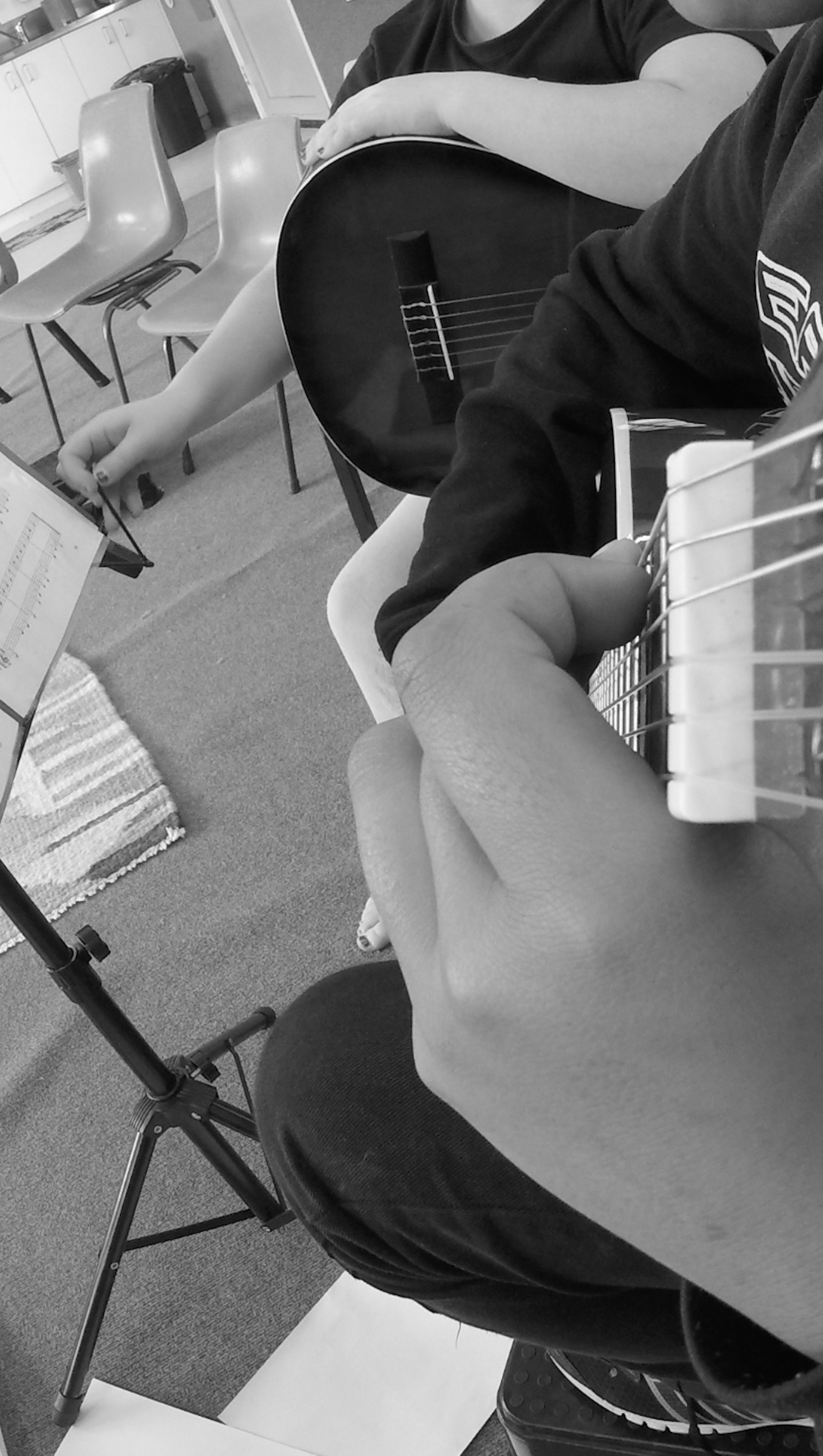
I am using a range of ethnographic methods in this project, including interviews, participant-observation (attending rehearsals, concerts, holiday programmes, and other events), photography, and participatory video. This involves inviting some of the young people involved in these organisations to use video cameras to document their experiences, and collaborate with me on making a short ethnographic film – for example, by working with me to decide what should be in the film, shooting footage for it, and advising me during the editing process.

As well as making an ethnographic film showing how young people experience the relationship between music and social change, I will produce reports for Arohanui Strings, Virtuoso Strings, and Porirua Soundscapes. I will write academic journal articles and book chapters, and give a public talk at the end of the project (early 2020), and will upload published material here to this blog.

This research has been approved by the Victoria University of Wellington Human Ethics Committee, application reference 24293. If you have any questions about it, or are interested in becoming involved, please contact me.


References

Allan, J. 2010. Arts and the inclusive imagination: Socially engaged arts practices and Sistema Scotland. Journal of Social Inclusion, 1(2): 111-122.

Baker, G. 2014. El Sistema: Orchestrating Venezuela’s youth. New York: Oxford University Press.

Booth, E., & Tunstall, T. 2014. Five encounters with “El Sistema” International: A Venezuelan marvel becomes a global movement. Teaching Artist Journal, 12(2): 69-81.

Booth, E., & Tunstall, T. 2016. Playing for Their Lives: The Global El Sistema Movement for Social Change Through Music. New York: W. W. Norton & Company.

Bull, A. 2016. El Sistema as a bourgeois social project: Class, gender, and Victorian values. Action, Criticism, and Theory for Music Education, 15(1), 120-53.

Burns, S., & Bewick, P. 2015. In Harmony Liverpool Year 5 Evaluation: Health and Well- Being Report. https://issuu.com/liverpoolphilharmonic/docs/in_harmony_liverpool_year_5_evaluat

Creech, A., Gonzales-Moreno, P., Lorenzino, L., Waitman, G., Bates, L., Swan, A., de Jesus Carillo Mendez, R., Hernandes, D.N.C., & Gonzales, P. C. 2016. El Sistema and Sistema-inspired programmes: A literature review of research, evaluation, and critical debates (2nd ed.). San Diego, California: Sistema Global.

Osborne, M. S., McPherson, G. E., Faulkner, R., Davidson, J. W., & Barrett, M. S. 2015. Exploring the academic and psychosocial impact of El Sistema-inspired music programs within two low socio-economic schools. Music Education Research, 18(2), 156-175.

Trinick, Robyn and Stuart McNaughton. 2013. Independent evaluation of the music learning outcomes in the Sistema Aotearoa Programme. Report prepared for Auckland Philharmonia Orchestra. Faculty of Education, the University of Auckland.

Uy, M. S. 2012. Venezuela’s national music education program El Sistema: Its interactions with society and its participants’ engagement in praxis. Music and Arts in Action, 4(1): 5-2.


New Zealand-born and internationally raised

I am delighted to welcome writer Cileme Venkateswar to anthropod. This is the third post in my series on doing fieldwork with kids, and in it Cileme (who I introduced in Part II of this series) reflects on what it was like to be the kid of an anthropologist who travelled a lot to do fieldwork. 

You grow up differently as a kid of an academic, that’s just kind of a given. There’s a certain drive you have, a desire to know more about the world, a determination to succeed in the things you find joy in that I’ve only ever seen so fiercely in children whose parents have similar professions.

But being the kid of an anthropologist in particular? Now that’s a whole other ball game.

I can safely say that I wouldn’t be who I am now in any way whatsoever without my mother’s influence as an anthropologist. I’ve learned some of the most important life lessons I carry with me as a now almost 21 year old from the anthropological teachings I witnessed and the research I was privy to as a child. Growing up, it was just me and my mum and so when it came to her doing fieldwork, there weren’t a whole lot of options for what I would do. It was simple. I’d just go with her.

Cileme
Cileme, age 8, in Singapore

Travelling from a young age is its own lesson. Before the age of 15, I had been to New Zealand (obviously), Australia, India, Thailand, Singapore, Malaysia, the UK, the USA, Nepal, Portugal, Germany, France and quite possibly more that I don’t even remember. It ingrained in me from a very young age the vastness of the world and how much more there was out there. I was surrounded by so many different languages and cultures, heritage and traditions that even if I didn’t understand them, I was immediately curious about how their lives differed from my own and how much diversity existed around the globe.

Kids aren’t inherently patient, not in the slightest, but annual 12 hour plane rides, long taxi commutes to various places in numerous cities, waiting in long queues, having to amuse myself for several hours during book launches, research interviews etc., certainly helped improve what little patience I had as a child! It also produced a remarkably active imagination. I learned to sit in my own corner and make up stories in my head. I carted my imaginary friends around the world with me, having my own adventures in each new location we visited. I began a growing collection of books picked up cheaply in roadside book stalls and airport shops that helped foster a love for storytelling, complex characters and literature, a love that remains today as I study English and Creative Writing at university.

But one of the things I’ve only recently started to appreciate having learned solely from the situation of my mother’s work in academia, is my ability to converse with anyone, especially adults. Adults speak to kids a very particular way, stick to a select few conversational topics and often use that annoying, high pitched, slightly condescending tone of voice, laughing at the interesting and often naive answers they receive to their questions. Children rarely notice, but as a child of an academic, you’re constantly surrounded by adults in scenarios of meetings, pot luck dinners, fieldwork, or random encounters during a normal day. The asking about school, the ‘what do you want to be when you grow up’ and the interest in what books you’re reading grows old pretty quick when you have several pot lucks a semester and you’re encountering the same adults each time. For a while, it’s easy to be amused by the luxury of getting to watch Nickelodeon and Cartoon Network on Sky TV, or running around playing tag outside with the other kids. But eventually, it reaches around 10 o’clock in the evening and the only shows on the television are reruns of episodes you’ve already seen, half the other kids are either asleep or have gone home, the high schoolers are bored of babysitting you and have taken to answering questions about their own subjects and university applications, and you meanwhile want another slice of the pavlova on the dessert table but unfortunately, there’s a group of lecturers from a department you’ve never heard of standing there and you have no segue into asking them to help you reach the cake tin. It’s around that point that you realise you’ve got to bridge the gap between child and adult and just find a way to talk to them without them looking down at you like a silly little kid.

Somewhere between the ages of 8 and 11, I suddenly gained the ability to proficiently and fluently interact with adults outside of the regular ‘child questions’, whether I knew them or not and whether we had common ground or not. I talked about travel, about what they might be researching and what my mum was researching, about where in the world they’d been and where in the world I’d been, about the things I didn’t understand in the books I read, about the stories I was writing, about whether I wanted to be a journalist or a novelist — anything and everything I could hold an almost adult conversation about. It never occurred to me that this was a ‘skill’ of any sort until I was much older. Only in the last few years of my life have I realised that people my age don’t just hold conversation with adults much older than them (even now with so much more to talk about), that it isn’t normal to be able to go up to a perfect stranger and find common ground, sparking a friendship. I’ve had so many friends pull me aside after a seamless conversation with a tutor or a lecturer and whisper ‘How did you do that? How did you know what to say?’ It’s so much easier now, as I can converse about politics, history, literature, climate change, generational differences, activism … but it all stemmed from the ability I decided to cultivate as a child.

Some of the things that have shaped me the most profoundly are the experiences I’ve had because I accompanied my mother in so many aspects of her job. I’ve played soccer with boys living in slums in India even though they didn’t speak a word of English nor I a word of Bengali. I’ve spent half my childhood wandering around university campuses playing make believe and dragging those same invisible friends to every country I had the privilege of visiting. I’ve been changed and impacted by each and every culture and experience I was enveloped in and would be so much lesser of a person without it all. This was all a part of my life out of necessity — me going with my mother was the only option either of us had for when she had to travel or go to research. But to any and all academics out there with kids: honestly. Even if you have other arrangements you could make, don’t rule out taking your kids with you, especially before they reach high school. Getting to see the world as a kid is unlike anything else, and they learn lessons that are invaluable and unteachable in any other circumstance. Believe me. We become better people for it.

Anthropology for Liberation readings

Next trimester I’m teaching a new course, Anthropology for Liberation. Here’s the course description:

How can anthropology advance human emancipation from racism, gender inequality, class disparities, and other forms of oppression? We will consider this question by examining anthropology’s colonial history from a decolonising perspective, rethinking key anthropological concepts and asking what an anthropology for liberation might look like in theory and practice.

A number of people have asked me for the list of readings, so here they are. The readings focus on decolonising anthropology and anthropological knowledge, and my lectures will complement this by discussing anthropology for liberation.

  1. Teaiwa, Teresia K. 1995. “Scholarship from a Lazy Native.” In Emma Greenwood, Klaus Nemann and Andrew Sartori (eds.), Work in Flux. Unviersity of Melbourne: Parkville, Victoria. Pages 58-72.
  2. Asad, Talal. 1973. “Introduction.” In Anthropology and the Colonial Encounter. Ithaca Press: London. Pages 9-19.
  3. Smith, Linda Tuhiwai. 2012. “Colonizing Knowledges.” In Decolonizing Methodologies (2nd edition). Dunedin: Otago University Press. Pages 61-80.
  4. Harrison, Faye. 2008. “Writing against the Grain: Cultural Politics of Difference in Alice Walker’s Fiction.” In Outsider Within: Reworking Anthropology in the Global Age. Chicago: University of Illinois Press. Pages 109-133.
  5. Tengan, Ty P. Kāwika. 2005. Unsettling Ethnography: Tales of an ’Ōiwi in the Anthropological Slot. Anthropological Forum, 15:3, 247-256.
  6. Sissons, Jeff. 2005. “Indigenism.” In First Peoples: Indigenous Cultures and their Futures. London: Reaktion Books. Pages 6-35.
  7. Mikaere, Ani. 2011. “Are We All New Zealanders Now? A Māori Response to the Pākeha Quest for Indigeneity.” In Colonising Myths, Māori Realities: He Rukuruku Whakaaro. Wellington: Huia Publishers. Pages 97-119.
  8. Simpson, Audra. 2007. On Ethnographic Refusal: Indigeneity, ‘Voice’ and Colonial Citizenship. Junctures, 9, 67-80.
  9. Kaʻili, Tēvita O. 2012. Felavai, Interweaving Indigeneity and Anthropology: The Era of Indigenising Anthropology. In Joy Hendry and Laara Fitznor (eds.), Anthropologists, Indigenous Scholars and the Research Endeavour: Seeking Bridges Towards Mutual Respect. London, United Kingdom: Routledge. Pages 21-27.
  10. Muru-Lanning, Marama. 2016. Intergenerational investments or selling ancestors? Māori perspectives of privatising New Zealand electricity-generating assets. In Peter Adds, Brigitte Bönisch-Brednich, Richard S. Hill, and Graeme Whimp (eds.), Reconciliation, Representation and Indigeneity: ‘Biculturalism’ in Aotearoa New Zealand. Heidelberg : Universitätsverlag Winter. Pages 49-61.
  11. Fabish, Rachael. 2014. “Chapter 1. Methodology: ‘Learning to be affected’ by Kaupapa Māori.” In Black Rainbow: Stories of Māori and Pākehā working across difference. PhD thesis, Victoria University of Wellington. Pages 23-60.
  12. Loperena, Christopher Anthony. 2016. A Divided Community: The Ethics and Politics of Activist Research. Current Anthropology, 57:3, 332-346.

As you can see, we are only going to read one reading per week instead of the usual 2-3 per week that many courses assign. This is so we can develop a thorough, critical understanding of each required reading.

I plan to provide a list of recommended readings to supplement the required reading list, which will include authors like Paulo Freire, Franz Fanon, and Edward Said, and non-academic texts such as poetry, fiction and film. What would you recommend I add to this list of recommended readings, and why? I would love to hear your suggestions!