
I am delighted to share this invaluable resource from my friend and colleague, Dr. April K Henderson. April has written the most thoughtful and practical advice I’ve seen on navigating the PhD examination process, which involves a viva/oral defence here in Aotearoa New Zealand. Her advice is grounded in years of supervisory experience in Pacific Studies at Te Herenga Waka—Victoria University of Wellington, and exemplifies her generous mentorship. If you or someone you know is approaching a thesis examination in Aotearoa New Zealand, this is essential reading.
Approaching examiners’ reports
Your first and lasting response to examiners’ reports—even the one with the toughest-to-take criticism—should be gratitude for the detailed engagement with your work they provide. Let’s face it: reading a thesis, even a beautifully written one, is a bit of a slog, but these three people read yours, re-read it, thought deeply about, formulated opinions and crafted several (or five, or sometimes even eight) pages of detailed discussion and advice. No one else, apart from your supervisors, will read your work this closely.
Examiners are people, and just like other people we know (friends, relatives) some examiners are better at wording their critiques in a generous and supportive way, while others may be more blunt. Some critiques you may easily see the truth of, others you may reject. But no matter how they sound, examiners’ comments are always (at least in my experience) intended well and meant to improve your thesis. Therefore, the first note you should sound in the oral exam is gratitude that these esteemed, busy people have given so much time and attention to your work.
In your oral exam, you will need to be prepared to address critiques in your reports. Here’s some strategies for preparing to do that.
So you have your examiners’ reports—what to do now?
I advise students to work your way methodically through all the reports, developing a list of every critique/request made and who made it. More specifically, I suggest developing a spreadsheet with three columns.
In the left column of the spreadsheet, enter each critique/request in a new row.
In the middle column, write a statement about whether the critique was echoed or contradicted in the other two reports. Why this middle column is important:
- It will help identify the key areas of agreement across all three reports, and these will most likely feed into predictable questions in the oral exam and possibly revisions you will be asked to make;
- It will help you to have perspective on the reports when taken as a whole. Otherwise, our natural human negativity bias means that we will obsess about the most critical bits in the reports, losing sight of the big picture—including that some examiners may have loved the exact same aspect of the thesis that another hated. So Professor X thought you did a really poor job elaborating [key concept] in your thesis. But Professor Y and Dr Z thought you did a great job and said so! This middle column can help your fragile scholarly ego maintain perspective. It also can suggest positive strategies for approaching the stinging bits of critique in the oral exam: if examiners’ responses were contradictory on a particular point, it can be useful to gently (and non-defensively!) work a reference to the positive commendations of other examiners into your considered response to the critique (a suggestion for doing this below). Which brings me to the final column…
In the right column, put your carefully considered response to the critique and what (if anything) you are willing to do to address it, including practical changes you might make to the final thesis. Also note for yourself if/how you might (implicitly or more directly) work a reference to the critique in your opening fifteen minute presentation. (More about how you will use and draw on this column is at the end of “The Oral Exam” section).
Here is an example of a table of examiners’ comments and student responses. (Note: this is an anonymised, generalised composite, not a particular student’s exact spreadsheet).
| CRITIQUE | CONVERGENCE/DIVERGENCE in REPORTS? | MY RESPONSE |
| 1. One examiner said thesis invokes divergent conceptions of [key concept] from multiple theorists and “the way in which [key concept] is being used as expounded in Chapter 2 and especially in later descriptions and analysis could have been clearer” (Professor X p2) | Critique not reflected in Professor Y’s or Dr Z’s reports, who write approvingly of thesis’s use of [key concept]: “[insert their flattering, approving statements here]”. | Two examiners were very satisfied with my treatment of [key concept]. I can offer an implicit response to Professor X’s critique in my opening 15-minute presentation in the oral exam; As part of narrating the thesis’s key original contributions, I can say something like: “I agree with examiners that the concept of [key concept] is critical to the thesis. It underpinned my analysis of x and y and allowed me to see z. Given its importance, I was gratified by Professor Y’s and Dr Z’s commendations of how the thesis introduces and uses the concept.” If Professor X raises a specific question later in the exam, I am prepared to restate/elaborate clearly on the thesis’s use of [key concept], making reference to particular passages in the thesis that I feel address Professor X’s questions. Ways to do this non-defensively: open the response by agreeing with X that clarity is important. After pointing to specific passages that I hope address X’s critique, close by welcoming suggestions X may have for bringing further clarity. |
| 2. “Textual descriptions of x and y are rather hard going” (Professor X p2) | Critique not reflected in Professor Y’s or Dr Z’s reports. Both of these other examiners are trained in [specifically relevant field] and write of the thesis’s textual descriptions in very positive terms: “[insert their flattering, approving statements here]”. | Professor X’s critique seems a bit pointed here—it’s very specific and not shared by the other examiners who have more expertise in [relevant field]. I don’t think I need to pick up on it in my opening presentation. If it comes up later in the exam, I could discuss why I chose to describe x and y in the level of detail I did, the relationship of these descriptions to my analysis, and end by acknowledging with gratitude Professor Y’s and Dr Z’s commendations of my descriptions in their reports. |
| 3. “The Conclusion [was short]. I craved more. What I expected here was a greater connection between the research questions posed at the start, the subtle exposition of complex theories, the graphic depictions of [thesis content], the lived realities of [thesis participants] than is presented in these short, final paragraphs. This was a profound disappointment and I can only presume that the author ran out of time or energy. This deficiency might be redressed in the final version.” (Professor X p7) | While phrased more generously, the other examiners agreed: “The thesis concludes with a short chapter that briefly summarises [xxx], reiterates the central argument, and sketches some preliminary ideas for future research.” (Dr Z p4) “[The student] might well want, in any future revision, to expand and amplify the thoughts indexed in their concluding chapter.” (Professor Y) | This critique was shared across all reports and is likely to come up in oral exam. I agree with examiners that my Conclusion was too short. It was not a matter of running out of time or energy, though—just running out of word limit. I think there’s a way to acknowledge this shortcoming of the thesis towards the end of my opening 15-minute presentation, and to do it in a way that explains this shortcoming as an unfortunate by-product of what examiners appreciated as the strengths of the thesis: all of the rich detail in the substantive chapters meant that the thesis was at the maximum word limit. In terms of practical steps to address what we all agree was a shortcoming in the thesis: prior to the oral, I will gain clarity from FGR on whether the revised, final (post-exam) thesis can exceed the 100,00 word limit – if so, I will readily offer to expand the Conclusion. If not, I will explain the word constraints to examiners and seek their advice on parts of the thesis they think could be sacrificed to make space for an expanded Conclusion. |
Once you’ve got a draft of this spreadsheet, circulate it to your supervisors in advance of your preparing-for-the-oral-exam meeting. When you meet, supervisors can help you go through the list and provide additional guidance on ways to approach responses to critiques in the oral.
Note that this table is a tool for you to help make sense of the examiners’ reports and prepare in the lead up to the oral exam. More about how to use this table is at the end of the next section.
The oral exam
Your opening 15-minute presentation
At the start of the oral exam, after the chair has welcomed everyone and discussed the general process, you will be invited to make your opening remarks (at our university, these are usually limited to fifteen minutes). In your opening remarks, what you want to do is: 1) thank the examiners for their careful consideration, 2) tell them the story of your thesis (how it came to be what it is, what it accomplishes, and why it matters), and then 3) end by explicitly welcoming the ensuing discussion and questions as a valuable opportunity to improve your work.
Discussing each of these, in turn:
First, re-read the opening lines of “Approaching examiners’ reports…”, above. Gratitude should be the opening note you sound in the oral exam. You will never again in your life have this many people focused solely on you and your work (even if you write a book, you’ll just get peer review reports—not the additional benefit of getting to talk to those people for 2–3 hours about your work in person and explain why you wrote what you wrote). Even if you disagree with some of their comments/critiques; even if you think one or two of them don’t “get” your work, express gratitude for their careful consideration of your work—they really do intend well (in my experience).
Second, I usually advise students to think of this opening presentation as a chance to tell the story of your thesis. Of course you will want to ensure clear statements about the thesis’s key arguments and original contributions to knowledge, and especially why it matters, but this is also a chance to contextualise the thesis. This is a chance to narrate why and how the work they’ve all read came to be what it is. It’s quite common for examiners to simply be curious about some things that may not be explained in the thesis: they’ll have questions about certain decisions you made to zig instead of zag, why you went here and not there, or how you ended up in this research area in the first place.
Of course, there are endlessly different ways to tell a story, including the story of your thesis. Take your cue for what parts to emphasise by what’s in the reports. For example:
- If a common question or critique emerged across the examiners’ reports about an aspect of the thesis (for instance something in the research design: where you went, who you talked to, how you talked to them, what theoretical concept was centred, what archives you consulted; or some key consideration that they thought was missing; or even why the thesis was structured like it was), and you can work an explanation of this into “the story of your thesis,” do it! I’ve seen examiners’ concerns about something melt away when they hear the backstory of why the student chose to do it like they did. Just hearing that the decisions were carefully considered and that the student had good reasoning behind them can sometimes appease examiners, such that things they raised as big concerns in their reports are no longer concerns (or even mentioned) in the recommendations for final revisions.
- Sometimes, if it’s not clear in the thesis, examiners will want to know more about you and how you came to do this research (at least in my field of Pacific Studies, people’s personal stakes in the work usually matter). I recall two of my past PhD students who both produced theoretically nuanced, ethnographically rich, and immaculately written theses, but both chose, for various reasons, to give minimal details about themselves in their theses. In both cases, multiple examiners came back asking them for more discussion of their relationship to the research topic. Partially this was about ethically disclosing their positionality, but partially it was also curiosity: how did someone who appears, on the surface, to be so different from this research context come to be studying this specific thing? So when one of these students crafted his opening presentation, he devoted some time to telling his coming-to-the-thesis backstory (aspects of which I’d never even heard, as his supervisor) and examiners seemed delighted to hear it: it was like, Ahhh, I get it now! And in the end, they didn’t even ask him to add any of that extra biographical detail into the final thesis—they were just curious and wanted to know.
- In contrast to #2 just above, many of my other supervisees include quite a lot about their personal biography and relationship to the research in their theses (I’ve had at least two that incorporate auto-ethnography as a specific method). In these cases, examiners probably aren’t going to ask for more about you and your relationship to the project, but they will be curious about other aspects of how the thesis came to be what it is. Look for questions in the reports that you might be able to address (in a positive, implicit, way) in your opening narration of why and how the thesis came to be what it is.
The important thing in this opening 15-minute presentation is to keep the focus on what you did do in the thesis. The most effective opening presentations tell that story of what the thesis did accomplish, and why and how it came to be in the form it is, in a way that implicitly answers some of the examiners’ questions. Narrating the decisions you made, and why, will implicitly explain why you chose not to research or write the thesis in another way. Where relevant, feel free to lightly work in explicit acknowledgement of things the examiners said they liked into this story (c.f. Row 1 Column 3 of the spreadsheet above, where it says “Given its importance, I was gratified by Professor Y’s and Dr Z’s commendations of how the thesis introduces and uses the concept.”)
You can weave more explicit mentions of examiners’ critiques into your opening presentation as well, but keep the main thrust of your presentation to the positive work you did, and see if there’s ways to frame (what examiners’ identified as) shortcomings or gaps in the thesis as by-products of some of its strengths, or the result of decisions that were well-considered and necessary. For instance, see Row 3 Column 3 in the example spreadsheet table above: in that example, all of the examiners (and the student) agreed that the thesis conclusion was too short. The student’s opening presentation foregrounded the rich, original contributions made in the thesis’s substantive chapters and thanked examiners for their commendations of those chapters (e.g. leading with the positive story of what the thesis did do well), and then acknowledged that the rich substantive chapters strained the word limit and regrettably left little space for a Conclusion.
I strongly advise rehearsing your opening presentation with supervisors to get both substance and tone right. What you don’t want to do in this 15 minutes is foreground examiners’ critiques first and then respond to them point-by-point with an explanation. It’s common for students to think that’s what they should do in their oral exam or oral defence presentation, but don’t do that: it sounds defensive and sets a combative tone for the oral exam. (So don’t go down your spreadsheet point-by-point! That spreadsheet was to help you process the reports and plan effective responses).
Finally, be sure to end your presentation by explicitly welcoming the ensuing discussion and questions as a valuable opportunity to improve your work. This last bit is key: by inviting their critiques, you actually retain more power in this situation. Examiners will visibly relax and feel more comfortable about raising questions, and the tone is more likely to feel like an engaged scholarly conversation rather than an inquisition. That’s what you want. 🙂
Some final reflection on examiners
You may be wondering, how the heck did these people come to sit in the seat of judgement on my work?
Examiners are ultimately nominated by supervisors. Your supervisors usually consult each other and will have varying degrees of responsibility for the final examiners. I can’t speak for all supervisors, but everyone I’ve ever co-supervised with has sought the same qualities in examiners: people with some expertise relevant to the thesis who will be rigourous and kind. We want them to hold students to a high standard and help ensure that the student’s final published thesis can withstand scholarly scrutiny anywhere, but we also hope that their criticisms will be voiced in a generous and supportive way. In Pacific Studies we’ve been fortunate to have many rigourous and kind examiners over the years, but occasionally we’ll see an examination report that surprises us.
Pacific Studies is a pretty small field (big ocean, tiny field), so we often know the “Pacific Studies” examiners personally and have expectations of what kind of examiner they will be. However, sometimes a colleague we think we know well surprises us when they put their “examiner hat” on. At other times, the student’s topic or the unavailability of people we initially ask necessitates that we get an examiner who supervisors don’t know personally and/or don’t have a sense of as an examiner—in these cases we always hold our breath a bit and hope that they turn out to be great, rigourous, kind examiners.
So, if the ideal type of examiner (and, I assure you, the vast majority of past examiners of PASI theses are this way) is rigourous, engaged deeply with the thesis, and able to relay comments and critique in a kind and generous (but firm) manner…what are the other types? Here’s some characters I’ve encountered:
The off-in-some-other-field examiner: this is the “one of these things is not like the others” examiner—their report bears little relationship to the other two, and in your (and your supervisors’) opinion bears little relationship to your work. Parts of their report might seem downright wacky, like huh? What the…?
- If this person is the overseas examiner, YAY! This is the best case scenario for an oddball examiner because the overseas examiner does not attend the exam and the examiners who are there (internal and NZ examiner) have discretion over how they incorporate the overseas examiners’ questions and whether to include any of the overseas examiner’s requests into the final required revisions. If the overseas examiner’s report was really wacky, trust that everyone present at your exam (the internal and NZ examiners, the chair, your supervisors) are aware of it. They will have to be diplomatic and professional in their comments about it, but they know. The examiners who are present will still have to pose some of the overseas examiner’s questions (they are required to), so do your best to remain poised and professional also as you generously and diplomatically address the irrelevance of the overseas examiner’s questions to the work you did.
- If this person is the internal examiner, take a deep breath and know that you will get through this. The internal examiner wields a greater amount of power over the very last stage of the thesis process because they are usually the person responsible for overseeing and approving the final (post-exam) revisions (your revised thesis will not go back out to the overseas and NZ examiner). Again, remain poised, professional, and diplomatic in the exam, and be prepared to do whatever is the minimum required to appease this person if their requests get included in your final required revisions. For instance, they might want you to include a new section that the other examiners (and you, and your supervisors) think is totally unnecessary, but they’ve managed to get this included in the list of required revisions. Unfortunately, you’ve just got to suck it up and do enough to satisfy them. Remember, the thesis is a means to an end goal (your PhD). If oddball examiner is gonna throw up this one last hurdle for you at the end of your marathon, take a deep breath and do what you need to do to get yourself over it.
- If this person is the NZ examiner, be professional, poised, and diplomatic when responding to their comments in the exam. See what, if any, of their odd requests get included in the final required revisions. If some of them do get included, you will need to do something to show the internal examiner that you diligently attended to their requests, but you may not need to do as much as you would if the oddball requests were coming from the internal examiner themself.
The I-actually-think-this-thesis-is-really-good-but-I’m-having-a-bad-day (or) I-actually-think-this-thesis-is-really-good-but-I’m-just-too-tired-to-write-kindly examiner. This is the examiner that buries some stinging little comments in a report that otherwise mostly contains praise for the thesis (see Professor X in the example spreadsheet, above). Developing a spreadsheet (as advised above) will help put this examiner’s comments in perspective. Try your best to look past their little barbs: those ouchy bits may not be representative of examiners’ comments as a whole, and (funnily enough) they may not even accurately represent this particular examiner’s overall estimation of your thesis. I’ve encountered variations of this type of examiner several times: students dwell on the stinging critiques in the report and assume the examiner hates their thesis, and then are shocked when the same examiner sums up the thesis as excellent and is totally pleasant and encouraging in the actual exam. Sometimes people are tired, or annoyed about something when they write their reports, and things come out more harshly than they intend or realize. Or, due to time pressure, they had to send the first draft of their report rather than the draft they would’ve sent if they had time to sleep on it, go back in, and soften their language. Focus on crafting well-considered responses to the useful and productive elements of examiners’ critiques, and try not to focus on the stinging or ungenerous ways the critiques may have been delivered.
The Your-thesis-makes-me-think-about-all-these-things-I’m-interested-in-in-my own-work-that-I’m-about-to-tell-you-about examiner. This type seems to be less interested in engaging your work on its own terms and discussing what your thesis actually did, and rather more interested in using your work as a jumping off point to talk about their own scholarly interests. There’s a couple variations of this type:
- The easier-to-handle variation will talk a lot about their own research interests in their report, and want to talk more about them in the oral exam, but will not insist that you do a lot of revisions to make your final thesis more like their work. This type might be annoying (if you are actually wanting them to focus on your thesis for two hours), but they are ultimately benign because they aren’t going to put up additional hurdles at the end of your marathon. In some ways, this type of examiner’s response is a form of flattery: they are reading your work like they might read an exciting new book in their field, and it’s sparking off all these ideas for their own work that they are keen to talk about. They are treating this examination as a chance to have a stimulating scholarly conversation. Be diplomatic and pleasant, engage with them, gently guide the conversation back to your thesis in your responses if you need to, and trust the chair to do this as well.
- The more difficult version of this is an examiner who then insists on revisions that will align your thesis more with the project they would’ve done, or are doing, rather than respecting your thesis on its own terms. The extent of the challenge this examiner poses may depend on whether this person is the overseas, NZ, or internal examiner. See points 1, 2, and 3 from the off-in-some-other-field examiner above.
The This-is-my-first-examiner’s role-and-I-think-I’m-supposed-to-treat-the-thesis-like-the-articles-we-savaged-in-my-graduate-seminars examiner. This person may think their job is to be a finely-honed machine for dispensing incisive, exhaustive critique that tears apart what someone else has built, rather than approaching examination as an opportunity to support and strengthen another person’s scholarship. Many competitive graduate programmes in the US, for instance, foster an ethos where tearing apart someone else’s work is equated with competence. If an examiner has only recently emerged from that type of environment, and not yet had a lot of experience publishing their work and supervising postgrads (both of which tend to make you a bit more generous towards imperfect texts, I think), they may think that “doing a good job” means being as relentlessly critical as possible. This is enough of a “thing” that some supervisors deliberately avoid asking very junior academics to serve as examiners. But sometimes the niche subject matter of the thesis, combined with the unavailability of the one or two more senior scholars with relevant expertise, means that your supervisors do approach a first-time examiner and hope for the best. If you do receive a report that offers unrelenting critique of all the thesis’s faults without attentiveness also to its strengths, it may just be that the examiner mistakenly thinks this is what is expected of them. Your supervisors (and the middle column of the table strategy I suggest above) can help you to keep some perspective on this report.
I’m sure there are other less-than-ideal types out there, but these are the ones I’ve encountered. But as I said before, by far the vast majority of examiners I’ve experienced are the kind we hope for: rigourous but kind, deeply engaged in the work of the thesis, and intent on helping you make the final published thesis as strong as it can be.
Best wishes for your preparation!
Dr. April K Henderson
Pacific Studies
Te Herenga Waka—Victoria University of Wellington



 Even though he’s sometimes dejected when I get to school and interrupt his play time.
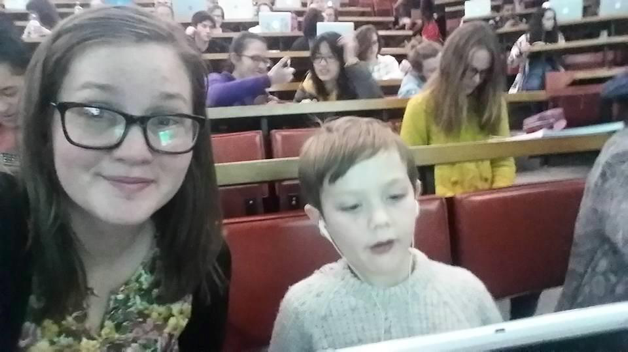 Here he is plugged into the tablet during a lecture. Thank goodness I bought that
 Sometimes he gets bored at uni and does things like this. I’m OK with this. Apparently it’s good for kids to be bored. I’m not going to cite that claim because this is a blog and I don’t have to.
  So unwell he couldn’t even sit up straight.
 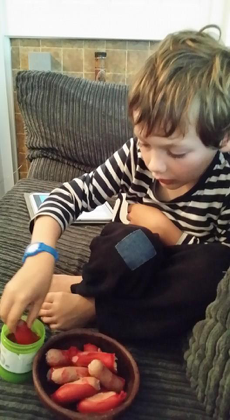 Here he is eating cheerios leftover from his birthday party while watching Netflix.
 My friends are great but my cats are no use at all when I’m trying to revise my notes.
 I particularly enjoy the full stops at the end of each “sentence”.

 Lorena Gibson