
I’m excited about this upcoming conference on Competing Responsibilities, not least because of the keynote speakers (Nikolas Rose and Cris Shore). Call for papers open now!
Category: Anthropology


The ‘Who are “we”?’ web project: discussions now open
This looks interesting – an anthropology of anthropologists! I look forward to following the debate on the Open Anthropology Cooperative forum.

The ‘Who are “we”?’ web project is now open!
Who do ‘we’ anthropologists think we are? And how do our collective identities and relations – as part of wider communities, movements, disciplines, ‘schools’ and so on – shape our methods, theories and analyses?
Socio-cultural anthropology has historically and popularly been characterized by its study of ‘other’ societies – not only the remote, exotic natives of Malinowskian legend, but also ‘others at home’, such as marginalized minorities, activists and religious communities. But while endless debates have raged over how anthropologists construct and theorize ‘otherness’, far less attention has been paid to the other side of the story: how forms and notions of affinity between anthropologists influence their theory and practice.
This is where YOUR input is needed! The ‘Who are “We”?’ project aims to redress this imbalance by asking how the anthropological ‘we’ is imagined and invoked. How are ‘we’ construed…
View original post 194 more words
Suddenly non-vegetarian: Dilemmas in anthropological fieldwork
I thought I had prepared for my PhD fieldwork in India and Papua New Guinea. I’d taken language lessons, made initial contacts, researched cultural traditions, read the Lonely Planet guides to each place, tried to anticipate what culture shock might be like, and decided to ‘expect the unexpected’. What I hadn’t fully considered, however, was what I would eat in the field.
Being vegetarian was no problem on my trips to Kolkata (India) where vegetarianism is normal for many. It was easy to find suitable street food and restaurants when I was out and my (Muslim) research participants usually included a vegetarian dish in their meals. I even found vegetarian options at weddings I attended (which was a relief, as it is considered rude not to eat at a wedding and I wanted to be a good guest).
On my first trip to Lae (Papua New Guinea) however, I suddenly became non-vegetarian. I’d met with a village women’s literacy group and, after touring their facilities and meeting the women involved, we shared a meal. Pride of place at the meal was a pig the women had slaughtered and cooked. As a guest, I was offered my plate of food first. All eyes were on me as I accepted it and sat down to eat. I had seconds to decide whether to decline the pork and risk offending my hosts, or whether to eat what was on the plate in front of me. I ate it. I was quite unwell afterwards (not having eaten meat in some years) but preferred this to the discomfort I thought I would have caused by refusing the meal cooked for me.
Everyone has different reasons for becoming vegetarian. Mine involved the treatment of animals in the commercial meat industry in New Zealand, and the fact that I don’t like the taste of red meat. I remember quickly thinking ‘it’s okay, they’ve raised and killed this pig themselves’ and ‘this doesn’t look too bad’ before I ate it. For the rest of my fieldwork in PNG I ate meat when it was offered to me and, over time, became non-vegetarian at home as well (for a whole host of different reasons, and I still dislike red meat).
Recently, conversations I’ve had with colleagues suggest that suddenly becoming non-vegetarian is actually quite common. David Sutton (1997) has written about being a vegetarian anthropologist but I haven’t found much written by anthropologists who faced food-related dilemmas during fieldwork and changed their dietary practices (by either becoming non-vegetarian or vegetarian), temporarily or permanently. Is this because it is considered ‘normal’ or expected for anthropologists to follow the cultural practices of those we work with?
I am curious to find out whether others have crossed the vegetarian/non-vegetarian divide while doing fieldwork. Did you become non-vegetarian, vegetarian, vegan? Why? Have you maintained it? I would love to hear about your experiences!
Student Debt and Activism in New Zealand
Great post by Hollie Russell, MA candidate in Cultural Anthropology at Victoria University of Wellington. Incidentally, Hollie’s student loan balance is around a third of mine.
Announcing the Savage Minds Writing Group
Name: Lorena Gibson
Writing Projects: a film review, a book review, a book chapter, and a journal article.
Goals: To devote one day per week to specifically to writing, and to write for at least one Pomodoro (25 mins) on other days. And to get these writing projects finished!
Anthropology theses published in Aotearoa New Zealand in 2013
Ever wondered what kind of topics graduate students in anthropology work on in ‘the antipodes’ (a term I’ve often heard used to describe where I’m from)? The following is a list of theses (Masters and PhD) published in anthropology departments in Aotearoa New Zealand in 2013.
I compiled the list by searching the New Zealand National Union Catalogue of the National Library of New Zealand, which holds masters theses and doctoral dissertations awarded by New Zealand universities as well as individual university library catalogues. I used the keywords “anthropology” and “thesis” in my search. Some catalogues were more difficult to navigate than others and I had restricted access to several resources, so my apologies to those whose names I have missed.
The theses are listed in alphabetical order according to the surname of the graduate. Congratulations to everyone to everyone who received degrees!
The Political Economy of Monumental Architecture at Nan Madol, Pohnpei, Federated States of Micronesia, by Helen Alycia Alderson.
Department of Anthropology and Archaeology, University of Otago
Advisor: Mark McCoy
Degree: Master of Arts
Fetal alcohol spectrum disorder diagnosis and intervention: An investigation of professional practice in New Zealand, by Kerryn Bagley.
Department of Anthropology and Archaeology, University of Otago
Advisors: Rugh Fitzgerald and Chrystal Jaye
Degree: Doctor of Philosophy
The Sweet Potato Factory – An Archaeological Investigation of the Pouerua Cultivation Landscape, by Alexander Campbell Bell.
Department of Anthropology and Archaeology, University of Otago
Advisor: Ian Barber
Degree: Master of Arts
The Disrupted and Realigned Self: Exploring the Narratives of New Zealanders with Chronic Fatigue Syndrome/Myalgic Encephalomyelitis, by Lara Joyce Milka Bell.
Cultural Anthropology, Victoria University of Wellington
Advisors: Catherine Trundle and Rhonda Shaw
Degree: Master of Arts
Tombs and trade: strontium and mobility at ed-Dur (U.A.E.), by Augusta Violet Bunting.
Anthropology, University of Auckland
Degree: MA Biological Anthropology
Bodies in context: a comparative study of early childhood education in New Zealand and Japan, by Rachael Sarah Burke.
Social Anthropology, Massey University
Advisors: Graeme MacRae (Massey) and Judith Duncan (Canterbury)
Degree: Doctor of Philosophy
Bronze Age nomadic pastoralism on the Mongolian Steppe, by Brittany Rose Carroll.
Anthropology, University of Auckland
Degree: Master of Arts
Time of Transition: Patterns of Obsidian Exchange and Utilization during the Lapita and Post-Lapita Periods on Watom Island, Papua New Guinea, by Yi-lin Chen.
Department of Anthropology and Archaeology, University of Otago
Advisor: Glenn Summerhayes
Degree: Master of Arts
Glimpses of Eternity: Sampled Mormon Understandings of Disability, Genetic Testing, and Reproductive Choice in New Zealand, by Kristin Clift.
Department of Anthropology and Archaeology, University of Otago
Advisor: Ruth Fitzgerald
Degree: Master of Arts
Medicating Miners: The Historical Archaeology of the St Bathans Cottage Hospital, by Jessie Garland.
Department of Anthropology and Archaeology, University of Otago
Advisor: Ian Smith
Degree: Master of Arts
‘Wrought into being’: An archaeological examination of colonial ideology in Wellington, 1840-1865, by Rose Caroline Geary Nichol.
Department of Anthropology and Archaeology, University of Otago
Advisor: Ian Smith
Degree: Master of Arts
Dental pathology profile of pre-European Maori and Moriori, by Amanda George.
Department of Anthropology and Archaeology, University of Otago
Advisors: Richard Walter and Jules Kieser
Degree: Doctor of Philosophy
Argonauts of Aotearoa: voyages of alternative ageing via the movanner archipelago, by Kim Green.
Social Anthropology, Massey University
Advisors: Graeme MacRae and Kathryn Rountree
Degree: Master of Arts
What’s Cooking? An Archaeological Residue Analysis of Ceramics from Thailand, by Cathleen Hauman.
Department of Anthropology and Archaeology, University of Otago
Advisors: Charles Higham and Russell Frew
Degree: Master of Arts
Game Balance: Designed structure and consumer agency in an online game, by Elizabeth Haynes
Cultural Anthropology, Victoria University of Wellington
Advisor: Catherine Trundle
Degree: Master of Arts
Himalayan journeys: a mobile ethnography and philosophical anthropology, by Christopher A. Howard.
Social Anthropology, Massey University
Advisors: Kathryn Rountree and Graeme MacRae
Degree: Doctor of Philosophy
Buying fair: the moral assemblage of Trade Aid and its supporters / Corinna Frances Howland.
Anthropology, University of Auckland
Degree: Master of Arts
“Still at nature’s mercy”: human-environmental relations after the Christchurch earthquakes, by Heidi Elisabet Käkelä.
Anthropology, University of Auckland
Degree: Master of Arts
“Nourishing ourselves and helping the planet”: WWOOF, Environmentalism and Ecotopia: Alternative Social Practices between Ideal and Reality, by Elisabeth Kosnik.
Cultural Anthropology, Victoria University of Wellington
Advisors: Brigitte Bönisch-Brednich and Catherine Trundle
Degree: Doctor of Philosophy
Assessing the temporal foundations of supra-regional models for early to mid-Holocene climate-cultural change, northeast Africa, by Natasha Phillips.
Anthropology, University of Auckland
Degree: Master of Arts
Shooting and friendship over Japanese prisoners of war: differences between Featherston, New Zealand and Cowra, Australia in Japanese connections, by Yasuhiro Ota.
Social Anthropology, Massey University
Advisor: Graeme MacRae
Degree: Master of Arts
Foreign seasonal workers in New Zealand horticulture: an ethnographic account of the nexus of labour and immigration policies and employment practices, by Jana Prochazkova.
Department of Anthropology and Archaeology, University of Otago
Advisors: Jacqueline Leckie and Martin Tolich
Degree: Doctor of Philosophy
Relieve me of the bondage of self: addiction practitioners from three treatment centres in New Zealand discuss the use of community as a method of healing the self, by Derek Ross Quigley.
Social Anthropology, Massey University
Advisors: Eleanor Rimoldi and Kathryn Rountree
Degree: Master of Philosophy
The politics of influence : an anthropological analysis of collective political action in contemporary democracy, by Kathryn Scott.
Anthropology, University of Auckland
Advisors: Julie Park and Cris Shore
Degree: Doctor of Philosophy
Soldiers’ Foodways: Historical Archaeology of Military Comestibles in the Waikato Campaign of the New Zealand Wars, by Alexandra Lee Simmons.
Department of Anthropology and Archaeology, University of Otago
Advisors: Ian Smith and Helen Leach
Degree: Doctor of Philosophy
Neighbours and Social Capital in the wake of the Christchurch Earthquakes, by Kirsten Stallard.
Department of Anthropology and Archaeology, University of Otago
Advisor: Gregory Edward Rawlings
Degree: Master of Arts
Narratives of Incorporation: An Anthropological Analysis of Same-Sex Civil Unions in New Zealand, by Dionne Steven.
Cultural Anthropology, Victoria University of Wellington
Advisors: Brigitte Bönisch-Brednich and Catherine Trundle
Degree: Doctor of Philosophy
Understanding the culturally modified tree record and the socio-economy of the Weipa mission in Cape York, Australia, by Eleanor Jeneen Sturrock.
Anthropology, University of Auckland
Degree: Master of Arts
Cheese Machines and Cellos: Technical Craftsmen and Craft Technicians, by Gwenda Dorothy Wanigasekera.
Anthropology Programme, the University of Waikato
Advisors: Michael Goldsmith and Tom Ryan
Degree: Doctor of Philosophy
Between Gifts and Commodities: “Op Shops” in Dunedin, New Zealand, by Valerie Jane Wilson.
Department of Anthropology and Archaeology, University of Otago
Advisor: Jacqueline Valerie Leckie
Degree: Master of Arts
Artefacts and Community Transformations: A Material Culture Study of Nineteenth Century North Dunedin, by Naomi Woods.
Department of Anthropology and Archaeology, University of Otago
Advisor: Ian Smith
Degree: Master of Arts
Parenting, AAA 2013, and being an anthropologist
Last month I went to the AAA 2013 meeting in Chicago. This was the first time I’d attended an international conference with my family in tow (20-month-old toddler and amazing husband). My husband looked after our daughter during the day but her presence gave me the opportunity to reflect on how being a parent of a young child has changed my experience of conferences, and possibly my future research directions.
I had a great time at the AAA 2013 and live-tweeted from about half of the panels I attended. I didn’t enjoy all of the papers I heard (mainly because I find it boring to listen to people reading articles or excerpts of thesis chapters – there’s an art to this and not everyone has mastered it) but I did appreciate the opportunity to hear some excellent speakers and meet people doing interesting and exciting research.
One of the first things I noticed was the number of children aged three or under with caregivers (mothers, fathers, grandparents, aunties, uncles) at the conference. I’m sure this is due to my heightened sensitivity as a first-time parent but it was great to see toddlers playing on stairs, younger babies in frontpacks, and kids sleeping or just taking it all in from the vantage point of a stroller while their parents gave presentations. What I didn’t see, though, was a parent’s room at the conference venue. Was there one? Could there be in future? What did anthro-parents with toddlers do at changing and feeding times if they didn’t stay at one of the conference hotels (like we did)?
Networking was also a different experience this time around. The 19-hour time difference between Wellington (NZ) and Chicago meant my daughter had a hard time settling, which ruled out any evening social events for me. However, explaining why I wasn’t going to be at a dinner did open up a space for people to talk about their own kids and how they handled going to conferences when their children were young. Plus I got to meet some lovely caregivers looking after toddlers whose parents (usually mothers) were giving presentations, people I would not have felt confident introducing myself to at previous meetings.
I noticed a divide in opinion about whether or not I would continue fieldwork in Papua New Guinea now that I’m a parent. This is something I have been thinking seriously about as I start to develop a new research project addressing vulnerable urban spaces in India and PNG. While no-one questions that I will continue to work in India, PNG is a different story (mainly due to reports of crime, security, and violence). Attending the AAA was good for meeting other anthropologists working in Melanesia and discussing the issues involved in taking children/family on fieldwork trips to PNG. Back at home I’ve continued these conversations with other anthropologists. I would love (and plan) to continue to work in PNG but being a mum is likely to shape future research directions.
I’m curious to hear from others about whether/how being a parent affects your future research plans. Have you done fieldwork with family in tow? Left them behind? Decided against a fieldsite due to safety concerns? I would love to hear about your experiences!
Related articles/blogs
- Ontology as the Major Theme of AAA 2013 (backupminds.wordpress.com)
- ‘European Savages’ at the AAA
(Allegra: A Virtual Lab of Legal Anthropology website) - parenthropology
(a blog containing ‘field notes on parenting, work, and anthropology)
Conference Chic, or, How to Dress Like an Anthropologist
I didn’t know there was a dress code and I read this after I arrived in Chicago. No scarf! Oh well.
The Digital Revolution and Anthropological Film
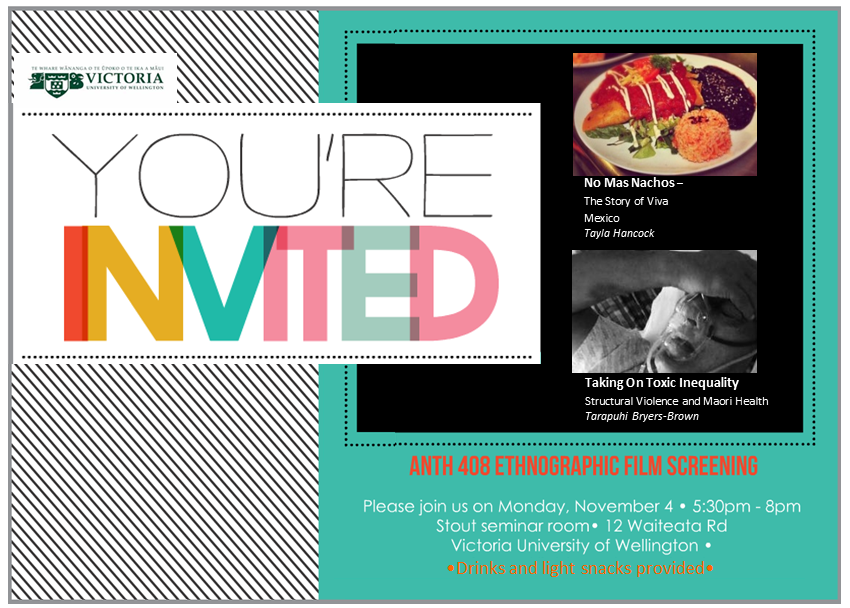
I enjoyed this post by Jay Ruby. I have a somewhat more optimistic view about the future of anthropological cinema though, based in part on the films produced by our 300-level and Honours students in visual anthropology courses taught by Prof. Brigitte Bönisch-Brednich. In fact I’m going to an ethnographic film screening tonight where two of our Honours students are showing films they created as part of their coursework this year. This post has given me lots of food for thought and it will be interesting to discuss various filmmaking techniques with everyone.
If you’re in Wellington, come along!
Venue: Stout Seminar Room, 12 Waiteata Road, Victoria University of Wellington
Time: 5.30-8pm
Making the most of the 2013 American Anthropological Association meeting
UPDATE: Since I posted this, the AAA has released a mobile app for Android and iPhone/iPad users. The AAA Annual Meeting Mobile App replaces the hard copy version of the programme in an effort to help make the event ‘greener’. I will probably give this a go before heading to Chicago later this month.
I’m excited about the 2013 American Anthropological Meeting in Chicago next month. I am presenting a paper as part of the session The Spatial Politics of Enclosure: Creating Persons and Publics.
The session organisers, Barbara Andersen (New York University) and Tate Lefevre (Franklin & Marshall College) of the Melanesia Interest Group, have done a great job in putting together an interesting panel (not just because my paper is in it!) and lining up discussants. Here are my paper details:
Title: Negotiating Space: Hope, development, and a politics of possibility in Kolkata (India) and Lae (Papua New Guinea)
Abstract: Hope is a prominent theme in discourses of development. Through its focus on social change, development provides a way of engaging with a hoped-for future of social justice and equality that is embedded in, but moves beyond, present social, political, and spatial enclosures. In this paper I explore how women living in bastis and settlements in Kolkata (West Bengal, India) and Lae (Morobe Province, Papua New Guinea) negotiate space for themselves, their families, and the wider communities in which they live by participating in grassroots-level development initiatives. I discuss how the various social and spatial arrangements in particular, physical and societal enclosures facilitated by structural inequalities that shape women’s lives in each of these cities simultaneously constrain and provide a basis for their actions. I argue that whether or not they achieve their objectives, such initiatives foster a sense of possibility and movement within and beyond the social and physical spaces these women inhabit.
How to make the most of the meeting?
AAA Meetings are always well-attended with multiple streams of panels running from 8am-9.45pm most days. Based on past experience I know that good planning is essential in order to make the most of my time at the conference. There are a range of new tools available now to help plan everything, including the AAA’s personal meeting scheduler and of course Google Calendar. Kerim has written a useful blog post on Savage Minds combining these two process into one #AAA2013 Google Calendar.
A quick look at the preliminary schedule suggests it’s going to take me a couple of hours to work through everything. The search function of the preliminary schedule seems a bit clunky – for example, looking at the Melanesia Interest Group in the ‘search by section’ function only shows the group’s annual meeting and does not list the session above as we have been sponsored by the American Ethnological Society. Also, because the schedule is only ‘preliminary’ I can’t read many of the abstracts to get an idea of what the papers will be about.
However a couple of sessions run by the Association for Political and Legal Anthropology stand out, this one in particular:
Special Event: Genres of public writing in political and legal anthropology: Addressing Multiple Audiences
Participants: Thomas Hylland Eriksen (,University of Oslo); Ghassan Hage (University of Melbourne); Susan Hirsch (George Mason University); Linda Layne (Rensselaer Polytechnic Institute)
Date: Thursday 21 November 2013
Time: 12.15pm
Venue: Chicago Hilton, conference room 4E
I haven’t started planning my time yet and might end up doing so the old-fashioned way with pen and paper on the longhaul flight from NZ to the USA (although this might not be practical with a 20-month in tow). I am keen to hear from others about conference planning – what tools or apps work well, and which should I avoid? If you are going to the AAA 2013 Meeting, how are you planning your time?
 Lorena Gibson